
A passenger boards a Metro bus at the Eastwood Transit Center Friday, July 8, 2022, in Houston.
Houston Chronicle/Hearst Newspap/Houston Chronicle via Getty Imag
Houston, believe it or not, has a public transit system. I know, I know, I couldn’t believe it either. This city is a place where not owning a car can condemn you to second-class citizenship. But the Houston Metropolitan Transit Authority, or METRO, exists just the same, and hundreds of thousands take it every day to get to work or to just get around.

More Houstonians may find out about METRO when the FIFA 2026 World Cup descends on our fair city, which is hosting seven matches beginning on June 14. If FIFA and local organizers’ projections are to be believed (and that’s a big if), some 500,000 people could visit Houston over three weeks.
Article continues below this ad
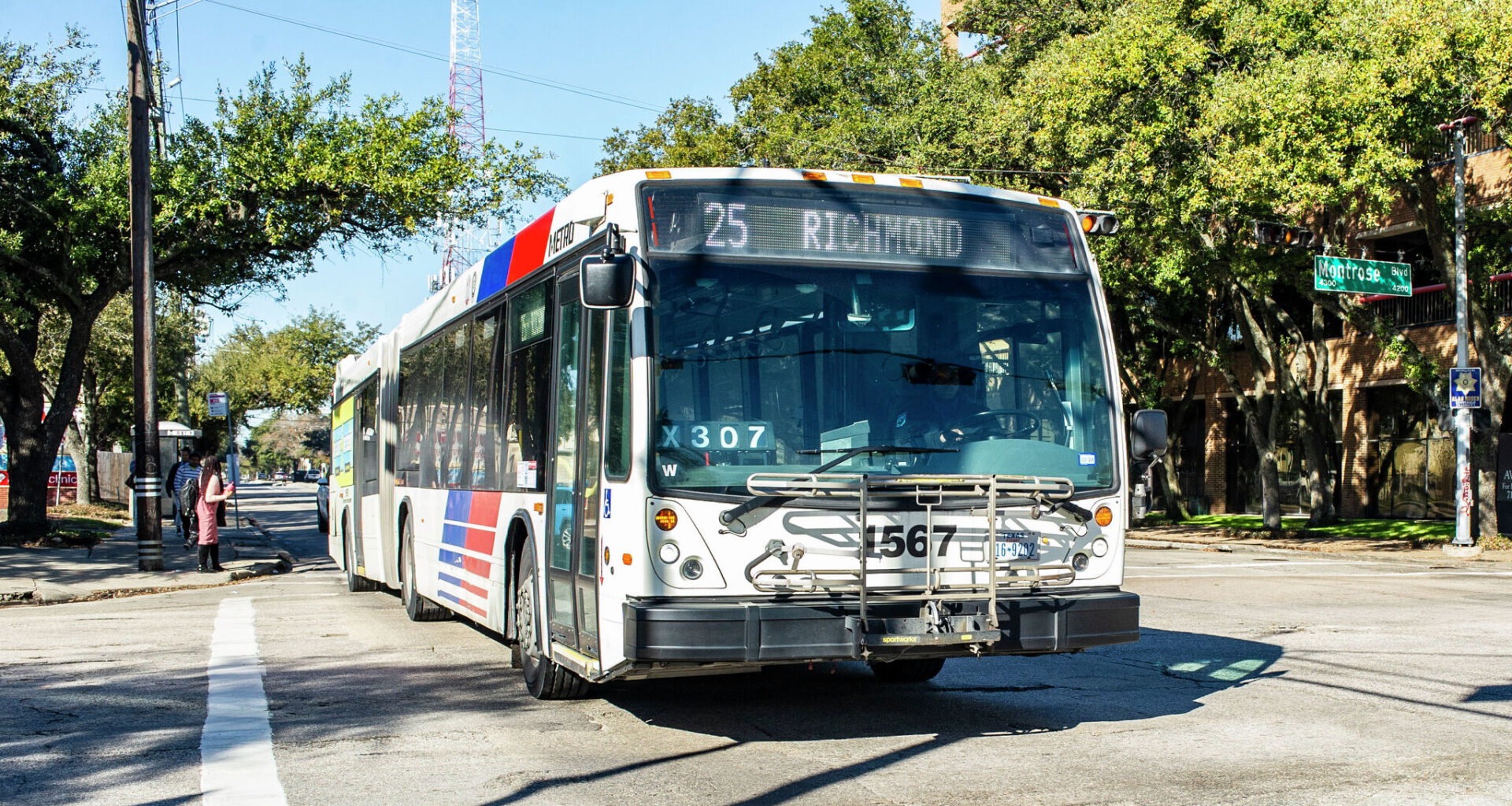
A Metro bus leaves a station eastbound on Richmond Avenue at Montrose Boulevard, Monday, Jan. 29, 2024.
Houston Chronicle/Hearst Newspap/Houston Chronicle via Getty Imag
Houston is hosting matches between Germany, Curaçao, Portugal, the Netherlands, Uzbekistan, Cape Verde and Saudi Arabia. At least some of the tourists visiting Houston will be from these nations, all of which have forms of public transit nicer than the United States’ (although Saudi Arabia has lots of highways, it’s very Houston-like in that regard). German tourists in particular will be in for a shock; Berlin, the capital, has a higher population than Houston in half the space and a much more robust metro system to boot.
So whether you’re a confused Uzbek or just trying to avoid traffic on the way to NRG, here’s your guide to using METRO.
What services does METRO offer?
METRO runs 113 bus routes, three light rail lines, a paratransit system, a handful of park-and-ride bus lines to and from the suburbs, and some electric golf cart circulators. For tourist purposes, most people visiting Houston will likely take the METRO Red Line train, though all light rail lines will be the most useful for visitors. METRO also runs the 102 bus service that goes from George H.W. Bush Intercontinental Airport to Downtown Houston. (More on that in a bit.)
Article continues below this ad
How do I buy METRO fares?
METRO’s website offers a more comprehensive breakdown, but the most useful way to pay is to download METRO’s new-ish RideMETRO app. Once upon a time, METRO had two apps: one for checking bus and train schedules, and one for actually buying the damn ticket. It was really annoying. The new RideMETRO app combines both, allowing (mostly) real-time tracking, trip planning and ticketing.
The RideMETRO app lets you buy and load a virtual fare card on your phone, meaning that you don’t need a physical card or ticket like you once did. METRO also just installed tap-to-pay readers on all of its buses, so now you can just pay your bus fare with Apple or Google Pay.
If you prefer physical experiences, you can buy a physical METRO fare card at various locations throughout the city, and METRORail stations have physical ticket machines.
Article continues below this ad
How much does it cost?
Because FIFA isn’t paying transit costs (like they initially said they would), host cities have to pick up the slack. As a result, cities such as New Jersey are charging infuriating prices to make up shortfalls. Not in Houston, where a METRO bus and train ticket will cost you $1.25. It’s honestly a great deal. (The park and ride and airport buses cost $4.)
The downtown Houston skyline is visible behind Shell Energy Stadium as a Metro light rail train passes in front in Houston, Monday, Aug. 18, 2025.
Houston Chronicle/Hearst Newspap/Houston Chronicle via Getty Imag
Can I actually get to NRG and other World Cup stuff on METRO?
Yes! Unlike Arlington, where there’s no public transit to AT&T Stadium (which hosts the final), METRO’s Red Line runs from Downtown Houston, through Midtown, the Medical Center and then to the NRG Stadium/Astrodome stop. If you’re staying at a hotel downtown, in Midtown or the Medical Center, that’s your best option. For the World Cup, METRO has announced it will be running the trains every six minutes daily and every 12 minutes at night. (Wouldn’t it be great if they ran it that way after the World Cup, too?)
Article continues below this ad
Buses are another story. Houston’s bus network covers most of the city, but most long-distance trips that aren’t on a single route will require a bit of planning. You should use the RideMETRO app to figure out how to get to NRG if you’re not near the Red Line.
Other events, like the FIFA Fan Festival™ taking place in the East End near Shell Energy Stadium, are also accessible via both the METRO Green and Purple lines. If you’re staying out in the burbs for some reason, the Park and Ride buses (which cost $4) are your friend.
Wow, this doesn’t seem as bad as those photos of the Katy Freeway and downtown Houston in the ’70s made me think it would be.
Houston METRO is not anywhere near as good or reliable as, say, the New York City subway system. But it works if you know what you’re doing.
Article continues below this ad
A man waits at a bus stop along Main Street next to the a Federal Emergency Management Agency COVID-19 vaccination super site at NRG Park Wednesday, Feb. 24, 2021 in Houston.
Houston Chronicle/Hearst Newspap/Staff photographer
So what’s the drawback?
This could be an article itself. For one, the buses don’t really have dedicated lanes except downtown, and even those are more of a suggestion. Because buses are subject to the whims of traffic, you’ll encounter “bus bunching” when buses are so delayed that one ends up right behind another. On the 82 route, METRO’s most popular and busiest bus line that runs the length of Westheimer Road, you’ll be passed by one, two or even three buses in quick succession if they’re running late enough.
Many METRO bus stops are also in less-than-stellar condition. While METRO has upgraded some, many have no shelter or place to sit. That will be a huge problem for World Cup fans visiting in June and July, when Houston’s concrete hellscape really heats up. Many stops are also just unpleasant to wait at because they’re on the side of fast-moving streets. That’s assuming there’s a sidewalk at all.
Article continues below this ad
Got any tips or tricks?
Download the RideMETRO app, seriously. The third-party Transit app is also nifty, and often it has better real-time trip planning and bus information than METRO’s system, though METRO’s is getting a lot better. Transit also crowd-sources bus info from its users, so you can report if a bus is running late and get reports from other users. Apple and Google Maps also have good transit tracking for Houston and will show you multiple routes for using the system to get to your location.