
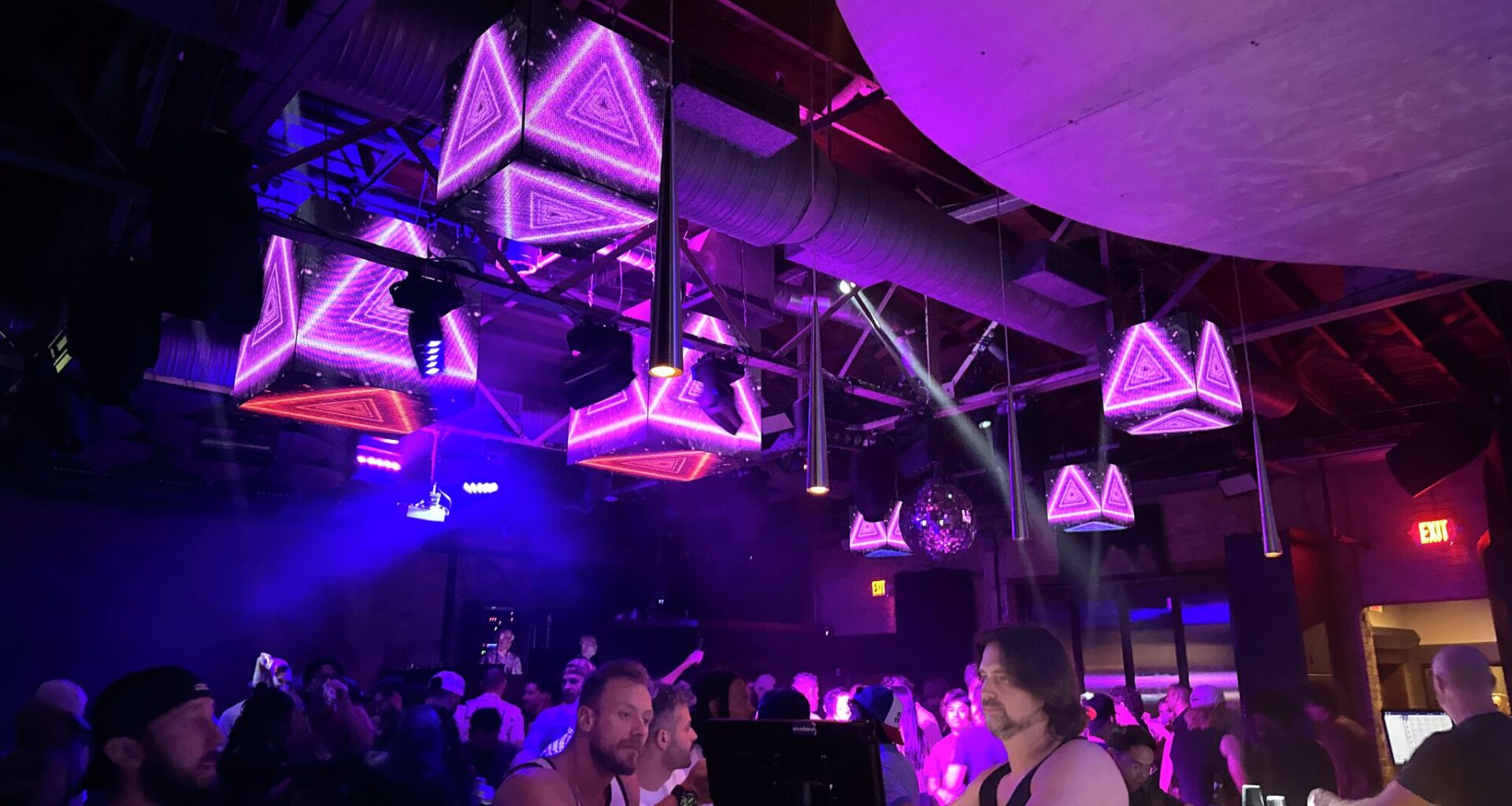
Last week, Texas’ LGBTQ+ community got more bad news: Robert’s Lafitte in Galveston, one of the state’s oldest continuously operating gay bars and a lifeline for the island’s queer community, was teetering on disaster. A “laundry list” of costly issues, such as plumbing problems and city code violations, threatened to sink the bar.

“It’s home for us. We don’t have a lot of options here unless we go to Houston, so to have that type of place we can go and be ourselves is something that’s super important,” Terry Michael Fuller, a bartender and events coordinator at Robert’s Lafitte, told Chron.
The threat of closure hanging over Robert’s Lafitte underscored the already precarious position that queer haunts around the nation find themselves in. Amid political attacks on LGBTQ+ people, economic troubles pinching business owners and patrons alike, and shifting social habits, gay bars from coast to coast have closed their doors. A March survey by The Barbed Wire found that since 2020, at least 15 LGBTQ+ bars, clubs and businesses have closed in Texas alone. Lesbian-focused bars in particular have been nearly decimated. And the challenges facing the ones that are still open—both economic and social—are mounting, community members say.
Article continues below this ad
A weakening foundation
As far back as the 17th century, gay-focused bars have served as safe spaces for queer people to gather. In 2003, Houston bar and club owner Jeff Hoffman opened Halo, a gay bar in Bryan-College Station that was the only space of its kind in the small town. Hoffman, who has since turned Halo over to new owners, has seen nightlife change as more avenues to meet hookups and build community have opened.
“There was no other gay bar there. For over 20 years, Halo was your only choice,” Hoffman told Chron. “Before, you would have to go out to meet other people like you. [Dating apps] definitely changed the bar scene.”
Somewhat paradoxically, the rapid acceptance of LGBTQ+ people in America has caused struggles for some LGBTQ+ bars as nightlife in general has become more inclusive. For Scott Neal, the president of Austin gay bar Rain on 4th and a managing member of Oilcan Harry’s, the relative friendliness of Austin nightlife to queer people means gay bars no longer have the meaning they once did.
Article continues below this ad
“That’s a good thing for society, of course, but unfortunately, what ends up happening is that you slowly start weakening the foundation out from these cultural institutions and these community centers,” Neal told Chron. “All of a sudden, we’re back at a time where these community centers should be much more important for providing a meeting ground for our community that’s under threat.”
Spaces that are more important than ever
Drag queen Dani Knighten, from Austin, Texas performs during the Vanguard drag show at the Swan Dive nightclub on April 19, 2023 in Austin, Texas.
Brandon Bell/Getty Images
While public support for rights such as gay marriage remains high, LGBTQ+ Americans, particularly transgender people, have faced an onslaught of attacks. Few states have led that charge like Texas, which has passed laws criminalizing gender-affirming care for minors, restricted how trans Texans can use public bathrooms, and banned Gay-Straight Alliances in public schools as part of a broader crackdown on LGBTQ+ discussions in schools. Queer and trans Texans have been assaulted and supportive businesses, bars and churches have been vandalised and protested.
Article continues below this ad
A Texas law restricting drag performances that was recently unfrozen has had cascading effects on LGBTQ+ nightlife, too. Suddenly, because of what Neal called an “overreaction” to the law, fewer venues feel willing to book drag queens and performers, meaning less money for those whose livelihood depends on consistent shows. Neal and other LGBTQ+ bar owners now say they tread very carefully.
“It does make me think twice about doing any drag events that could include minors. It makes me think twice about being too vocal politically,” Neal said. “I worry about how we might inflame the Texas legislature and have them come after [our] liquor license. It’s a chilling impact on everyone in general.”
Different clientele, same problems
Despite their differences in patronage, straight and gay bars alike are still bars, after all. Bars and restaurants are famously thin-margin businesses. Changes in consumer sentiment and a younger generation that doesn’t drink or go out longer drinking or going out as much as they used to mean even the most successful ventures can be a few bad weeks away from disaster.
Article continues below this ad
That’s something that Hoffman knows well. Hoffman, 50, has worked in nightlife since he was bartending at 18. Now, he owns three LGBTQ+ bars and clubs in Houston: Montrose Country Club, Rich’s, and the newly opened Varsity Bar. Hoffman said that last fall and this spring were “very tough” for his businesses.
“Just because I have multiple bars, the only thing that means is that I have multiple bills,” Hoffman said. “That doesn’t mean I have a big bank account.”
Construction equipment on the patio of Varsity Bar at 611 Hyde Park Blvd. in Houston, Texas on Sept. 23.
Gwen Howerton/Chron.com
To get people in the doors and to stay afloat, queer bars are trying everything they can. Hoffman’s three clubs all cater to different clientele. Neal, who said his liquor sales are down 30 percent from last year, began offering THC beverages and other non-alcoholic options and even began instituting cover charges, something he was resistant to. Rising rents in places such as Austin have only put the squeeze on gay bars and clubs on the city’s historic Fourth Street.
Article continues below this ad
“In the next five years, I think there is a big question mark as to how many will still be open,” Neal said.
“A responsibility to keep these spaces open”
Opening in 1970 and within sight of Galveston’s Historic Pleasure Pier, Robert’s Lafitte is reportedly the oldest continually operating LGBTQ+ bar in Texas.
Chris Gray/Chron
When all else fails, some businesses like Cheer Up Charlie’s in Austin and Robert’s Lafitte have turned to the public. Fuller at Robert’s Lafitte said some on staff had trouble coming forward with the bar’s struggles.
Article continues below this ad
“It’s hard to say I can’t do it on my own. You feel like a failure, and you feel like you’re not doing your part, especially when it’s something you’re so passionate about,” Fuller said.
But for Robert’s Lafitte, the plea for help worked. Galvestonians and out-of-towners packed Robert’s for a benefit drag show this past weekend. Fuller told Chron that the bar raised $20,000 on Saturday.
“You could not walk through that bar. It was so packed,” Fuller said. “That’s the way it used to be when people used to come see the drag shows or come to benefits.”
Article continues below this ad
Both Fuller and Neal said that just as the LGBTQ+ community in Texas needs its bars in times of trouble, queer bars and venues need the community to come out and show support for bars and their employees in any way they can.
“We provide places for you to get a reasonable drink, have a relaxing time, disconnect from the outside world, and really boost your self-esteem and your sense of well-being,” Neal said. “And I think that’s getting harder and harder to find.”