
Texas Tech’s first game of the 2026 NCAA Softball Tournament is on pause after lightning and heavy rain hit Lubbock, Texas on Friday evening.
The first round of the regional between the host Red Raiders and Marist went into a delay in the top of the fourth inning, with Texas Tech leading 9-1.
Advertisement
REQUIRED READING: NCAA Softball Tournament schedule, bracket, score updates
For NCAA Softball Tournament games, a 30-minute delay goes into effect anytime there is lightning in the area. That clock restarts each time there is a lightning strike within a six-mile radius following the initial spotting of lightning. The game between Texas Tech and Marist first went into a delay at 6:43 p.m. ET.
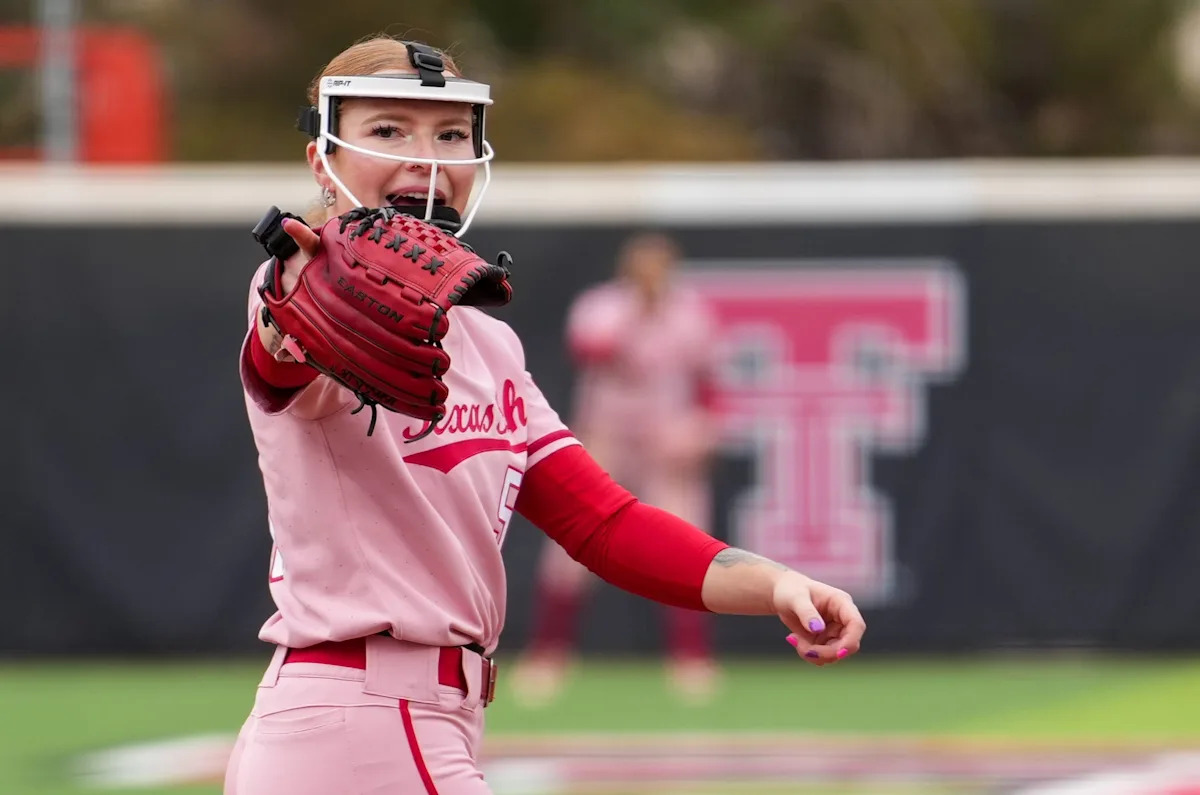
Texas Tech’s offense was cooking before the game was paused. Taylor Pannell connected on an 0-1 pitch that was low in the strike zone and sent it over the left field wall for a two-run homer in the bottom of the third inning. In addition to striking out four batters in 3 2/3 innings from the circle, pitcher Kaitlyn Terry has scored two runs for the Red Raiders as well.
Advertisement
Texas vs Marist weather updatesLubbock, Texas weather forecast
Here’s an hour-by-hour weather forecast for Lubbock, Texas, courtesy of AccuWeather:
All times Eastern
7 p.m.: Thunderstorms (47% chance of rain)
8 p.m.: Cloudy (4% chance of rain)
9 p.m.: Mostly clear (1% chance of rain)
NCAA lightning delay rules
NCAA rules state that once lightning is detected in the area and the game goes into a lightning delay, it is either delayed or suspended for 30 minutes. The 30-minute clock resets for every lightning strike within a six-mile radius following the initial strike, meaning delays can extend for several hours.
Advertisement
The NCAA uses the “flash-to-bang” method, meaning that if lightning is observed, officials must count the seconds until thunder is heard and divide the number of seconds by five to obtain the approximate distance in miles.
“To resume athletics activities, lightning safety experts recommend waiting 30 minutes after both the last sound of thunder and after the last flash of lightning is at least six miles away, and moving away from the venue,” the NCAA states. “If lightning is seen without hearing thunder, lightning may be out of range and therefore less likely to be a significant threat.
Click here to read more on the NCAA’s lightning and weather delay protocols.
Advertisement
This article originally appeared on USA TODAY: NCAA Softball Tournament weather updates: Texas Tech vs Marist resumes