
Adapted from Boomtown: The True Story of the Wickedest Town in Texas by Joe Pappalardo, by permission of St. Martin’s Publishing Group.
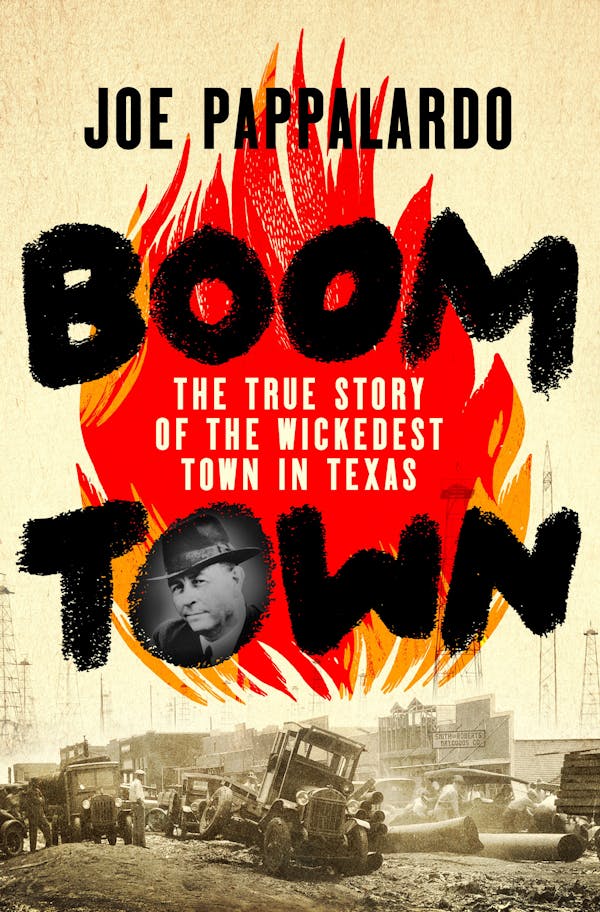
Frequent Texas Monthly contributor Joe Pappalardo’s rollicking new book, Boomtown: The True Story of the Wickedest Town in Texas (St. Martin’s Press), uncovers the story of Borger, a small settlement in the northern stretches of the Panhandle that was renowned during the 1920s as a den of gambling, bootlegging, prostitution, and random violence. In this exclusive excerpt, the legendary Texas Ranger Frank Hamer—best known as the man who later headed up the successful manhunt for Bonnie and Clyde—arrives in town with a remit to set things right in the wake of the murder of a local law enforcement officer. It won’t go as he plans.
April 3, 1927 (Night)Borger, Texas
Frank Hamer puts the Borger Daily Herald down, lips pursed. The veteran Texas Ranger despises the press generally, having been burned by reporters, and sometimes lies to their faces. A front-page editorial denouncing the threat of martial law only heralds future trouble during the Rangers’ coming intervention.
His men are ostensibly here to hunt down Matt Kimes and Ray Terrill, who reportedly killed Borger policeman Coke Buchanan two weeks earlier. But Hutchinson County Sheriff Joe Ownbey already has his men searching along the banks of the Canadian River, thinking the outlaws are sleeping in the open. It’s the kind of all-night operation that means they have no good intelligence and are literally stumbling around in the dark. Hamer and the Rangers didn’t join, and instead checked into the Hotel Marland, one of the only places in town that isn’t filthy and staffed with hookers. All the Rangers stay on the second floor.
Adjutant General R. L. Robertson is coming to Hutchinson County to receive Hamer’s initial report. Hamer and his fellow Ranger Captain Thomas Hickman have not been in touch with him—that’s not really their style—and now their boss is arriving in person. This visit will be more awkward because Robertson is traveling with W. B. Gatewood, Governor Dan Moody’s private secretary.
Borger clearly is now an unwelcome, top-tier political problem. These men will expect Hamer to have a solution.
He’ll advocate an aggressive but incremental response. First, use the local law to close the sin shops. That part will be underway the night before Robertson and Gatewood get here. Then, clear the town of anyone who doesn’t have a legitimate reason for being there. Only then can he fire Fred Williams, Borger’s corrupt police chief, and as many cops and deputies as have proven themselves complicit or incompetent.
Gatewood’s appearance can help the Rangers force Mayor John Miller to fire his staff, using the threat of martial law as leverage. Hamer has sized up Miller, from his genial personality to his oversized ears, and figures the man will bend over backward to appear cooperative.
The political class here seems rotten—there are plenty of murky municipal contracts and many signs of liquor-related graft—but it’ll take the governor’s direct request to make elected public officials resign. Hamer will recommend that, too, if Moody is willing to go that far.
Tomorrow promises to be the first tough day of many in Hutchinson County. What Hamer needs is to feed his sense of purpose for the fight ahead. So, he leaves his hat in room 216 of the Hotel Marland and sets out to take in Borger at night.
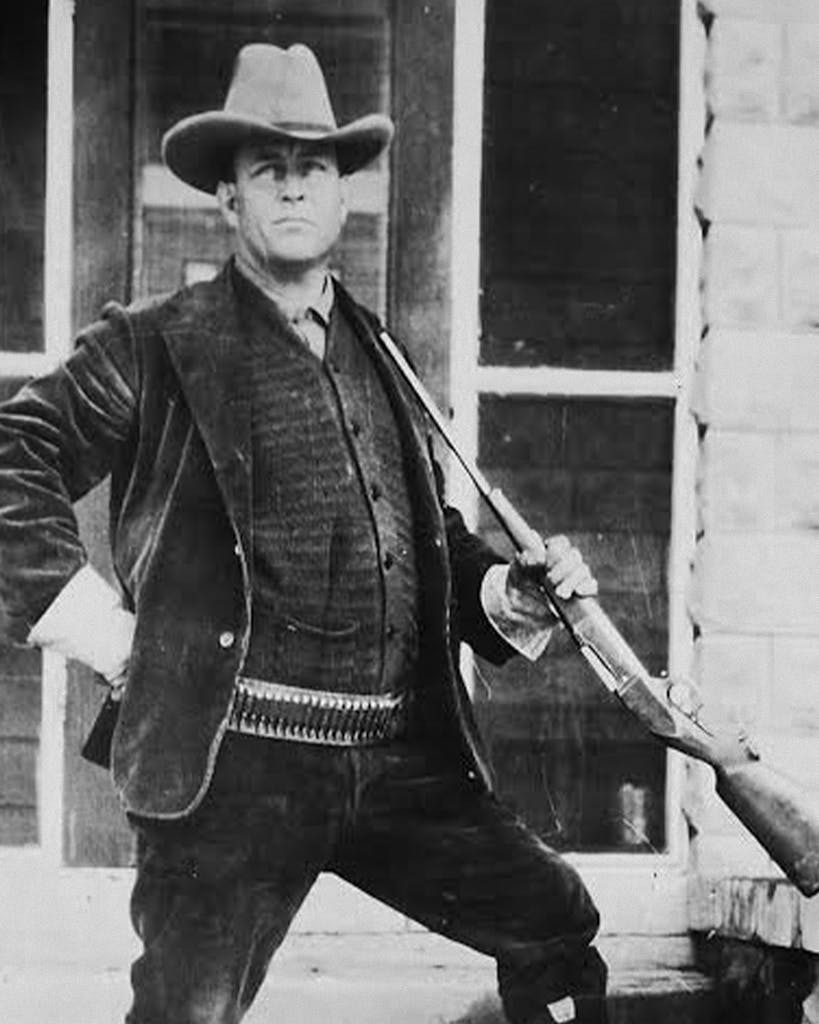 Frank Hamer.Courtesy of the Ken Sharpe Collection
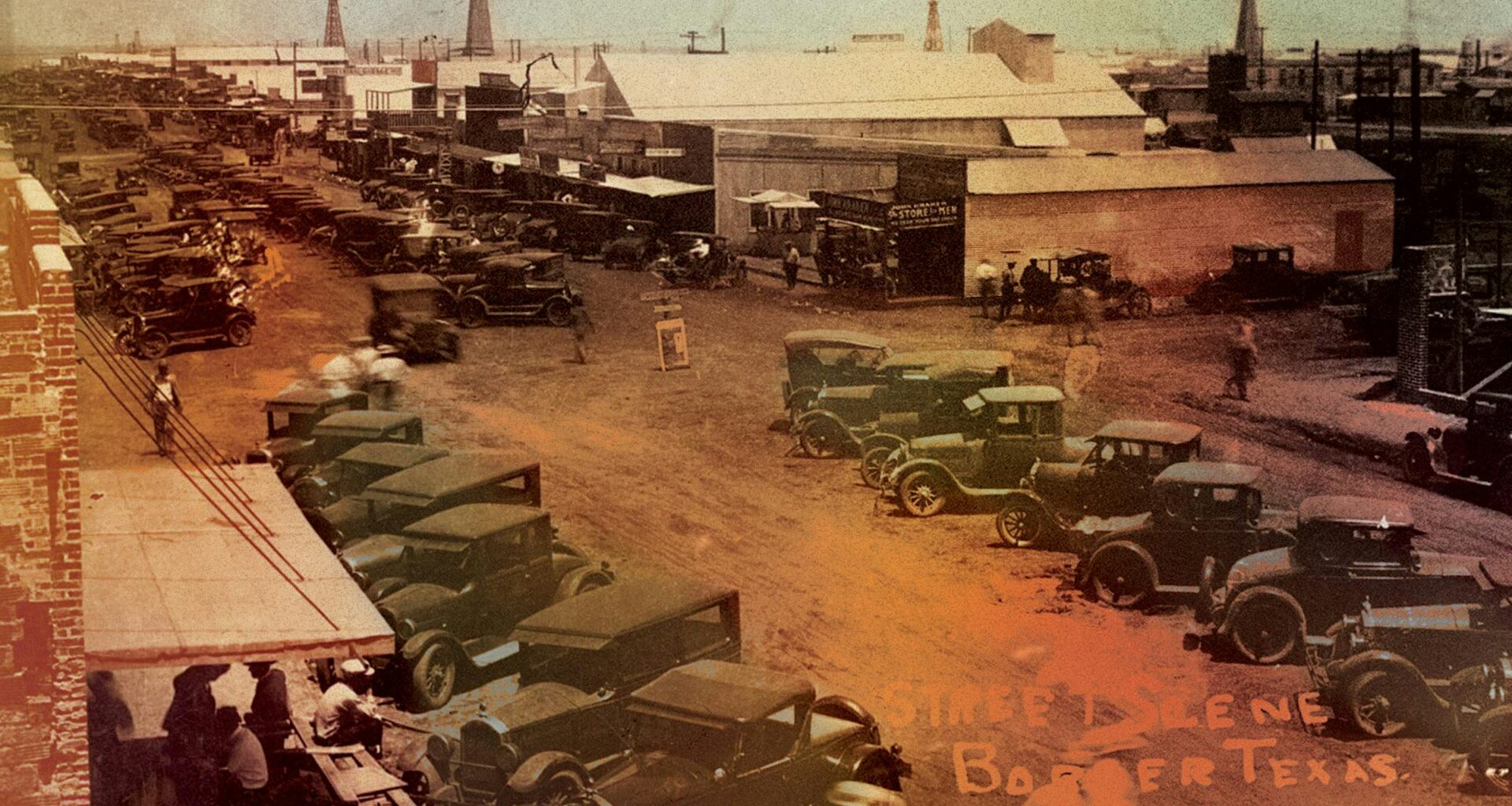
The hotel is on the corner of Fifth and Harvey, two short blocks from Main Street. He walks to the wide thoroughfare and heads north. The connected walkways of buildings form a near-continuous sidewalk, but it’s home to a parade of drunks, dolled-up women, oil workers, and men who’d be confused with dandies if not for the pistols on their belts. The bulk of the crowd seems to have no identifiable purpose except to drink, gamble, and prowl for sex. Others exist to supply those vices. Taken as a group, Hamer puts them under the legal label of “vagrants,” each of them subject to arrest. His Rangers can’t detain thousands of people, so he’ll have to inspire them to leave on their own.
Main Street is clogged with cars and trucks. It’s hard to tell which ones are parked and which are stuck in traffic. Very few have tags, and Hamer idly wonders how many are stolen. He remembers when horse thieves operated rings across the state and beyond. Now cars are stolen, stripped, and shipped from here with regularity. He suspects that the cops’ and deputies’ supercharged Fords and Buicks are stolen cars that never made it out of the county for resale.
Images flicker past him as he walks through the crowd, like a motion picture except in color. Leering women posing on balconies and in windows. A truckload of idiots waving bottles. A glimpse of slot machines in the back of a drugstore. Two drunks holding each other up while vomiting in the street. Preteen kids on a mission too urgent to be wholesome. The scarecrow figure of an old doper, holding up a pole outside a ramshackle pharmacy. A couple, screaming at each other in a sewage alley as amused gawkers cheer them on. Some guy in a suit bringing a crate, sized perfectly for conveying bottles, into the back door of the Betty Jane Hotel.
And this is only Main Street; the infamous Dixon Street is still another half mile away. When he reaches that intersection, he looks down the length of Borger’s nightlife nerve center. On display is every human disaster he’s already witnessed tonight, but magnified. It’s an endless stretch of foot traffic and cars, revelry boiling over from every door and balcony.
There’s a concept big in Texas that separates “natural law” from “artificial law.” The former covers thievery, assault, and most murders. The latter are laws that are imposed by governments and social movements that are considered, well, optional. Drinking, gambling, and most prostitution bans definitely qualify as artificial laws in a place like Borger. The town is hardly alone—Galveston has ignored Prohibition since it started, with city and county leadership riding a crest of popularity for the stance.
Hamer is a paragon of both natural and artificial law, but he’s also a realist. Men will drink and whore as much as they’re given the opportunity, and others will naturally be keen to earn money from this fact. But there’s too much opportunity here to be considered rational. When sin gets out of balance like this, the innocent always suffer.
That’s what happened to his family, led by a loving and strong father who fell prey to hard drinking. That memory has steered Hamer from booze his whole life. He served as a Prohibition officer in 1920, before rejoining the Rangers and transferring to Austin in 1921.
Hamer has seen too much to be shocked by revelry, having worked frontier border towns as a youth and wide-open oil towns as an adult. As a lifelong Texan, he recognizes stubborn individualism as a virtue and subscribes to it as an ethos. As a Ranger, he’s worked with functional alcoholics and holds deep respect for some of them.
But his job is to be a bullet, aimed by the governor. If Moody wants to shut down a circus on Sunday—as he did two months earlier—the Rangers will shut down a circus.
This army of drunks, whoremongers, and their enablers are now in the governor’s crosshairs because of a trio of murders they have nothing to do with. Hamer will drain this swamp of its vagrants to rob the underworld of its customers and to give the legitimate forces in Borger a moment to breathe and organize.
The scale of Borger’s sin industry is so blatantly pervasive that it offends that part of Hamer that once wanted to be a priest. His immunity to bribery and killer instincts are well suited to twentieth-century police work, but he also has a twelfth-century knight’s sense of morality. He doesn’t hesitate to use force to defend the weak, defy corruption, and protect the honor of himself and his Rangers. This certainty is also his weakness, since Hamer has been known to overreact to obstacles in his way—including newspaper reporters, local police, and Ranger-reforming politicians like J. T. Canales—while convinced that he’s in the right.
The indignation he feels is aimed at the founders of Borger, who created this monster. The vagrants swarming here are symptoms of irresponsibly greedy governance. But this week there will be elections, bringing hope for a change in leadership. It would be one way to avoid martial law and bring a satisfying end to the Ranger mission.
With the stakes so high for Miller and his cadre, the temptation to tamper with the results is obvious. So on top of a fugitive hunt and a wholesale cleanup of Borger, Hamer’s Rangers will have to protect against election fraud. After the election, hopefully backed by the promise of new local partners, the real cleanup will begin.
It’s a daunting workload, and all Hamer can do about it tonight is take the opportunity to rest. He turns his back on Dixon Street to begin the walk back to the Hotel Marland. Let them have their fun. The time will soon come when he’ll bring it all to a screeching halt.
When you buy a book using a link on this page, a portion of your purchase goes to independent bookstores and Texas Monthly receives a commission. Thank you for supporting our journalism.
Read Next