
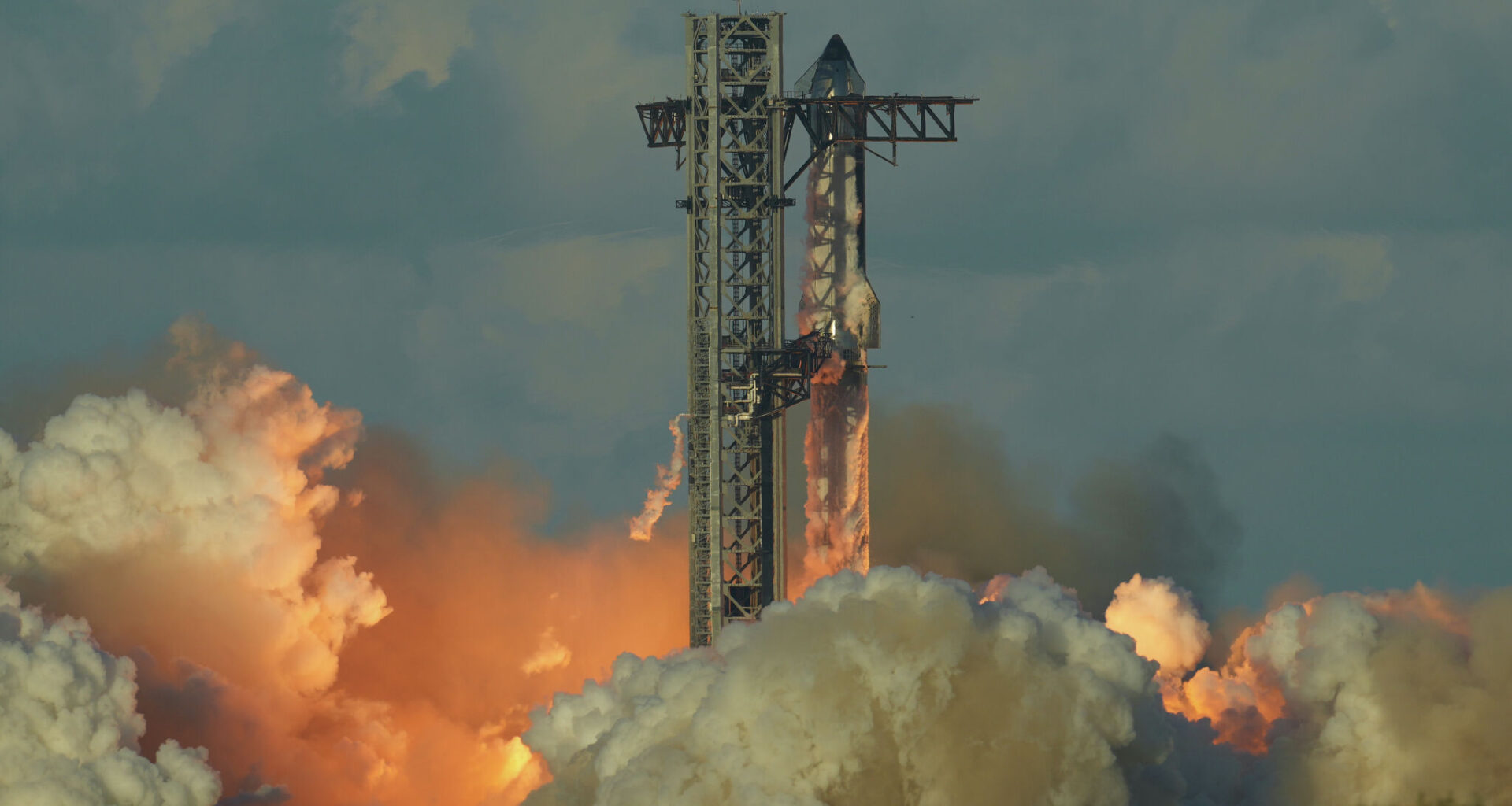
It will be the first test flight of the third generation of Starships and the project’s first flight since October, when a second-generation Starship released a batch of dummy Starlink satellites and returned for a controlled splashdown in the Indian Ocean.
SpaceX has been upgrading the spacecraft and its two Starbase launch towers as it prepares for as many as 25 flights a year from its border complex near Boca Chica Beach.
The launch comes less than a month before the company is expected to go public with a $2 trillion valuation in what’s predicted to be the largest ever initial public offering. Shares are set to trade under the ticker “SPCX” on Nasdaq.
According to SpaceX, the flight will resemble past missions, with the goal of operating the redesigned components “in the flight environment for the first time.”
After propelling the upper-stage Starship to space, the rocket’s 20-story-tall booster will return for a splashdown in the Gulf of Mexico. SpaceX won’t try to land the booster back at the launch tower as it has in the past because it “is the first flight test of a significantly redesigned vehicle.”
While in space, Starship will attempt to release 20 dummy Starlink satellites and two “specially modified” Starlinks. SpaceX plans to use Starship to rapidly grow its Starlink satellite internet constellation. The company’s biggest moneymaker for three years running, that service is expected to generate $20 billion in revenue this year.
The two modified satellites “will scan Starship’s heat shield and transmit imagery down to operators to test methods of analyzing Starship’s heat shield readiness for return to launch site on future missions,” SpaceX said.
The company also has removed one of the craft’s heat tiles to see what happens to adjacent tiles when one is missing.
Like past flights, SpaceX will test the craft’s heat shield, engines and flight controls during the mission, including stressing “the structural limits of the vehicle’s rear flaps and a dynamic banking maneuver to mimic the trajectory that future missions returning to Starbase will fly.”
Starship is expected to splash down in the Indian Ocean about an hour and five minutes after liftoff.
SpaceX will provide a live webcast of the test beginning about 45 minutes before liftoff on its website, X and the X TV app.