
Being able to go to a musical performance or enjoy an afternoon in an art museum is something many people take for granted. For people who are incarcerated, that kind of access is rare.
But one Austin choir has made it their practice to take their music to the inmates where they are.
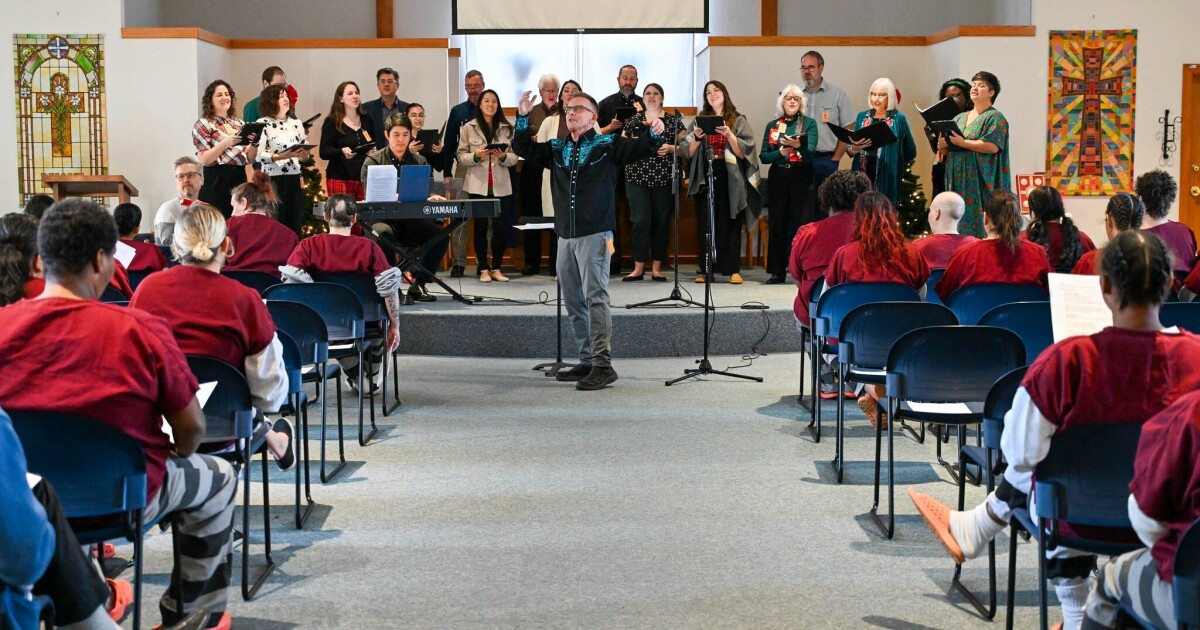
Conspirare has performed annually for female inmates at the Travis County Correctional Complex since 2014.
“We are meant to be a human family,” the group’s founding artistic director Craig Hella Johnson said. “What right would I ever have to say we should deny someone an opportunity to feel hope and feel comforted?”
KUT’s Jennifer Stayton talked with Johnson this spring about Conspirare’s concert for the inmates in December. Read a portion of that interview below.
This transcript has been edited lightly for length and clarity.
Logistics of performing in the Travis County Correctional Complex
All the singers have to do background checks. We have to know that that’s happened, I think, several days before we’re there. And then we get the time, the schedule, [and] we meet there.
We start out and have to go through all of their external security. Our keyboard and a couple of music stands — all the stuff that musicians have to bring — that’s carefully vetted on the way through security. And then we walk through a maze of gates and fenced-in walkways and then get to the chapel where this [concert] takes place. They have a chapel in the center of the complex and that’s where we do our shared time.
Impact on the performers of sharing their art in this setting
Maybe out here in the non-jail world, when people are walking around freely, everything else can take priority and music can be a luxury, a pleasure, an entertainment, while all the things we imagine are so important take top thought real estate. But you get there and everything just stops. You think, wow, this is like food. This is absolute food for someone who’s needing this and nourishment for someone who feels like they’ve lost hope entirely and [for] people who are feeling incredibly down and rejected. To have that meaningful connection, it couldn’t be more nourishing back to us, just to say, wow, this is a place of direct need.
I could speak also about entering the [Travis County] correctional complex and just having that awareness that the people who are there have just utterly lost all freedom of movement.
Everything is dictated to them. We all kind of are aware of it, but then you’re in the middle of their living environment in that sense, and it’s just a jolt to the system.
And then I think you face the whole set of questions around inequity, because I will say that one feels a real sense of the imbalance of the justice system, the courts. It’s a larger population of Black- and brown-skinned people. There’s a weightiness of that. People are certainly there because they committed crimes, but also a whole lot of people aren’t there who committed crimes. And people who have not been seen fairly by the system.
Beyond that, too, just the loneliness in the season when we sing at Christmastime or the holiday time because we’re in the women’s part of the complex, and there’s just a whole lot of mothers there who are away from their children, away from their families.
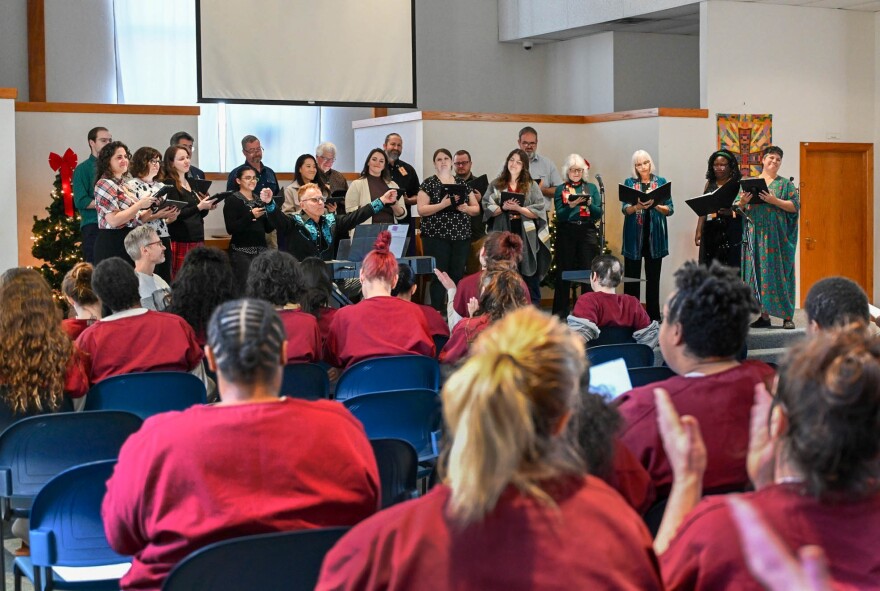
Conspirare has been performing holiday concerts for the female inmates since 2014.
Everyone deserves access to the arts
Every time I’m there, I have a feeling of — there but for the grace of God go I. I just believe, too, that every single being is a reflection of the divine spark. And I see enough to know that everyone there is being forced to be incredibly accountable for whatever they have done. This is no glory existence. This is an hour when they go weeks and months without any cultural enrichment. What right would I ever have to say we should deny someone an opportunity to feel hope and feel comforted?
Impact of the arts on marginalized groups
I know as a man, having grown up gay in small-town northern Minnesota, what it feels like to hear all the homophobic slurs as a kid and just to feel so separated and “otherized” and bearing the shame that comes with that. It means a lot when someone says — I see you, I care about you.
But when you hear that message in music, there’s a familiarity with that language. Music is a language that goes deeper. It can be so universal as a language. And that’s true with dance. I mean theater, it tells these stories. And you see this group of people who are together. They’re coherently, intentionally, holistically together saying, we’re here to share this message with you.
And even if we’re not in a marginalized group or an otherized group, there’s a sense in which so many people live with a basic sense of separation or alienation. I don’t know many people who don’t have that sense at some point in their lives. And things are so extreme right now in terms of divisiveness. The one thing that it does bring up, though, is the need for us to come home to each other, soul to soul. We are meant to be a human family that sees each other, respects [and] cares about each other. I hope that this time can lead us toward that eventually.