
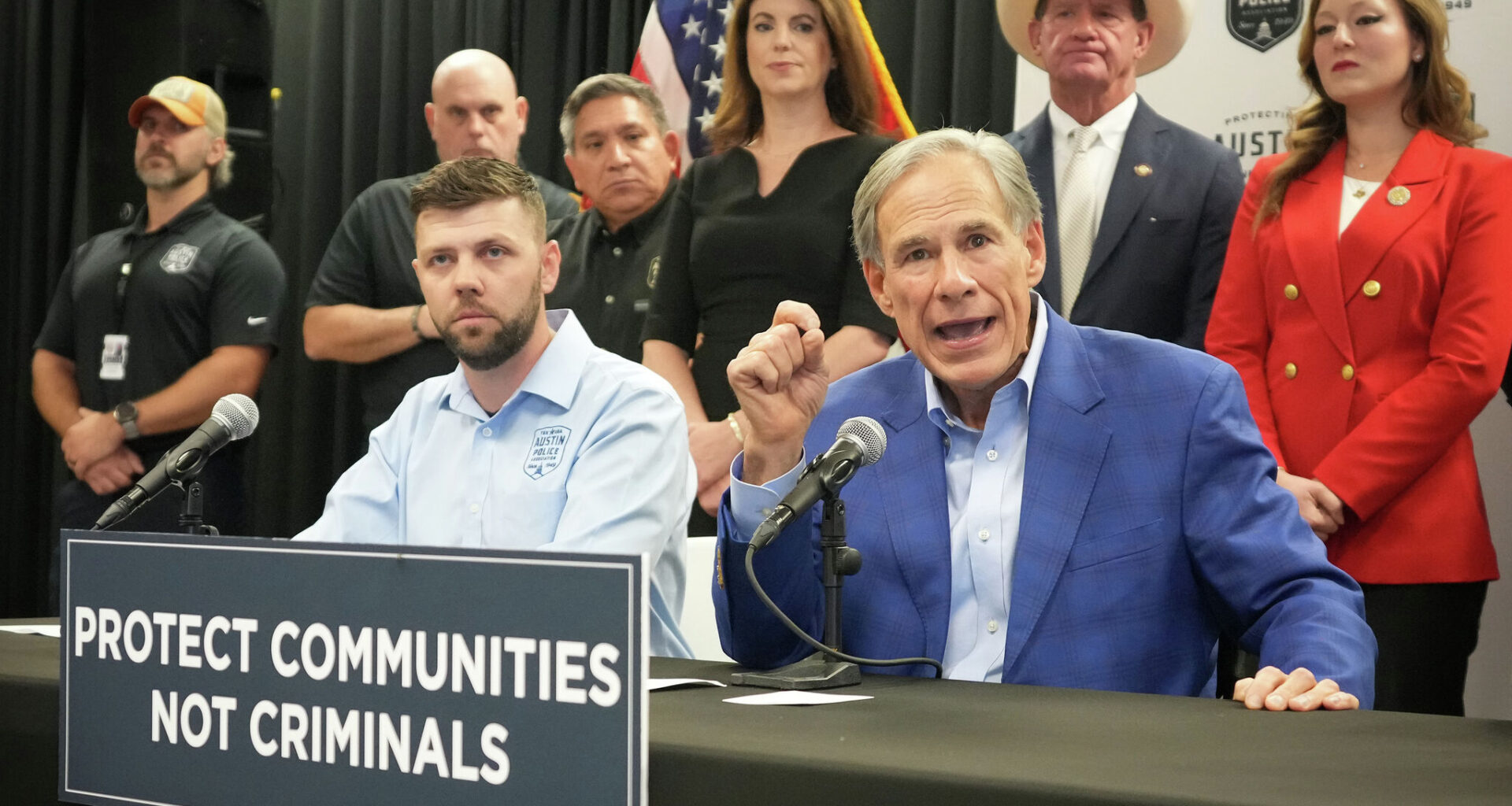
Gov. Greg Abbott last week put Travis County District Attorney José Garza back in his sights, announcing at a campaign event in Austin his desire for the Legislature to create a statewide prosecutor’s office with the authority to intervene “when the local district attorney doesn’t have the resources or doesn’t have the will” to pursue certain cases.
The announcement may have been campaign posturing, but Abbott has shown he can turn his legislative priorities into law. The implications of this proposal should be unsettling to all Texans.
District attorneys are locally elected officials for a reason: Voters pick a candidate whose judgment they trust to make the countless discretionary calls about who gets prosecuted, who gets diversionary programs or second chances, and whose charges get dropped. Abbott’s proposal — which includes giving him the authority to appoint the statewide prosecutor, with Senate confirmation — would allow his designee to meddle in some of those cases.
We recognize that serious concerns have plagued Garza’s tenure. His office failed to meet the 90-day indictment deadline more than 260 times in 2024. Some of those instances involved defendants who remained jailed while facing more serious charges. In others, missing the state deadline for securing an indictment allowed for the release of potentially dangerous defendants or needlessly prolonged the detentions of people facing charges that should have been dropped.
Still, the remedy for concerns about the district attorney is at the ballot box: Other candidates can run, and voters decide who gets the job. Travis County voters should not have their choice in district attorney undercut by a governor who won only 26% of the county’s vote in 2022.
And for district attorneys who want state assistance to prosecute certain cases, that resource already exists: The Texas Attorney General’s Office.
Abbott’s campaign told us the proposed statewide prosecutor won’t replace locally elected district attorneys or override their authority. Under the proposal, if a defendant hasn’t been indicted by the 90-day deadline, the state prosecutor would have an additional 30 days to bring charges before that person must be released.
This is about keeping Texans safe from “rare cases where public safety and justice are not being served,” campaign press secretary Eduardo Leal said. “Texans deserve a statewide justice system that protects communities, not criminals.”
But Abbott has already shown a willingness to undercut local criminal justice decisions in Travis County. Less than a day after a jury in April 2023 found Daniel Perry guilty of the shooting death of Black Lives Matter protester Garrett Foster, Abbott requested the Texas Board of Pardons and Paroles recommend Perry for a pardon.
The board gave Abbott what he wanted, and in May 2024, he granted that pardon, substituting his judgment for that of the jurors who heard eight days of testimony before reaching their verdict.
Governors have the power to pardon, but Abbott’s intervention in that instance smacked of politics, not a serious review of a complicated case. Texans should be just as concerned a statewide prosecutor would be used to advance the governor’s political agenda.
Justice cannot be served without fairness. Abbott’s proposal undercuts the independence of both our judicial and electoral systems. Prosecutorial decisions should remain with district attorneys, and their fate should remain with voters.