
We agreed that Highland Park was right to leave Dallas Area Rapid Transit in the withdrawal election earlier this month. The cost didn’t make sense given its low ridership and lack of rail stations within the town’s boundaries. But the way Highland Park has handled communicating the changes to those who used the service has been disappointing.
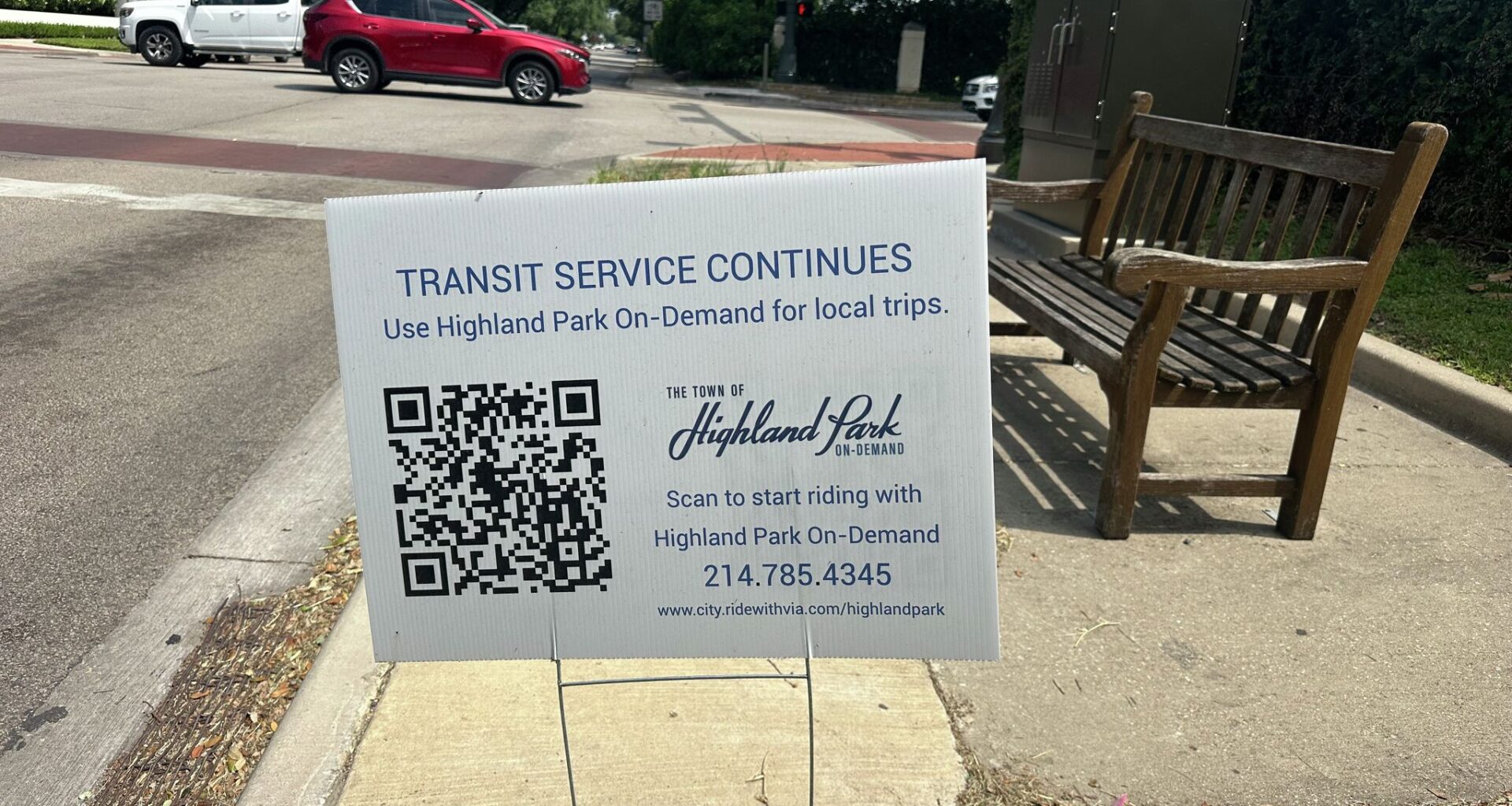
In place of DART, Highland Park has launched its own on-demand rideshare where riders can schedule rides through an app or over the phone, but signs advertising the program are only in English so far and not Spanish.
Our newsroom colleagues Lilly Kersh and Imelda García recently reported that commuters they talked to, many of them women who work as housekeepers and nannies for Highland Park families and at restaurants in the community, didn’t know about the service or didn’t know how to access it. They pointed out that signs advertising the program were in English, and many of the women speak and read Spanish.
It’s disappointing that Highland Park did not better consider the needs of the riders most affected by this change and that the town has not moved with more urgency to post signs advertising the program in both languages.
Yesterday morning, at one of the now-closed bus stops along Route 237, just down the street from the well-manicured lawns of Dallas Country Club and the luxury storefronts at Highland Park Village, a sign in English advertised that transit service would continue with Highland Park On-Demand.
It’s worth noting that a DART announcement also posted at the bus stop alerted passengers in both English and Spanish and bright red letters that the stop had permanently closed. Only the sign advertising new transportation options was in English alone.
If riders needed to know in Spanish and English that the bus wouldn’t be stopping at any stops in Highland Park anymore, wouldn’t they also need to know about other transit options in Spanish and English?
Route 237, the only bus line serving Highland Park, averaged about 35 boardings per weekday, according to DART.
Given those numbers, it should have been relatively easy to identify regular riders and anticipate how service changes would affect them. Any good marketing program considers its audience and the best way to reach them. In this case, that would have included signs in English and Spanish.
Kersh and García’s reporting highlighted that the commuters they interviewed were worried about whether the on-demand service would get them to work on time. Could the program allow riders to coordinate ride times and destinations with other commuters? A lot of unanswered questions remain about how this service could best serve those who need it most.
But the biggest question mark is the choice to not provide information about the new service in both English and Spanish. It sends the message that the people impacted most by the change were never truly considered in the first place.
Have thoughts about this? Send a letter to the editor using our letters form or email letters@dallasnews.com. Letters should be no more than 200 words and include the first and last name of the writer and city of residence.