
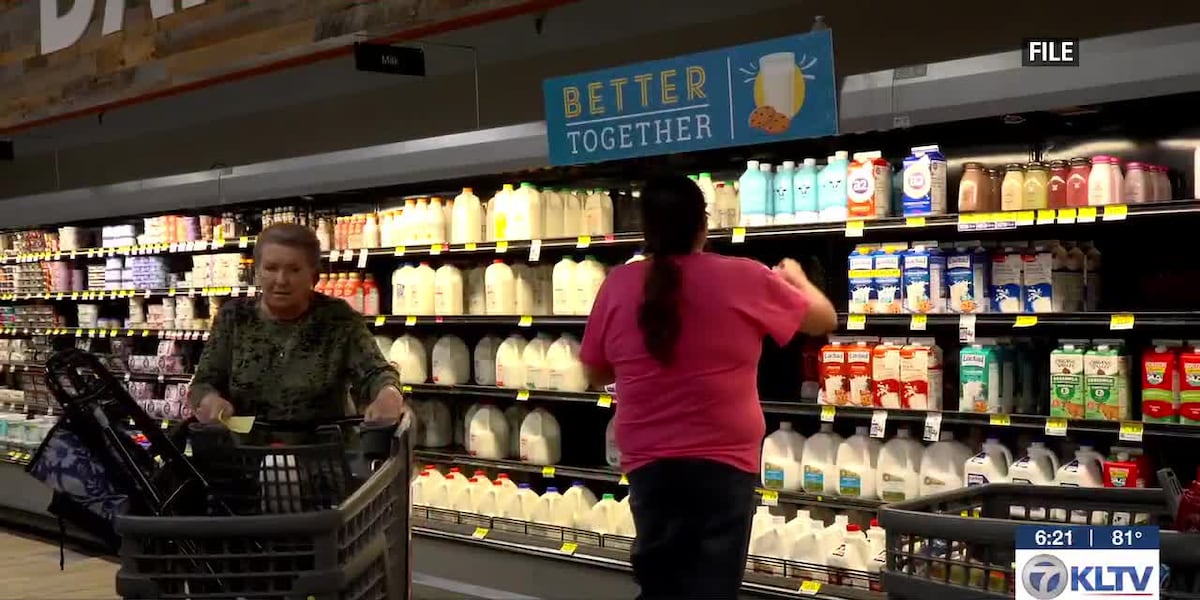
TYLER, Texas (KLTV) – For the first time in history, states could be forced to pay part of federal SNAP benefit costs.
The “Big Beautiful Bill” could soon have Texas paying hundreds of millions of dollars for SNAP benefit penalties.
Food assistance groups like Feeding Texas are hoping for a delay in the bill’s timeline to continue serving more than three million Texans.
“In the event that there is no delay and January 2027 rolls around then we will be pushing for the legislature to fully fund SNAP and not make any policy changes that take food away from vulnerable Texans,” Feeding Texas CEO Celia Cole said.
There are two sides to SNAP funding: administrative costs and benefit costs.
Administrative costs cover things like staff, technology and applications.
Benefit costs are the actual grocery assistance.
The Big Beautiful Bill reshapes SNAP financing by shifting more administrative and food benefit costs to the states.
In less than five months, states will cover 75 percent of SNAP administrative costs, a 25% increase from what they are currently responsible for.
On October 1 of 2027, states with payment error rates higher than six percent will share between five to fifteen percent of SNAP benefit costs.
“Payment errors are not intentional or fraud,” Cole said. “They are honest mistakes made by the state or participants.”
A state’s payment error rates will determine the amount of SNAP benefit costs.
“So if states have an error rate of below six percent there is no cost share. The cost share is zero,” Jamie Olson, Feeding Texas Vice President of Advocacy and Policy said.
Right now, Texas’ payment error rate is 8.32 percent.
“We’re looking at a 709 million dollar cost share based on the current data that we have,” Olson said.
The cost burden for 2028–29 will be determined by the payment error rate after 2026.
Cole said several states are pushing for Congress to delay the cost implementation by two years to allow states enough time to lower their error rates.
“We are behind this delay because we feel like it will balance the commitment to payment accuracy with reasonable expectations for states,” Cole said.
Organizations worry the change will ultimately entice states to remove or discourage more people from receiving food assistance.
Copyright 2026 KLTV. All rights reserved.