
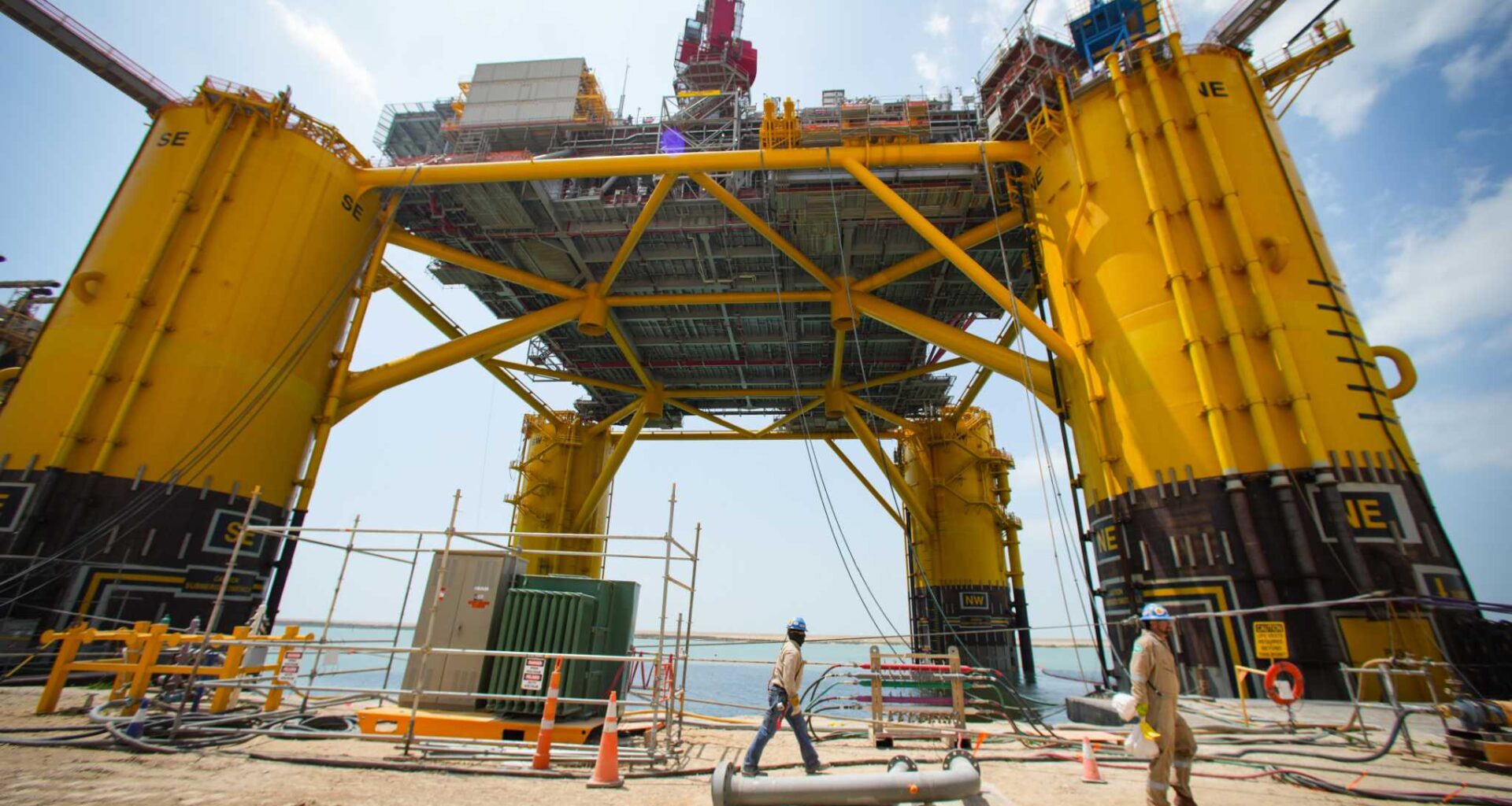
Workers construct Shell’s Vito platform at the Kiewit Offshore Services complex in Ingleside in 2022.
Brett Coomer, Houston Chronicle / Staff photographer
Crabs, tube worms and darkness greeted Dan McConnell, a marine geophysicist, when he rode a submersible deep into the Gulf of Mexico more than two decades ago.
The trip marked the beginning of the deepwater renaissance for the industry operating offshore Houston, and its first shift away from crowded shallow waters. Now, it is seeing a new resurgence after years of taking a back seat to the onshore fracking boom as technology, artificial intelligence, and policy shifts have boosted an offshore industry some said was fizzling out.
“Offshore still has a lot of promise,” McConnell said earlier this month at the Offshore Technology Conference, which he chaired this year. “The promise comes through better imaging and better drilling technology.”
Article continues below this ad
Production in the Gulf of Mexico is reaching record highs, according to the Energy Information Agency. Production in the area topped 2 million barrels per day at the end of 2025 for the first time in six years. U.S. offshore oil production, a majority of which comes from the Gulf Coast, hit over 714 million barrels last year. It marked the highest annual output on record for the industry, according to the Interior Department.
NEW FRONTIERS: The Permian Basin used to be enough for Texas oil companies. Now they’re looking elsewhere.
The resurgence of Gulf Coast drilling comes as onshore operations face the threat of decline in the Permian Basin and increasingly volatile crude markets. Offshore drilling, favored for the longevity of its resources, is better suited to weather low oil prices because its breakeven costs – the price needed per barrel for operations to be profitable – are considered lower and more stable, despite high up-front costs associated with new offshore wells.
Technological advancements are driving the offshore industry’s latest wave. Deepwater areas once off limits can now be drilled thanks to equipment capable of operating under higher pressures and hotter temperatures. The introduction and widespread use of super computers for imaging has also made wildcatting, or crude exploration, more accessible, allowing companies to better estimate the potential of wells in deep, deep water.
Article continues below this ad
“It used to be a human looking at wiggles,” McConnell said. “The AI is helping … the engineering process of, ‘how do I lift my resource up there?’ It can take it from a four month process to a few weeks.”
In March, BP’s deepwater Kaskida project received federal clearance for a deepwater project in the Gulf of Mexico expected to start production in 2029. It follows the Argos project, the London-based oil giant’s first platform launched in the Gulf since the Deepwater Horizon disaster.
Kaskida highlights the high-pressure technology improvements made over the last few years that have opened up new areas to drilling. Located approximately 300 miles south of New Orleans, it will drill under pressures up to 20,000 pounds per square inch in Paleogene sands.
For comparison, industry highs have long been thought to be around 15,000 pounds per square inch, comparatively.
OPINION: Why wind energy is big at Houston’s oil-loving Offshore Technology Conference
Article continues below this ad
BP is the latest to break through the environmental and regulatory red tape after its Kaskida project stalled for years over safety concerns, but others in the Gulf such as Beacon Offshore Energy have already begun producing using these deeper and higher-pressure platforms.
Houston’s hometown oil giant Chevron is the Gulf of Mexico’s largest leaseholder and plans to increase its footprint even more using the high-pressure tech. The company launched its Anchor platform in 2024 and was the first ultra-deepwater platform to use the high pressure technology.
A Shell oil platform in the Gulf of Mexico. The Gulf of Mexico Gulf in symbolizes the changes that both the offshore sector and broader energy industry have gone through
Shell / Shell
Unlocking deeper water and higher-pressure options has helped boost the company’s ability to develop the Gulf, both because it made new drilling possible but also because it helped boost the efficiency of older wells, said Brent Gros, president of offshore for Chevron.
“Before that, we technically could not do it, even though the resource existed,” Gros said of drilling more.
Article continues below this ad
Investments have also become easier to swing now that reaching more of the Gulf’s crude is possible, he said.
According to the company’s most recent earnings statements, it produced up to 328,000 barrels per day in the area. The company was also the high bidder on almost 30 offshore blocks in the last two lease sales, in December and March.
CHRONICLE EXCLUSIVE: Guyana’s president discusses Exxon, Venezuela tensions at Houston energy conference
The Trump administration has opened up swaths of previously restricted areas for drilling, increased the frequency and number of lease sales and eased environmental and procedural hurdles that in the past would have kept some drilling efforts at bay. The policy changes, including lowering the royalty rates companies have to pay for deepwater drilling to 12.5%, have helped boost interest in offshore development alongside the technological advancements.
“Some of the more recent leases had a lower royalty rate that incentivizes, or that makes the Gulf of America competitive,” said Gros. “I think that attracts investment.”
Article continues below this ad
The big question now, said Tom Liles, senior vice president of upstream research for Rystad Energy, is where will the region go next?
The offshore industry will need to leverage its newer technologies to discover and tap new resources, at times in already-discovered oil fields that have been underdeveloped or require better drilling technology.
New discoveries that connect to existing platforms, called tiebacks, have most recently included Houston oil giant Occidental Petroleum’s Bandit discovery. Bandit, announced in April, would be one of the deepest wells ever attempted in the Gulf of Mexico.
“I think the door is still open to new big discoveries,” Liles said, “But … it’ll be different.”