
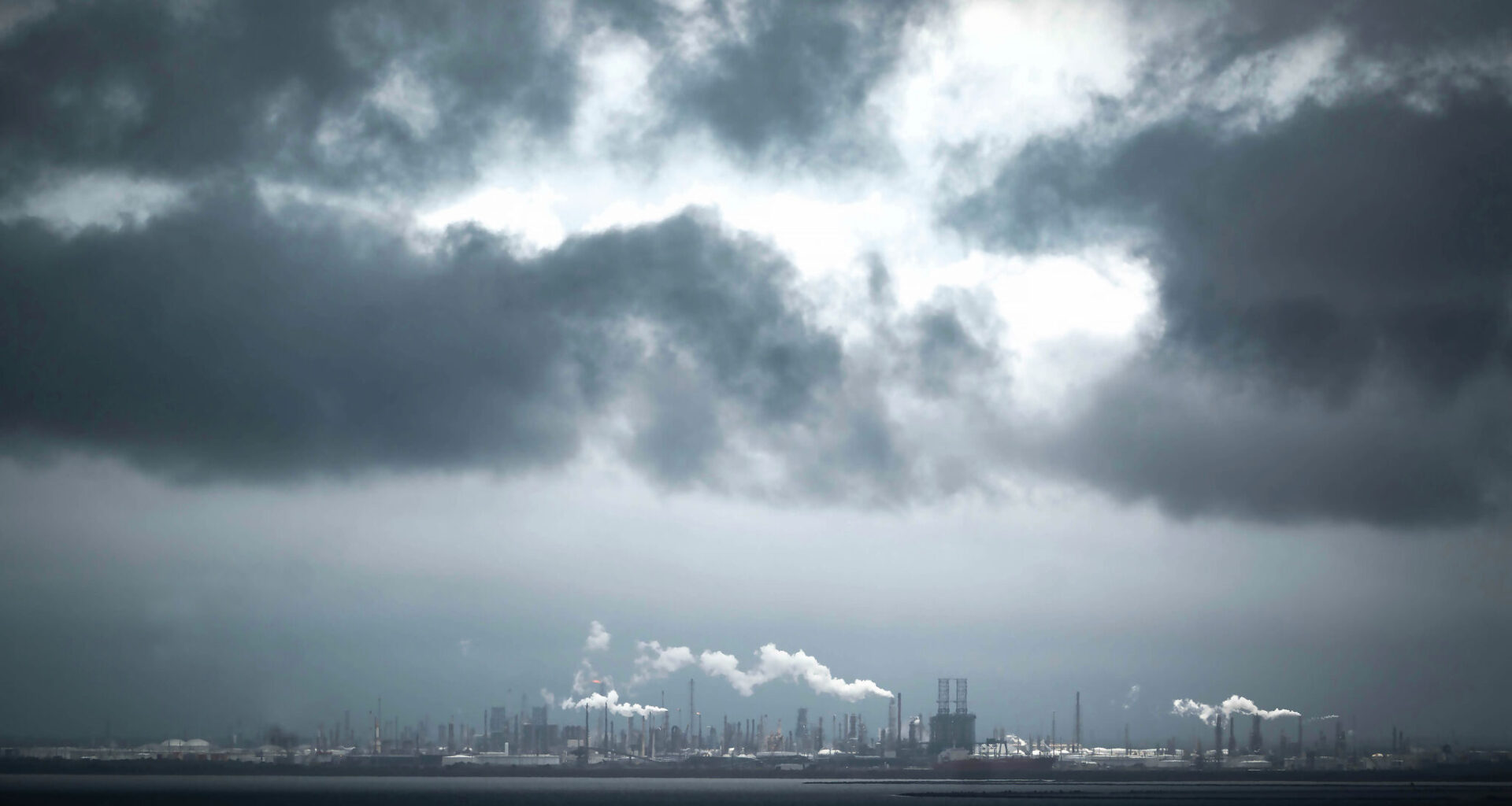
Storm clouds pass over the refineries in Texas City in 2025. With hurricane season set to begin June 1, Houston business leaders emphasize communication, collaboration and realism as key to resilience.
Jill Karnicki/Houston Chronicle
This July will mark two years since Hurricane Beryl made landfall in Texas, resulting in at least 40 deaths and leaving 2.7 million businesses and homes without power.
For Houston’s CenterPoint Energy, these two years have been busy. In the months after the storm, the utility completed more than 40 commitments, from installing new poles to revamping its alert system. Since then, it has continued to invest, CEO Jason Wells said Wednesday, from adding automation devices to adopting a more aggressive tree-trimming schedule.
“It’d be an understatement to say that we had a lot of challenges after Hurricane Beryl,” Wells said, at an event downtown hosted by the Greater Houston Partnership. “We had to take advantage of the big crisis. We made fundamental change across the board to make our system more resilient, to be able to respond to those more quickly.”
Article continues below this ad
Some of those changes, he emphasized, have to do with how CenterPoint will respond in the event of widespread outages, as well as how it will work to prevent them from happening in the first place.
“While we’re making significant investments to harden our system, to reduce the impact of outages, and reduce the length of outages, outages will happen in severe weather events,” Wells said. “I think the understanding that will be the case, planning around it, and working together to bounce back on that severe weather, is probably the most important thing that we can be doing in advance of severe weather impact in our region.”
WEATHER: Texas coastal counties face highest Memorial Day weekend flood threat. Here’s what to know
Executives who spoke at the event emphasized the importance of communication, collaboration and realism in resilience plans. Sean Meredith, vice president for project delivery for Entergy Texas, agreed with Wells that plans should anticipate power outages, despite the investments that utilities have made in hardening their systems.
Article continues below this ad
“The first thing we always try to do is make folks understand that in these major events, the power is going to go out,” Meredith said. “You need to have a plan for the power to go out.”
He gave an example from 2021’s Hurricane Ida, which tore through southern Louisiana with wind speeds of 150 mph and at one point caused the Mississippi River to flow backward.
Entergy had a transmission line go down, Meredith said—even though it successfully withstood the winds, as it was designed to do—after it was hit by an errant barge.
“Those are the types of things that happen in these events,” he said. “So, you gotta plan for that.”
Expect the unexpected, in other words. “In the office, we have a saying: when you have seen one weather event, you’ve seen one weather event,” said Jose Espinel, regional senior vice president for Comcast.
Article continues below this ad
HURRICANE SEASON: NOAA predicts a below-normal hurricane forecast for 2026. Here’s why Texas isn’t in the clear.
The luncheon event, held at the Marriott Marquis downtown, was part of the partnership’s new Resilience Forward initiative, launched last year and taking as a premise that Houston’s resilience will be critical to its future.
“If we’re going to sustain our momentum, we have to be honest about what it takes to keep a region like this strong,” said Steve Kean, GHP president and CEO, at the event. “Our growth depends on confidence — confidence that our critical systems function in times of stress, and if they go down, they come back up quickly.”
Armando Perez, executive vice president of H-E-B Houston and GHP board chair, agreed.
Article continues below this ad
“Resilience is not separate from Houston’s growth story; it is one of the things that allows us to continue to grow,” he said. “People choose Houston because of our people, our industries, our infrastructure, our access to markets and our ability to get things done, but they also need confidence that this region can withstand disruption, recover quickly, and keep operating when conditions are difficult.”