
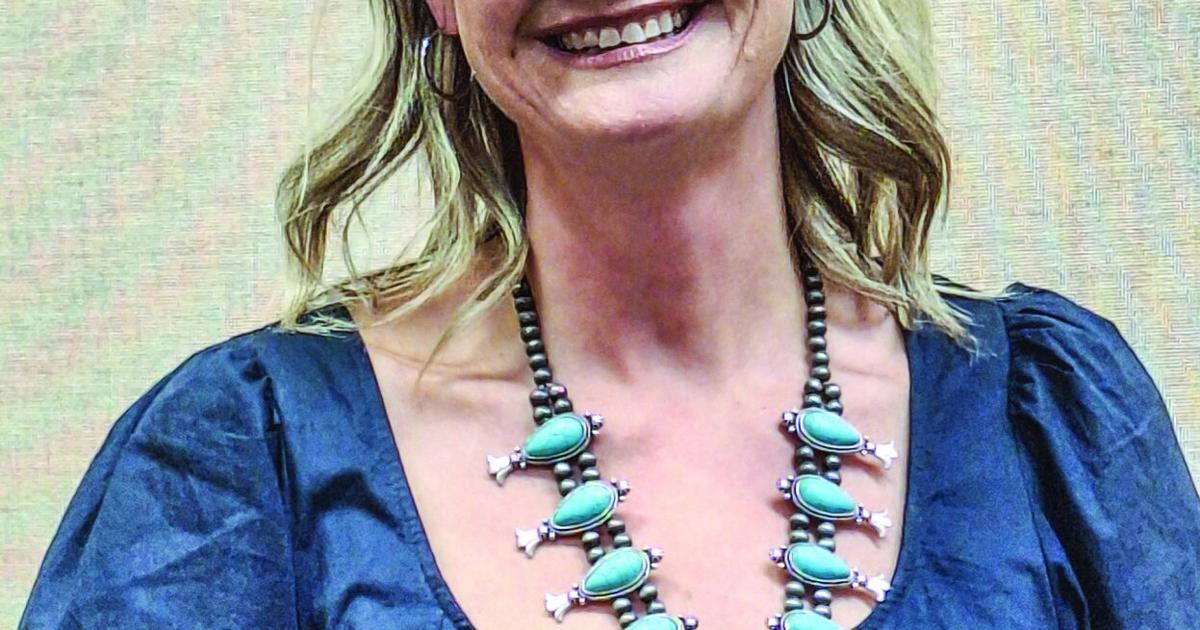
The founder of Texas Rural Reporter, Suzanne Bellsnyder of Spearman in the Texas Panhandle, came to Kerrville last week to speak at the monthly luncheon of the Republican Women of Kerr County.
Her publication and her message to the group focused on issues affecting rural life in Texas, such as public education, water, health care and challenges facing local government entities as a result of actions taken by the Texas Legislature in recent sessions, especially those involving unfunded mandates.
Bellsnyder describes her work as “working at the intersection of rural political media and political strategy, where decisions made in Austin meet the realities of small-town Texas.”
Politics close to the ground in small communities — the dark democracy that exists today in Texas — was the focus of her presentation.
“Our communities were built by people who didn’t sit around and wait for others to fix things. Local government is not someone else’s responsibility. The noise of national politics has become so loud that it drowns out grassroots local politics,” Bellsnyder said.
Bellsnyder stressed that “accountability matters” and added that self-governing conservatives should be the strongest voice for accountability.
“In rural communities we understand stewardship of land and resources. Holding people accountable doesn’t mean to be mean to each other. We have limited resources and limited time,” she said.
She pointed out that people who live in smaller, rural communities are most concerned about “kitchen table issues” like paying bills, stretching budgets, the cost of groceries, insurance, and the cost of living climbing faster than wages.
Other issues that worry people at the local level in Texas are water, rural hospitals and public schools, especially teachers leaving because of low pay, difficult working conditions and classroom management issues.
“Austin keeps adding mandates to schools, and rural school districts have problems with implementation. Today families decide where they want to live based on the quality of school districts,” Bellsnyder said.
She discussed the newly implemented school voucher program and said the issue in rural areas is not so much losing students to private schools, because no private schools exist there, but that Texas cannot fund two different school systems, in her opinion.
“It’s a fight we have to have with Austin. Right now there are 5.6 million children enrolled in public schools in Texas. Only 240,000 of them applied for the voucher program, and 96,000 of them received approval. Of that number, 75,000 of them are already enrolled in private schools or homeschooled,” Bellsnyder said.
“There was not a big demand,” she added.
She pointed out that the $1 billion in funding for the voucher program was equal to the amount the state committed to developing new sources of water statewide in the last legislative session.
She also discussed the water issues facing Texas in the coming years and how rural Texans need to become more involved in what’s going on in Austin in the next session, especially dealing with water.
“What priorities matter? We need to demand that the legislature be honest. Rural residents need to remind legislators what our priorities are,” Bellsnyder said.
Bellsnyder said the legislature is “slowly squeezing the rural voices out of the conversation.” She pointed out that the number of representatives in the Texas House who were once “rural issues oriented” has dropped from 21 to six in the last legislative session.
“House districts are becoming more and more urban or suburbanized,” Bellsnyder said.
She said on the school voucher issue, a majority of voters in rural areas opposed the legislation.
“There was pressure from the top that prevailed over the wishes of the voters in rural districts. I am concerned about the legislators not listening to their constituents,” she said.
Bellsnyder warned the attendees that the state of Texas is “stripping away your local control.”
“You can’t underfund and mandate more,” she said.
Another issue she highlighted was the referendum related to eliminating taxpayer-funded lobbyists in Austin.
Rural counties don’t have the resources to pay lobbyists in Austin — lobbying groups that rural counties often count on. Rural residents need to think through this idea because it will affect the voice that rural counties have in Austin, according to Bellsnyder.
Another hot topic in Austin and around Texas is the proposal, supported by many, to eliminate local property taxes.
“If we move to a system without property taxes, then local entities will have to depend on the state for funding. It will take away all local authority to control spending. Try calling the governor’s office to get a pothole fixed,” Bellsnyder said.
Bellsnyder warned local political leaders not to get caught up in the talking points of state and national politics because local politics is “self-governance at its finest.”
“Our local folks don’t always get it perfect, but we have a say there. We have local decision-making and local ability to do the things that are needed. We have to trust our local officials where accountability sits strong,” she said.
She pointed out that the Republican Party has never been a top-down party, but always a bottom-up, grassroots party.
“Our job is to elect people at the local level who are not here to serve Austin insiders,” Bellsnyder said.
She added that local leaders are the ones in charge and encouraged the attendees to get to know their local elected officials on school boards, city councils and county offices.
“They deserve your attention more than what you see on social media. Start gathering in small groups, sitting in living rooms and having conversations about issues facing rural Texas,” Bellsnyder said in closing.