
As Chabad at Rice University marks a decade of serving Houston’s Jewish student community and prepares for future expansion, its leadership is also looking ahead to new ways of strengthening and broadening student engagement.
This academic year, Chabad at Rice launched a pilot program bringing two young post-seminary women to campus for an entire semester as outreach interns. Their focus has been to support students through mentorship, relationship-building, Jewish learning and program development.
Known traditionally within Chabad as shluchos (women emissaries), these young women served in a unique peer-based role, offering students approachable support from mentors close to their own age and life stage.
For Rabbi Shmuel Slonim, co-director of Chabad at Rice, the results were immediate.
“It’s been incredible,” Rabbi Slonim said. “We saw increased engagement on all fronts, and we were able to do things we were never able to do before.”
According to Rabbi Slonim, the additional support allowed Chabad to expand programming in meaningful ways, including broader outreach efforts and more consistent engagement opportunities for students across campus.
While expanded programming was a major benefit, Chabad’s leadership emphasized that the true strength of the initiative lay in the interns’ role as relatable peers.
“The shluchos create a special kind of connection,” said Nechama Slonim, co-director of Chabad at Rice. “Students often see them not just as staff but as peers and friends – people they can relate to on a personal level.”
Because the outreach interns are close in age to the undergraduates they serve, they offer something distinct within Chabad’s broader mission: a trusted, sibling-like presence that fosters openness, friendship and support.
“Being able to connect with students as someone in a similar stage of life made many relationships feel natural from the start,” said Sarah Lerner, one of the interns. “Sometimes, students simply want someone who feels like a friend – someone who understands their pressures, questions and experiences firsthand.”
The second intern, Chaya Bernath, described the role as deeply relational.
“We weren’t there simply to run programs,” she said. “We were there to build genuine friendships, to learn together and to create a support system that felt personal and approachable. As this internship concludes, I may be leaving Texas behind, but not the friends I made here.”
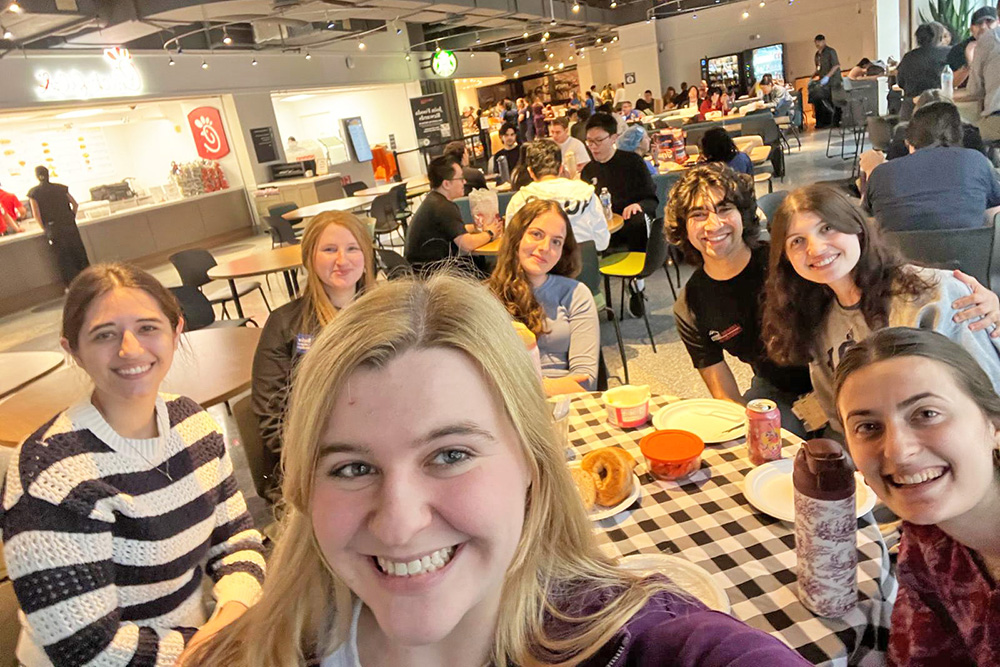
One of the new initiatives launched by the outreach interns was a weekly lunch program for medical students. Each week, the young women prepared an inviting kosher lunch in the Texas Medical Center Commons – a convenient gathering spot near Houston’s hospitals and medical schools – welcoming students from across the area to take a break from their demanding schedules, relax with friends and enjoy a sense of community.
For many students, that peer dynamic can be especially meaningful during the demanding and often complex university years.
“Having someone close to my age who understood campus life created a unique sense of comfort,” said Ava Orlando, a junior at the University of Houston. “It felt less formal and more like having an older sister or trusted friend who genuinely cared.”
That peer-based support system, Nechama explained, complements the work of Chabad’s senior leadership, while significantly broadening its reach among students.
Rather than replacing the rabbi and rebbetzin’s traditional roles, the program adds an important new layer, one rooted in friendship, shared experience and day-to-day accessibility.
“This is truly the way to further our growth,” Nechama said. “We look forward to expanding this and bringing new program opportunities in the coming academic year.”
As Chabad at Rice plans for a new student center and explores sponsorship opportunities for future cohorts of shluchos, leadership sees this pilot initiative as an important model for continued growth.
By investing in outreach staff who can serve as trusted peers, mentors and role models, Chabad at Rice is building on its first decade of success while creating new pathways to reach and inspire the next generation of Jewish leaders.