
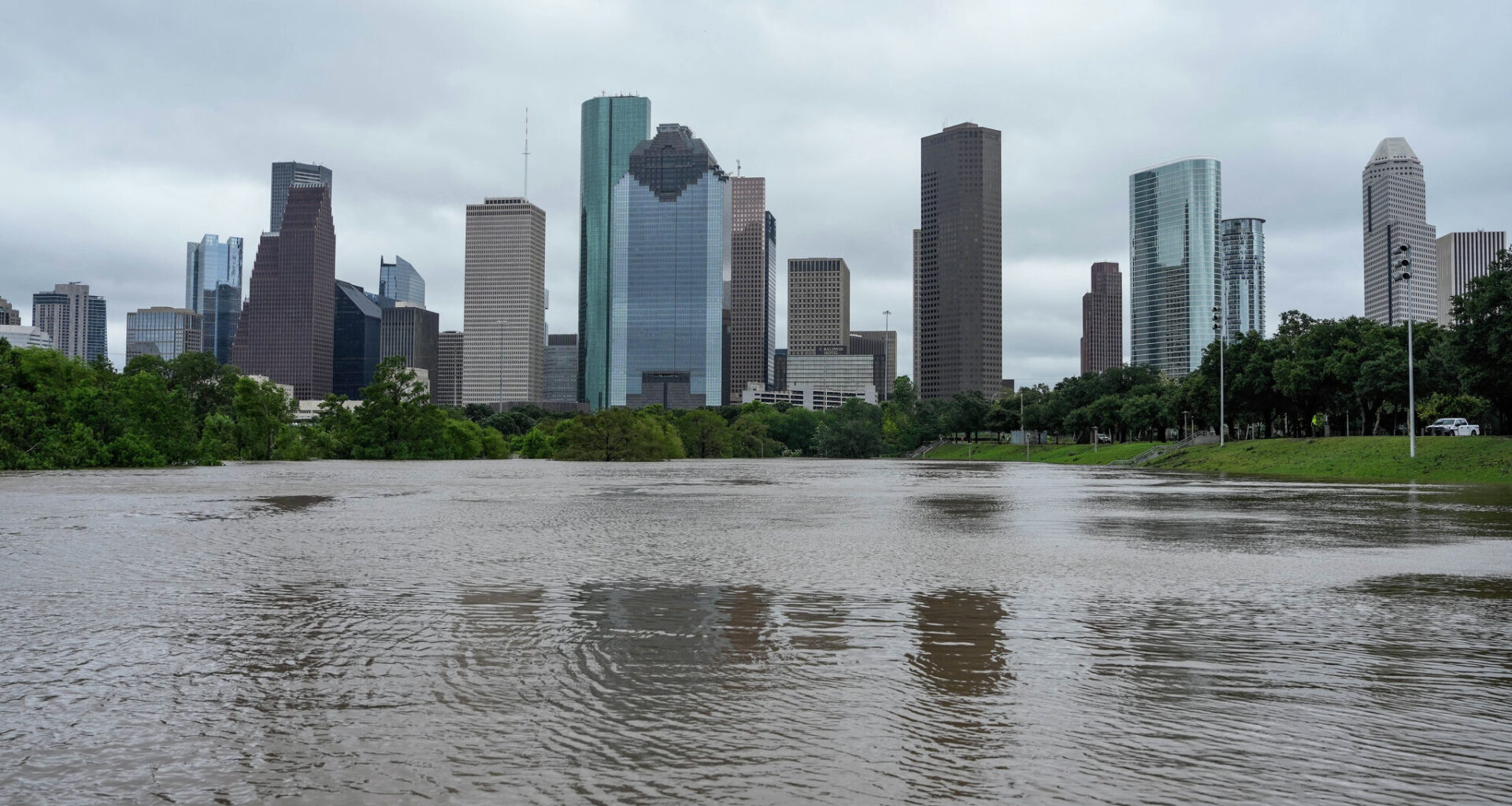
Researchers at Texas A&M University found that urban areas can strengthen some slow-moving thunderstorms capable of producing flash flooding by altering airflow, moisture and heat patterns around cities. However, researchers also emphasized that not every storm reacts the same way, and some systems can actually weaken over urban environments depending on atmospheric conditions.
According to the study, urban environments can influence storms through what researchers describe as the “urban heat island effect,” where cities absorb and retain more heat than surrounding rural areas. That additional heat, combined with changes in wind flow and moisture patterns around dense development, can sometimes intensify rainfall-producing thunderstorms.
“Cities don’t just change the landscape, they change the weather,” Dr. John Nielsen‑Gammon, a Texas A&M University atmospheric scientist and the study’s co-author, said in a statement.
“Asking whether cities get more or less rain is the wrong question,” Nielsen‑Gammon said. “The right question is which storms are affected, because that’s what determines the risk people actually face on the ground.”
The study, published Wednesday in the journal Nature, analyzed storms across multiple urban regions and found the impacts often depend on the structure and movement of the storm itself.
Houston’s geography only adds another layer to that risk.
During a flood-risk panel discussion hosted Thursday by Rice University’s Baker Institute and Kinder Institute, speakers repeatedly stressed how naturally vulnerable Houston already is to flooding, even before accounting for changing development patterns and stronger storms.
“Just because you’re not in a flood plain doesn’t mean you’re not gonna flood,” Andy Palermo, an engineer, said during the discussion while referencing evolving FEMA flood maps across Harris County.
He also noted many of the updated flood maps remain in draft form and may not fully take effect until closer to 2028 or 2030, though he encouraged residents to use the information now to better prepare for future risks.
The Texas A&M findings also arrive as extreme weather and flash flooding continue becoming more common concerns across Texas, especially in sprawling metro regions shaped by concrete-heavy infrastructure and continued outward growth.
Researchers behind A&M’s study stressed the goal is not to suggest cities “cause” storms, but rather that urban environments can meaningfully influence how some severe weather systems behave once they develop.
“If you design only for region-wide averages, you can underestimate the kinds of rainfall that actually cause the most damage,” Nielsen‑Gammon added. “Understanding which storms cities amplify helps planners target the real risks.”
In other words, for flood-prone cities like Houston, the relationship between growth and weather may be more connected than previously understood.