
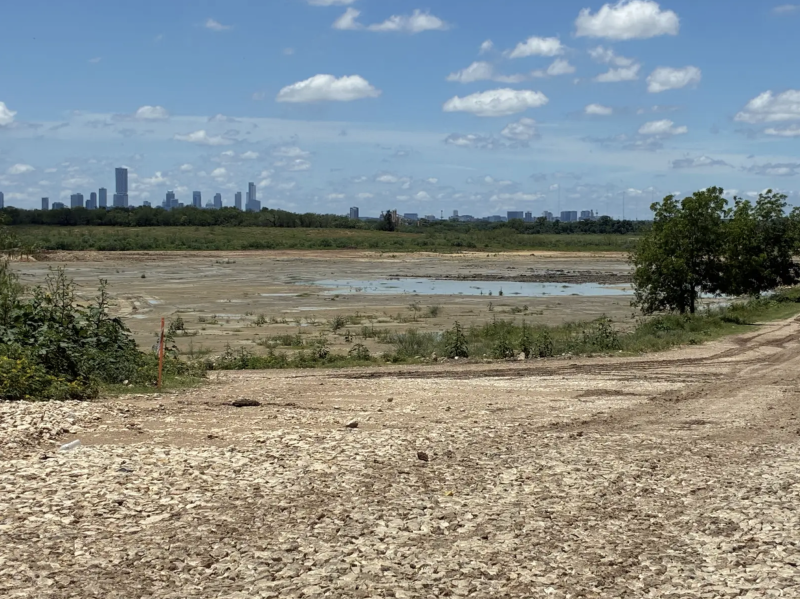
A fast-tracked proposal to annex more than 2,600 acres along the Colorado River under a 45-year development agreement heads to the Austin City Council today.
Bypassing reviews by city boards and commissions, city staff did not make the deal’s details public until late May 14, drawing criticism from community and environmental advocates.
Austin-based Endeavor Real Estate Group is promoting the deal after acquiring 26 tracts of land totaling more than 2,600 acres on Austin’s eastern border. Through Dog’s Head Land JV Ltd., Endeavor owns the properties around a Colorado River bend that resembles the head of a dog. The land is north of Austin-Bergstrom International Airport and west of Tesla’s Gigafactory. Travis Central Appraisal District records value the properties abutting City Council districts 1, 2 and 3 at $55 million.
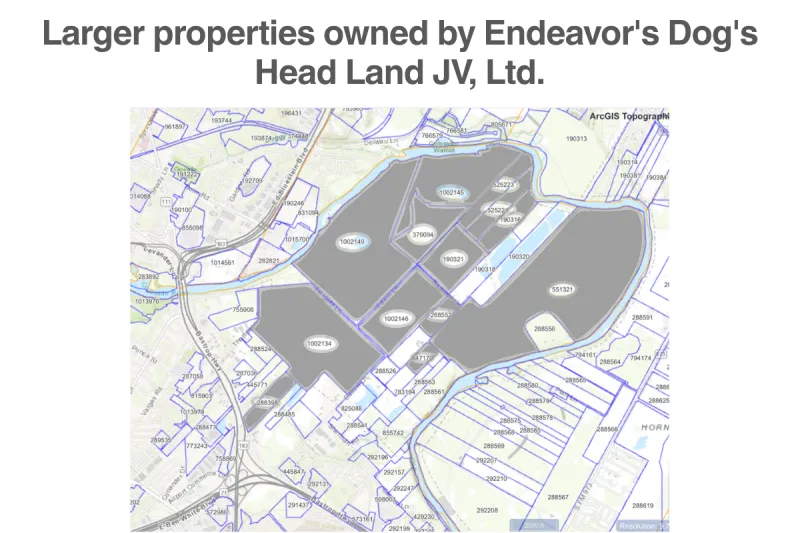 Source: Travis Central Appraisal District.
Endeavor Real Estate Group and Austin City Council members did not respond to requests for comment.
Three Dog’s Head items on today’s council agenda direct that the city pursue:
Annexation of the land;Numerous concessions to the developer by the city and Travis County (through an “interlocal agreement”); andA special Tax Increment Reinvestment Zone to allow Endeavor to invest some Dog’s Head property and sales tax revenue in its own infrastructure.
City staff has urged the council to approve the Dog’s Head proposals. They pointed to such benefits as 266 acres preserved as open space (10 percent of the total), public trails, up to $3.5 billion in new property taxes over 30 years and dedicating 20 percent of the housing to affordable units for 40 years. Half the affordable units would be Endeavor’s responsibility, with the city and Endeavor responsible for the other half (the accord does not specify how affordable the units must be).
Critics say the city is rushing a proposal that could reshape development of an ecological area for decades.
 Monica Guzmán
“Council needs to be called out on this,” Go Austin/Vamos Austin (GAVA) Policy Director Monica Guzmán told the Austin Free Press.“The first opportunity the public will have to speak on it is the council meeting where council will be voting on it.”
Guzmán noted that the project did not go through Austin’s boards and commissions before reaching council, cutting off earlier opportunities for residents and subject-matter experts to publicly weigh in.
Guzmán also raised concerns during a May 7 Austin City Council meeting over what she described as the city relaxing development regulations without public input.
“You’re proposing a comprehensive economic development policy package with flexible development regulation … thereby loosening processes for developers to attract business with zero community input,” Guzmán told council members in public testimony.
The proposed agreement would remove any height restrictions from Dog’s Head developments other than those dictated by the Federal Aviation Administration. It would waive most traffic-impact rules. The plan divides the entire area between open space and mixed-use zones, imposing no impervious cover restrictions on its mixed-use developments.
The development agreement would establish dedicated city permit review and inspection teams to expedite approval of Dog’s Head development requests. It would allow Austin Development Services Director Keith Mars to waive any street requirements and grant Dog’s Head variances from anything in the city Land Development Code except for zoning variances.
However, zoning variances might not be necessary. New state law SB840 allows multifamily residential or mixed-use residential development in commercially zoned districts without requiring council-approved rezonings.
If the city annexes Dog’s Head, “a regulating plan will be created to define the zoning and other land development requirements,” planning staff said in a statement to Austin Free Press. “If Council adopts the regulating plan, any commercial districts will be subject to the effects of SB840.”
 Richard Suttle
Dog’s Head lobbyist Richard Suttle said the agreement establishes flexible land-use standards.
“The Agreement covers land use and densities,” Suttle wrote in a brief email to the Austin Free Press. “Mixed use with flexible standards. It’s a clean slate.”
City staff describe the property as a former sand and gravel mining site undergoing reclamation efforts that could become “a revitalized mixed-use district.” Endeavor can pull out of the proposed agreement – and the city annexation – if the city does not initially approve the Tax Increment Reinvestment Zone tax breaks by Aug. 4.
 Bobby Levinski
, senior staff attorney for the Save Our Springs Alliance, criticized the agreement’s description of the riverfront property as “blighted” to justify such tax incentives.
“The area affected is over 2600 acres of the free-flowing section of the Colorado River, one of the most beautiful stretches of river in a major city, with exceptional biodiversity due to high water quality and relatively minimal urban development,” Levinski wrote in an email to the Austin Free Press.
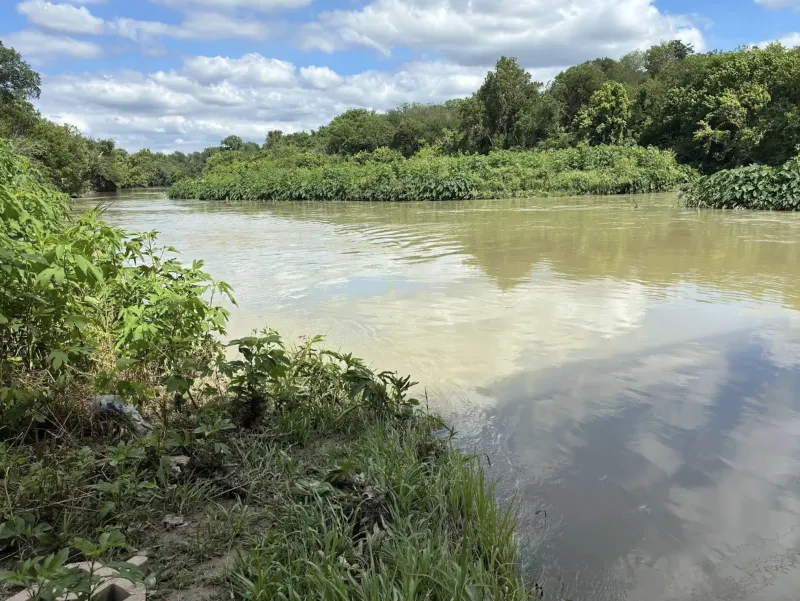 The Colorado River in the Hornsby Bend area just below Dog’s Head.
Credit: Andrew Wheat
“These taxes that should be going into the city’s general fund to pay for libraries, public safety, and social services get redirected to pay for the developer’s infrastructure,” he wrote.
Dog’s Head items 38 and 39 appear on today’s council consent agenda, where measures are often summarily approved unless pulled for discussion. Those two items cover the proposed 45-year development agreement and an interlocal agreement allowing the city to regulate and permit development on the property. The annexation ordinance is listed separately as public-hearing item 60.
Guzmán and Levinski both criticized putting consequential matters on the consent agenda.
“It was negotiated behind closed doors, and this is the first time the public has been able to review it,” Levinski wrote in the email to the Austin Free Press.
“The agreement will lock-in development regulations for 45 years, removing future City Council legislative authority to regulate growth in that area, unless the developer and future landowners agree,” Levinski wrote. “So, if there are problems that are encountered, future City Council’s hands will be tied.”
Levinski also raised concerns about how the agreement handles flood plains and environmental protections along the Colorado River.
“The agreement sets the allowable impervious cover (on mixed-use development) at 100%, while also reducing the critical water quality zone,” he wrote. Paving “will increase erosion, while also encroaching on the critical water quality zone (and) will change natural water flow patterns, and remove vegetation (like trees) that help mitigate flood risks and protect the river from pollutants.”
Levinski said the agreement exempts the property from Austin’s cut-and-fill regulations, which limit how much land can be reshaped during construction to help control erosion and flooding.
“Typically cut and fill is limited to 4 ft. and 8 ft,” he wrote. “No limit is wild.”
Shelby Ligon is the editorial manager for Austin Free Press.
Andrew Wheat is the Data, Information and Enterprise Editor of the Austin Free Press.