
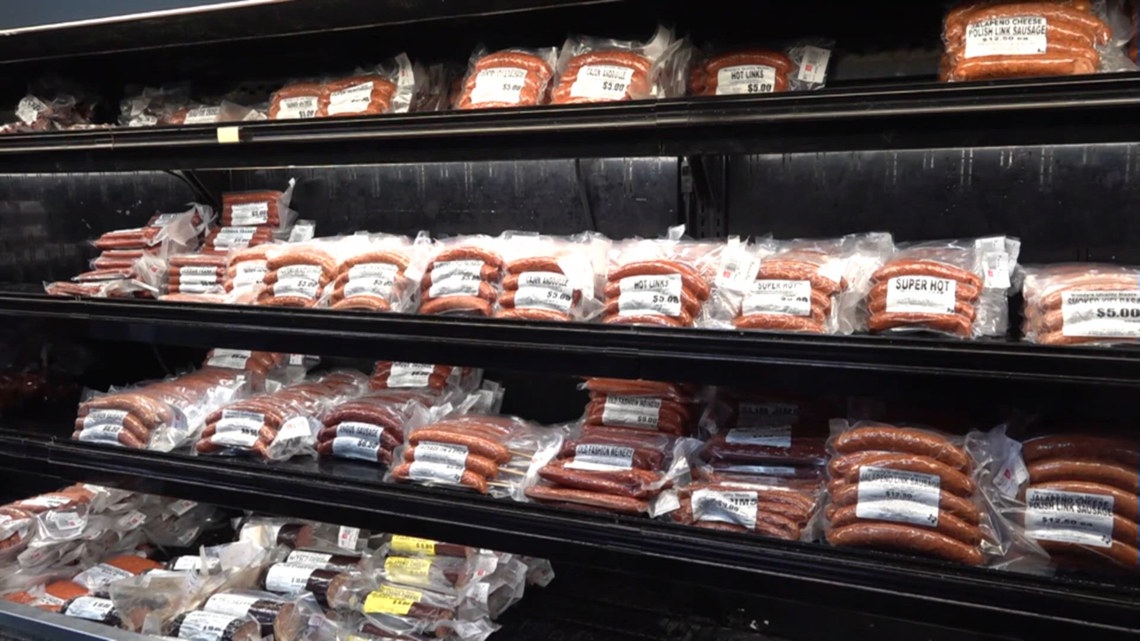
Rising beef prices tied to long-term drought and reduced herd sizes are creating challenges across the supply chain, from ranchers to local meat markets.
CORPUS CHRISTI, Texas — Meat prices are at an all-time high due to drought conditions and a shortage in beef supply, making it tough to keep up with demand across the country.
Locally, customers aren’t the only ones feeling it. Farmers and butchers say these are the highest meat prices they’ve seen in years. They’re hopeful things will improve once the drought ends but say it could still take some time.
Terry Moench is the co-owner of Moody’s Quality Meats in Corpus Christi. He said meat prices have gone up in recent years.
“I have never seen the prices quite as high, not as sustained high as it is. They’ve gone up and down. They fluctuate from time to time, but there’s never been the shortage of cattle either as we’ve had, and this has started, you know, about 10 years ago,” Moench said.
According to the USDA, the nation’s cattle inventory is now at its lowest level in more than 70 years. Although Texas still has the largest cattle herd in the country, ongoing drought conditions and rising costs continue to impact ranchers statewide.
Farmer Scott Frazier said this is taking a big hit on the agriculture industry.
SOT: Scott Frazier, Farmer
“Well, over pretty much the entire U.S., the last four or five years have been under drought conditions. So ranchers haven’t been able to retain females and keep their herd size large. We’ve had to downsize to match the grass available we have, the forage we have, and so the herd size all over the U.S. is down to, I think, record lows right now. As a result, the demand is still high for beef,” Frazier said.
With beef supplies limited and demand still high, Moench said his shop has had to make some adjustments — but customers are still showing up and making purchases.
“I don’t think people are gonna stop buying. They may not buy the same things. They might buy a little more, and we see more chicken and more pork being sold. We sell a lot more ground meat than we did,” Moench said.
Due to ongoing conditions, Frazier says farmers have had to make drastic changes.
“When you don’t have much grass because you’re not growing grass because it’s dry, you have to downsize, and so herds all over the U.S. have been downsizing for several years now. So that’s how we get the low numbers we have,” Frazier said.
Moench said it will take time for prices to come down.
“It’s going to be an extended period of time, even if ranchers start holding heifers to rebuild their herds. It’s going to take about four years, maybe five, before you really start seeing relief as far as pricing goes or steadiness because it’s been very volatile right now,” Moench said.
<“I think we’ll see beef prices, uh, moderate some whenever we, uh, we finally get herd numbers to start on the uptrend, and that’s a long process where the, the beef industry is not quite like poultry or something where almost overnight we can, you know, ramp up or down. It takes a number of months, you know, 9, 10 month gestation period for a cow. Then that calf before she raises her first calf is a couple years old. And then another close to 2 more years before her calf is ready to be slaughtered. So I mean we, we got a 4 or 5 year process here.”>
Terry Moench, Co-owner of Moody’s Quality Meats
<“So uh population as far as breeding cattle as far as cattle go in this country. It’s the lowest it’s been in a long, long time. And the reason why is because when all the ranchers were selling all the, the cows before, OK, when the drought started, they couldn’t afford the feed and they didn’t have pastures, it was bare ground.”>
PRICES IN MAINTAININGS IS ALSO REALLY HIGH.
<“Now it’s just I can’t afford it. I can’t replace them. It, it’s what I could sell 5 for before it takes to buy 1 now, you know, or 4 or something along that line because cattle prices are, I mean live cattle prices are the highest they’ve been ever.
The ranchers have never seen these kind of prices that they’re receiving, but their input costs have been a lot more as well, they’re buying supplements for their cattle and everything else, plus their fuel has gone up, all their expenses have gone up, so it’s a godsend for them that they’re able to get the money that they can.”>
It’s, it’s going to be an extended period of time even if, even if, uh, ranchers start holding heifers to rebuild their herds, OK. It’s gonna, it’s gonna take about, we’re looking probably about 4 years, maybe 5 before you really start seeing, uh, you know, relief as far as pricing goes or steadiness because it’s been very volatile right now
<“Now it’s just I can’t afford it. I can’t replace them. It, it’s what I could sell 5 for before it takes to buy 1 now, you know, or 4 or something along that line because cattle prices are, I mean live cattle prices are the highest they’ve been ever.
The ranchers have never seen these kind of prices that they’re receiving, but their input costs have been a lot more as well, they’re buying supplements for their cattle and everything else, plus their fuel has gone up, all their expenses have gone up, so it’s a godsend for them that they’re able to get the money that they can.”>
TAG: Later tonight on 3News we’ll talk to a local farmer who explains how the high prices are having an impact.
before we get, you know, from when the, when the cow’s born or calf’s born until we get it to, to slaughter. It’s a, it’s a probably 23 month process or so. So a calf born today is, is, you know, almost 2 years away from being eaten or at least 18 months, 1 year and a half years. So, uh, it, it just takes a while. We just, we can’t change that overnight.
Um, you know, locally here now over the last few days we’ve had significant rains, so our range conditions will, will improve, but there again with these high prices, not only are beef prices high, the, the value of the livestock is high, the, the cattle prices up, so it’s difficult for ranchers to restock as quick because it costs a lot of money. And so it’ll take a little time for the pastures to heal up a little bit and then uh as they heal up, you know, we’ll gradually start seeing more retention of heifers or females back into the ranches eventually a few more calves will be born.”>
<“When you don’t have much grass because you’re not growing grass because it’s dry, you have to downsize and so herds all over the US have been downsizing for several years now so that’s how we get the the low numbers we have.”>