
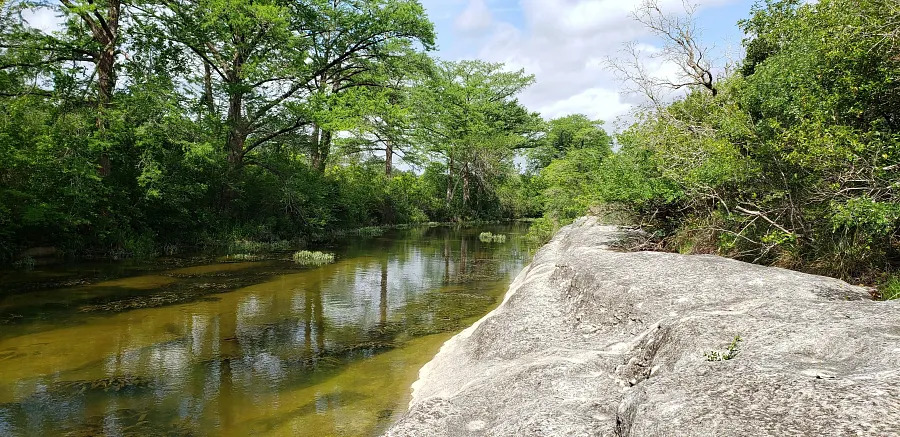
The Austin Parks and Recreation Department announced on Tuesday, May 19, its acquisition of 50 acres of parkland along Onion Creek, nestled in Southeast Austin. City officials finalized the purchase this month, noting its securement will ensure green space is maintained even amid rampant development projects planned in the area.
That 50-acre stretch of land is classified as a “land-banked passive park,” defined by the city as a portion of land that’s publicly accessible and will remain in its natural state until any potential modifications or enhancements for recreation are made down the road.
“This approach allows the City to secure land at today’s prices, saving taxpayers money and ensuring future parkland is available as Austin grows,” officials said in Tuesday’s announcement.
Its acquisition comes as city officials have utilized 92% of the city’s 2018 bond program’s allocation for land acquisition. Its purchase was also pulled from Austin’s $50 million Land Acquisition Fund created by the Austin City Council last fiscal year. That specific fund intends to aid water protection efforts, drainage improvements, flood risk mitigation work, as well as bolster parkland and recreational opportunities.
The latest 50-acre parcel could complete a potential future metropolitan park in Southeast Austin, as it ties into a larger land assemblage plan that includes the Old San Antonio District Park and the Wunneburger Neighborhood Park. That possible metropolitan park could amount to more than 200 acres in the future, city officials noted.
Now acquired, city crews are slated to clear out any potential hazards to open it to the public as passive parkland within a six-to-12-month timeline. Passive parks can be used for walking, picnicking, bird-watching, and field recreation, with trails expected to be crafted in the next few years, pending funding.
“Passive parks serve an essential role in Austin’s park system,” officials added. “While fully developed parks may offer structured recreation and programming, passive parks offer relief from urban life and provide space for residents to connect with creeks, forests, wildlife, and native habitats.”