
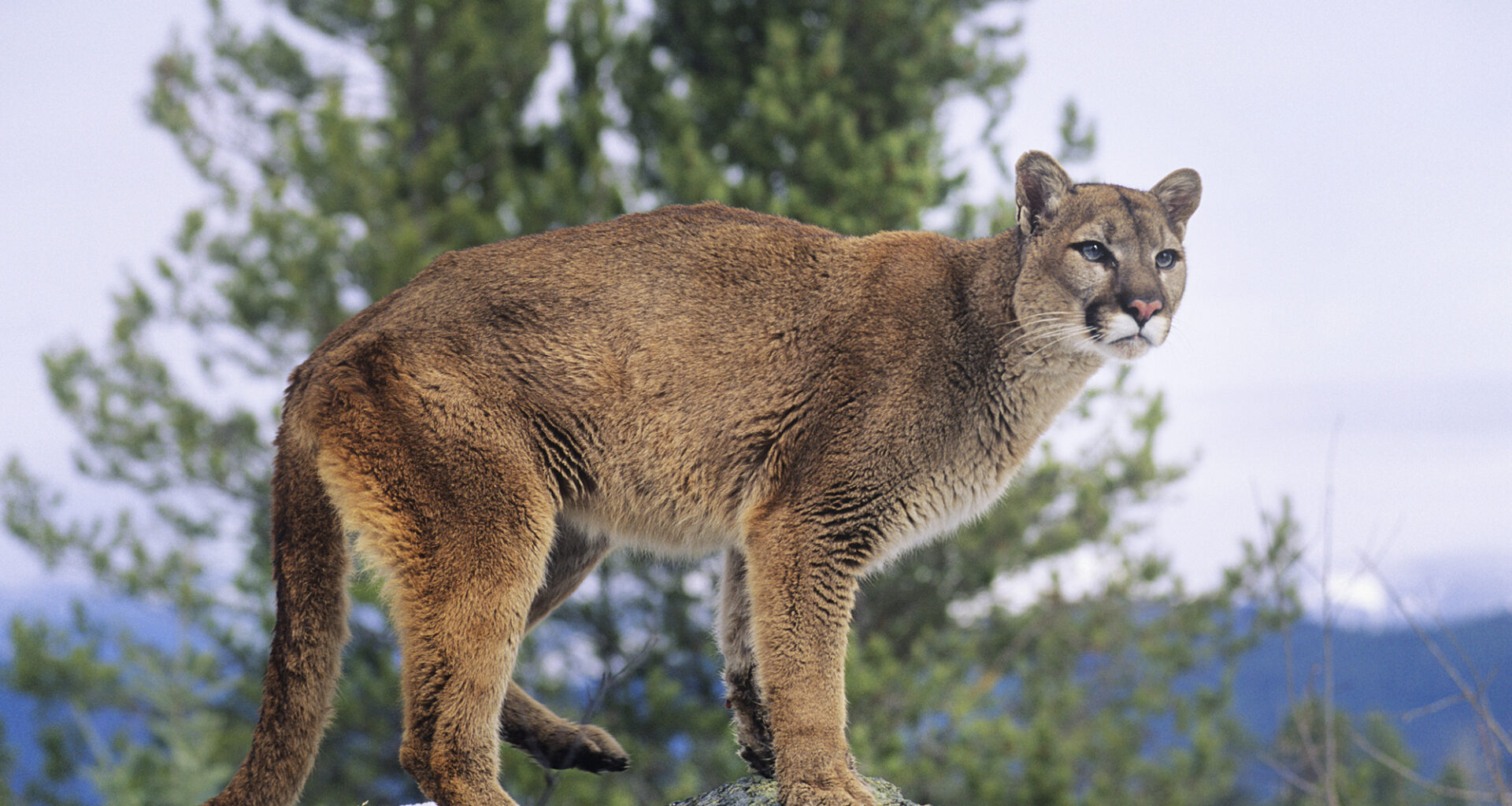
Texas wildlife regulators are weighing new rules that would require anyone who kills a mountain lion to report it to the state within 24 hours.
Dreamstime/TNS
State regulators will decide this week whether to approve new rules for mountain lion harvesting, aimed at learning more about the species’ population in Texas.

Mountain lions, also known as cougars and pumas, are considered “nongame” animals in Texas, meaning there are no limits on when they can be hunted or trapped on private property.
Article continues below this ad
Texas Parks and Wildlife commissioners are scheduled to vote Thursday on new rules that wouldn’t change that, but would require anyone who kills a mountain lion to report it to the state.
READ MORE: Hill Country man faces 74 charges, accused of decapitating deer
The proposed rule would mandate electronic reporting within 24 hours and submitting a tooth and tissue sample from the animal within 60 days. Those samples could either be taken by the hunter or by a Parks and Wildlife biologist upon request.
The report would include only the county where the animal was harvested, without any additional location information, and hunters’ information would be kept confidential.
Article continues below this ad
Texas Parks and Wildlife said in a news release that the proposal is intended to collect more data about mountain lions in the state.
“Texas maintains the most flexible mountain lion regulations of any state in the country, with no harvest limits,” the agency said. “TPWD supports the rights for hunters, trappers and landowners to hunt and manage mountain lions. Better data on mountain lion populations can help support these practices.”
While the agency has previously had voluntary reporting options in place, it said a lack of reporting has resulted in little usable data.
The tooth and tissue submission would be used to determine the age and sex of the lion, helping provide more information about the state’s mountain lion population, the agency said.
Article continues below this ad
READ MORE: Big Bend National Park cancels plans to rebuild lodge, fix water system
The commission is accepting public comment on the proposal before Thursday’s vote. Comments can be submitted through the TPWD website until Wednesday, or in person until 9 a.m. Thursday at the agency’s headquarters in Austin.
Texas created its first rules governing mountain lion hunting about two years ago. In 2024, commissioners voted to ban “canned hunts” for the species, which refers to releasing captive animals for the purpose of being hunted.
They also approved a new rule prohibiting keeping a live mountain lion in a trap or snare for more than 36 hours, requiring people to check their traps within that time frame. Previously, there was no mandate to check traps, meaning lions could be left in traps indefinitely until they died.
Article continues below this ad
When they adopted those rules in 2024, some commissioners asked the agency to start collecting more data on the species, and said they were interested in mandatory reporting rules.
Advocates for the new rules say that knowing more about where the cats are being killed will increase understanding about where they live and how the species is doing in Texas.
“Understanding mountain lion range and population is difficult, because they’re hard to see, their territories are huge,” said Ben Masters, a wildlife filmmaker and member of the Texans for Mountain Lions Coalition. “In Texas, we don’t have any idea how many mountain lions there are or where they’re located.”
Article continues below this ad
Harvest reporting, which is already required for many other species, “provides the crucial information about the species that allows us to monitor them in a cost-efficient way,” he said. The sample collection can help determine if there are healthy, reproducing populations, he said, which would be “a win for Texas conservation and landowner stewardship.”
“There’s a long history of animals in Texas almost going extinct, or being extirpated,” Masters said, including bison, ocelots and bears. “Right now we have this opportunity to kind of get ahead of a mountain lion crash, but we’ve got to have good data.”