

STAMFORD, Texas — What was announced in November as a $40 billion Texas investment from Google is now actively underway. Two data centers are under construction in Haskell County, anchoring a broader expansion into cloud, artificial intelligence, and energy systems. Early indicators suggest that the project is beginning to register within the region’s local economy.
RELATED | Google’s $40 billion Texas data center investment set to lead U.S. in global AI race

Stamford Mayor James Decker has closely monitored the pace of growth accompanying the region’s expanding AI and data center development (KTXS/Tavish Leffall).
Positioned along the border of Jones and Haskell counties, Stamford has found itself increasingly connected to the rapid expansion of AI infrastructure in West Texas. Stamford Mayor James Decker has closely monitored the pace of growth accompanying the region’s expanding AI and data center development.
“It’s jarring. It’s very jarring to suddenly realize that the focus of this AI data center rush is in your area,” Decker said. “We want to make sure that our town ends up better off in the end. We don’t want to be chewed up and spit out by the data center boom.”
RELATED | Google’s $40 billion data center plan sparks mixed reactions: Haskell leaders respond
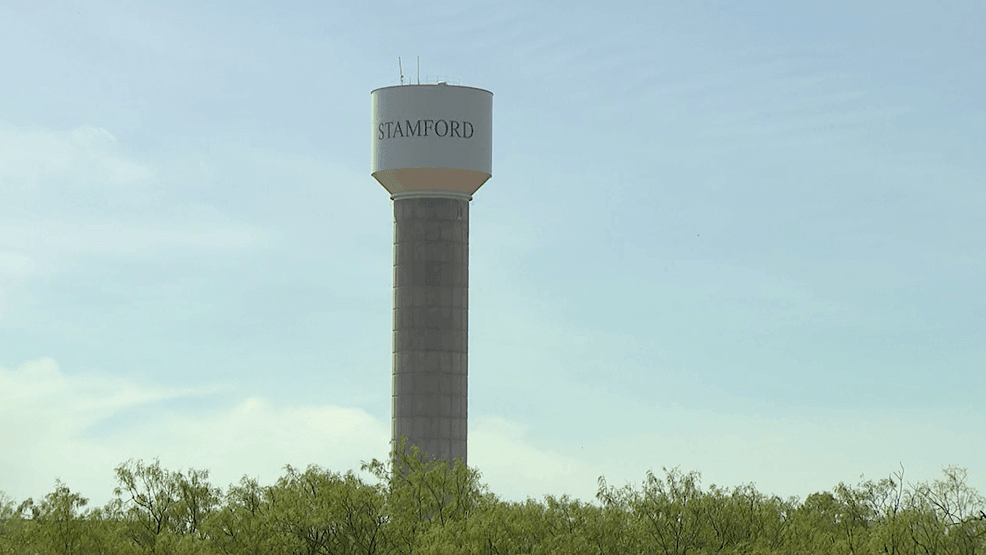
Positioned along the border of Jones and Haskell counties, Stamford has found itself increasingly connected to the rapid expansion of AI infrastructure in West Texas (KTXS/Tavish Leffall).
According to Decker, a notable uptick in housing construction has emerged for the first time in decades.
“To my knowledge, this is the first time that we’ve had multiple houses being built at the same time in the city since the 1980s. We just recently did some rezoning in one part of town. We cleaned up houses and then had them torn down in order to build triplexes. They will be rentals for multiple families,” he said. “Some of the people who’ve bought houses here are working on the Stargate project in Abilene. They could not find affordable housing in Abilene. They were able to find something more affordable here.”
He emphasized that the city is using temporary construction-driven growth to fund long-term infrastructure improvements.
“We’re taking the money that we’re receiving and finding ways to make one-time improvements to our streets, water, sewer, parks, and everything that we need to improve,” he said. “Those one-time improvements could last for 10, 15, or even 50 years.”
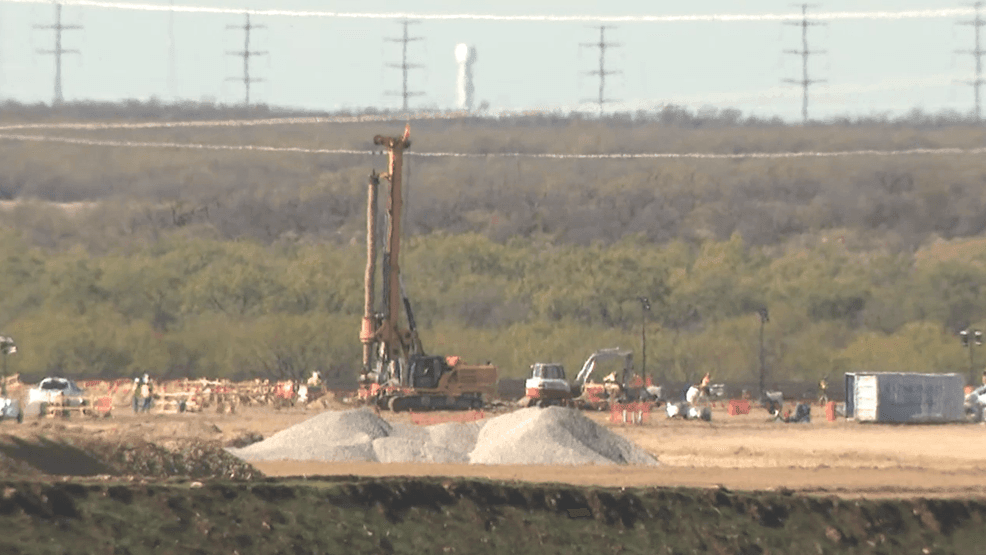
The city is using temporary construction-driven growth to fund long-term infrastructure improvements (KTXS/Tavish Leffall).
As Stamford continues to experience steady expansion, city leaders are working to address the pressure that comes with rapid development in a small community. KTXS asked, “How will Stamford balance rapid growth while preserving the longtime identity and culture that residents value?”
Decker explained the city’s approach to growth as a careful balance between encouraging development and protecting local character.
“If our community is really going to thrive in the future, then we’ve got to have new investments and growth. We can’t just wither on the vine. When there are new people moving in and spending money, we view that as something to embrace,” he said. “However, we must manage it in such a way that it keeps our culture alive and preserves what makes our community special. We want to make it a more prosperous version of what we already love, rather than changing it to something that we don’t recognize.”