
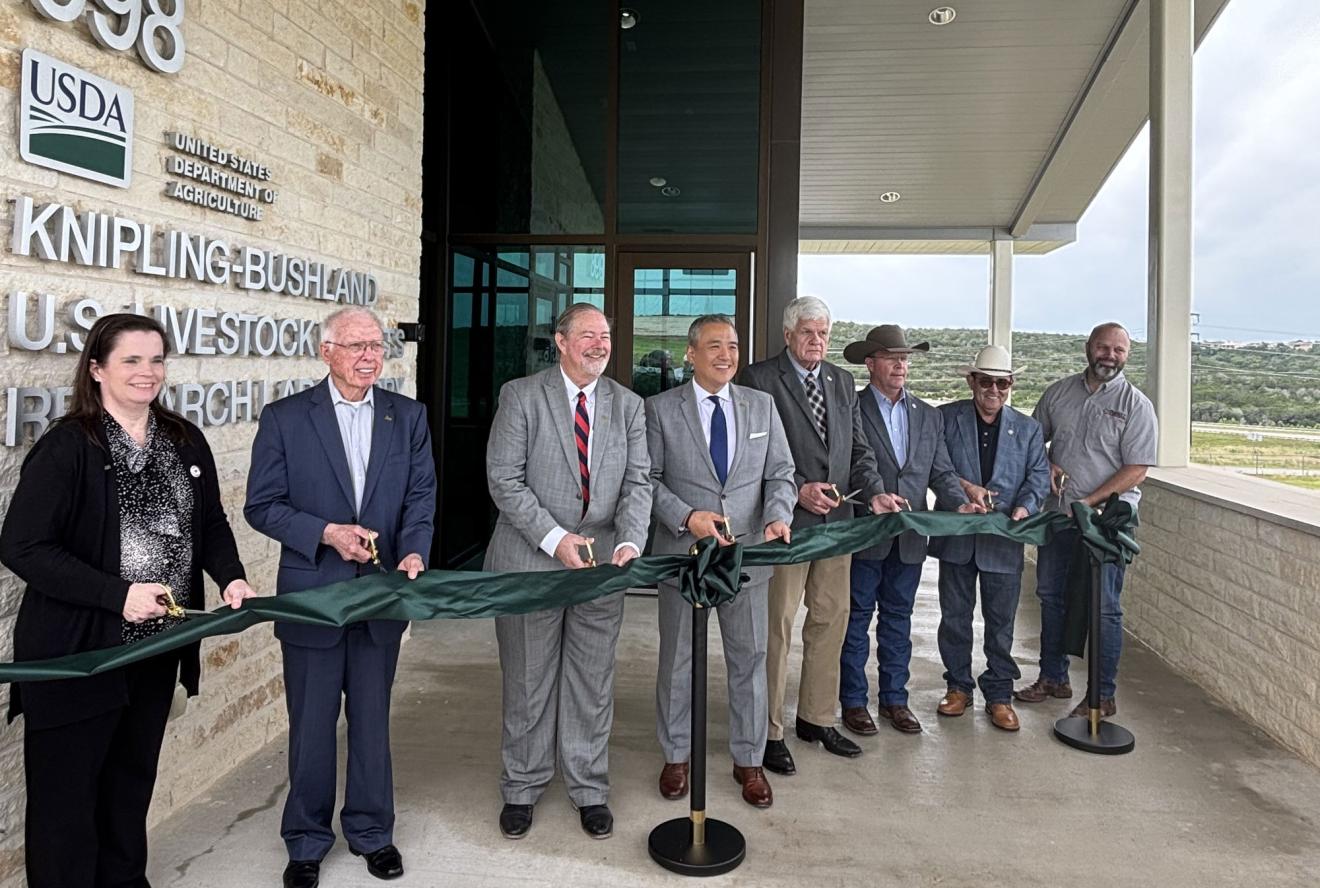
According to the USDA, the new 52,000‑square‑foot laboratory, equipped with advanced cattle facilities and a state‑of‑the‑art genomics core, offers spaces to research innovative control technologies that benefit the U.S. livestock industry
“The brand new Knipling-Bushland U.S. Livestock Insects Research Laboratory will allow us to research and find new active measures to keep current and future threats away from our borders,” said Agriculture Secretary Brooke L. Rollins. “We have taken extraordinary actions to keep New World screwworm out of the United States and this lab will help us accelerate our offensive efforts to drive this pest further away from our borders.”
Research will also focus on better surveillance and trapping tools, new insecticides and acaricides, improved pesticide application methods for cattle and wildlife, sustainable strategies for invasive arthropod species, ways to fight pesticide resistance and insect genomics that can identify pest weaknesses.
The facility is home to two ARS research units that focused on protecting American livestock and the food supply from pests such as biting flies, ticks and the New World screwworm. Named after USDA researchers Edward F. Knipling and Raymond C. Bushland, the lab honors their pioneering work on the sterile insect technique — a biocontrol method that helped eradicate screwworms from the U.S., Mexico and Central America and is still used today to prevent their return.
“For the last 250 years, our nation has relied on research leading to science-based innovation as a means to overcome some of America’s greatest agricultural challenges, including the exclusion of New World screwworm from the United States with novel Sterile Insect Techniques,” said USDA Under Secretary for Research, Education, and Economics Scott Hutchins. “The Knipling-Bushland U.S. Livestock Insects Research Laboratory — named after ARS pioneers that every entomologist and entomology student knows of through their breakthrough work — will build on their legacy by protecting livestock health, ensuring that America’s ranches remain productive, safe and profitable for generations to come.”
USDA’s Agricultural Research Service said the new facility represents a “full-circle moment,” building on 80 years of historic research at previous ARS laboratory facilities in the Kerrville area. That legacy includes research that helped eradicate New World screwworm from the United States, development and evaluation of pesticides such as macrocyclic lactones for controlling biting flies and ticks, and genome sequencing for more than 25 major livestock arthropod pest species.
“This new laboratory will equip our researchers with advanced tools to combat the most destructive invasive insects already impacting the United States, as well as those posing future threats at our borders,” said ARS Administrator Joon Park. “The important ARS research conducted here in Kerrville will continue to play a vital role in protecting and strengthening the future of the U.S. cattle industry.”