
Scientists say the Inner Harbor Desal plant would have minimal impacts to the bays’ salinity, while some committee members feel their questions are still unanswered.
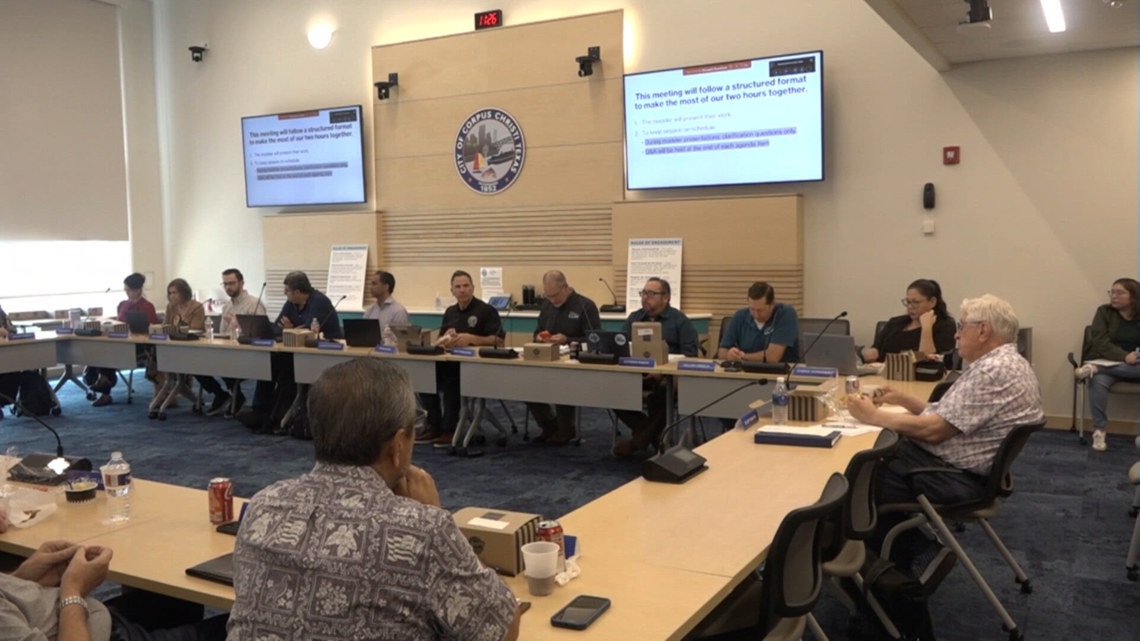
CORPUS CHRISTI, Texas — A committee reviewing the proposed Inner Harbor desalination project met for a final time Wednesday to hear the results of a far field study examining how the plant could impact salinity levels in Corpus Christi Bay and Nueces Bay.
The findings will now move to the Corpus Christi City Council, which is expected to vote on the project on June 2.

This story continues below.
Scientists with Spheros Environmental presented the study results to committee members, describing the projected changes to salinity levels in the bays as minimal.
The study is considered a key piece of information city council members have been waiting on before making a final decision on the project.
Still, several committee members said they continue to have concerns about the project and believe some questions remain unanswered.
“Even though I was a little biased to the Hillcrest area, I still went in with an open mind and was gonna listen to the facts and then so far they have not convinced me,” said Deanna King, president of the NAACP chapter involved in the discussions.
King said she wants to see a model that better reflects ship traffic and how that could impact salinity levels.
“The accuracy of the ship traffic, the data that have been provided so far is, you know, one ship going out, one ship coming in, that’s not realistic for us here in Corpus Christi,” King said.
Committee member Jeffrey Pollack, Chief Strategy and Sustainability Officer at the Port of Corpus Christi, acknowledged during the meeting that the ship traffic numbers used in the study were not accurate.
“Yeah, that’s not how it works nor is that a representation of the total number of vessels,” Pollack said.
Other committee members questioned whether existing naturally high salinity levels in portions of the bays could increase to environmentally harmful levels if desalination moves forward.
Jason Hale, a committee member with the Sierra Club’s Coastal Bend, said that while he appreciates the work that has been done, he believes more information is needed about the project’s ecological impacts.
“If I was a council member, I would want more information, but I know the city is under the gun to make a decision,” Hale said. “And so I think it’s just important that regardless of whatever decision they make that we keep doing the work that needs to be done to understand this as best as we can.”
Hale said he hopes the model lays a foundation for continued work.
“This is just water quality data,” Hale said. “So like, how does salinity change? How does temperature change, but we haven’t yet translated that into, how does that affect the fish, the wildlife, the habitat? And that’s not something you can do over four days.”
City Manager Peter Zanoni asked committee members to volunteer to speak during the upcoming June 2 city council meeting before the vote takes place. So far, five people have agreed to speak, including both King and Hale.