
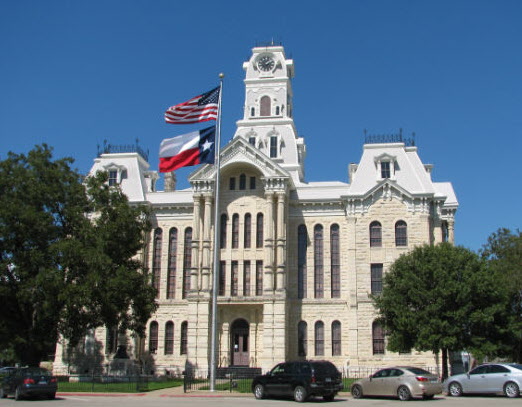
In the more than 60-page lawsuit filed Wednesday in federal court, RCM Hill, LLC argued the moratorium is illegal and unconstitutional and the county commissioners knew so before enacting it.
The developer asked a judge to declare the moratorium void and block its enforcement, alleging liabilities and damages could total at least $100 million.
RCM Hill spent nearly a year-and-a-half and $1 million to acquire contractual rights to buy more than 800 acres of land in Hill County at a price tag surpassing $80 million with the intention of developing a 1,235 megawatt data center, according to the lawsuit.
The company said the moratorium is “causing and will continue to cause immediate and irreparable harm” by either delaying or “sinking” its development known as Project Aquila.
The defendants include Hill County, County Judge Shane Brassell, and County Commissioners Jim Holcomb and Larry Crumpton as defendants.
Brassell, Holcomb and Crumpton voted 3-2 in favor of the moratorium on May 12, despite raising questions before the vote of whether county governments have the legal authority to temporarily suspend projects.
This was the first county-level moratorium of its kind in Texas and drew national attention.
“I’m not trying to break the law, I’m not trying to thumb my nose at the governor or the Legislature, but my constituents, my people, are literally begging for help right now, and I have no other mechanism but this,” County Judge Shane Brassell, a Republican who leads the commission and voted for the ban, told Politico.
The commissioners and county attorney David Holmes were not immediately available for comment Friday morning as they were in a special-called meeting. The meeting agenda included a closed session to “consult with attorney regarding pending or contemplated litigation.”
The developer is represented by Dallas-based attorney Tom Whelan and Waco-based Andy McSwain.
Texas has attracted data centers of varying sizes across the state due to its business-friendly attitude, deregulated and independent power grid, abundance of land and tax incentives. Dallas was recently recognized as the No. 1 primary data center market in the world, but Austin-San Antonio and West Texas led the secondary and tertiary market rankings, underscoring Texas’ growing importance as a large-scale AI infrastructure hub.
This reporting is part of the Future of North Texas, a community-funded journalism initiative supported by the Commit Partnership, Communities Foundation of Texas, The Dallas Foundation, the Dallas Mavericks, the Dallas Regional Chamber, Deedie Rose, Lisa and Charles Siegel, the McCune-Losinger Family Fund, The Meadows Foundation, the Perot Foundation, the United Way of Metropolitan Dallas and the University of Texas at Dallas. The News retains full editorial control of this coverage.