
AUSTIN, Texas — The U.S. military’s missile stockpile is under growing pressure after heavy use in recent conflicts, and rebuilding it could take years.
More than 2,000 missiles were used in recent Middle East operations, according to open-source estimates. Roughly 30 percent of the U.S. Tomahawk inventory has been depleted, along with about 50 percent of some Patriot and THAAD interceptor capacity.
The bigger concern: many of these high-end systems are slow to replace. Defense experts estimate it could take two to five years to fully rebuild certain stockpiles.
Now, an Austin-based defense startup says it has a faster, cheaper solution.
Tech This Out: A startup approach to missile production
Aeon Industrial, founded by CEO Naweed Tahmas, is developing a new class of weapons designed for rapid production and adaptability.
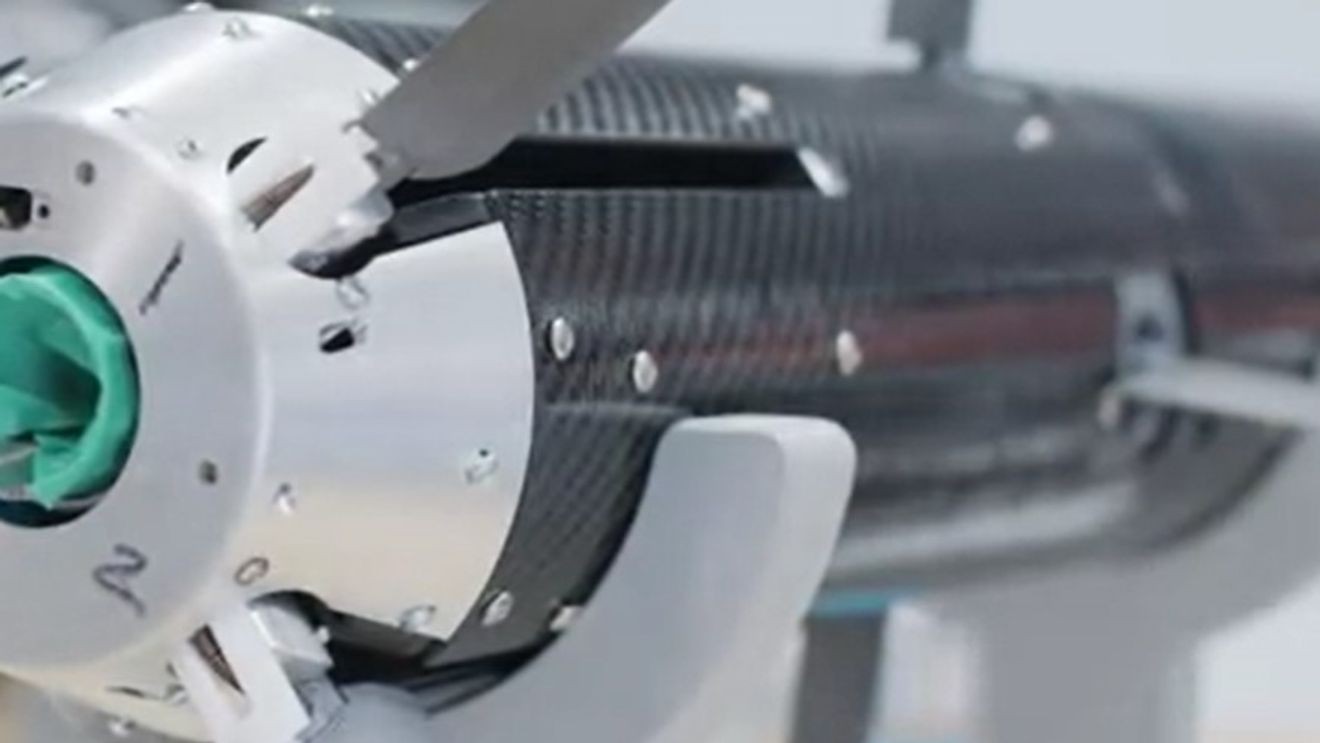
Its flagship product, called ZEUS, is a lightweight, modular, software-defined guided mini-missile system. The company says it is designed to give soldiers more flexibility in the field while dramatically reducing production time.
“Our mission is to make each warfighter as lethal as possible,” Tahmas said.
ZEUS can be configured as a shoulder-launched system and is built with modular components that allow operators to swap payloads and update capabilities as battlefield needs evolve.
“We designed the system from the ground up to adapt quickly,” said Aeon missile design lead Richard Howard. “Warfare is changing at a rapid pace, and systems need to evolve just as fast.”
ALSO| Tech This Out: Texas Startup Builds a ‘Chemical Sponge’ to Mine Critical Minerals
KEYE
Speed through technology
Aeon is leaning heavily on advanced manufacturing, including 3D printing and AI-assisted systems, to accelerate development and production.
Tahmas says 3D printing allows the company to prototype and iterate much faster than traditional defense contractors. Some components in the current ZEUS systems are already 3D printed.
The company is also integrating improved targeting capabilities. Using a simplified interface, operators can identify, lock, and track targets with greater precision than legacy systems.
“It’s a much faster process,” said Christopher Jennings, Aeon’s director of growth. “Once you lock on, the system maintains that target even as conditions change.”
Lower cost, higher volume
Beyond speed, Aeon is also targeting one of the defense industry’s biggest challenges: cost.
Traditional missile systems can range from hundreds of thousands to several million dollars per unit. Aeon says ZEUS is designed to dramatically lower that price point.
“Our goal is to bring costs down for taxpayers and allow the U.S. to field more systems,” Tahmas said.
The company says some configurations could cost tens of thousands of dollars — in some cases as low as $10,000.
A shift in “munitions math”
As global conflicts evolve and demand for precision weapons increases, companies like Aeon are betting that speed, scalability, and affordability will define the next generation of defense technology.
For the U.S., the challenge is clear: maintaining military readiness while replenishing stockpiles fast enough to keep pace with modern warfare.
Aeon’s approach could signal a shift in how those weapons are built — and how quickly they can be deployed.