
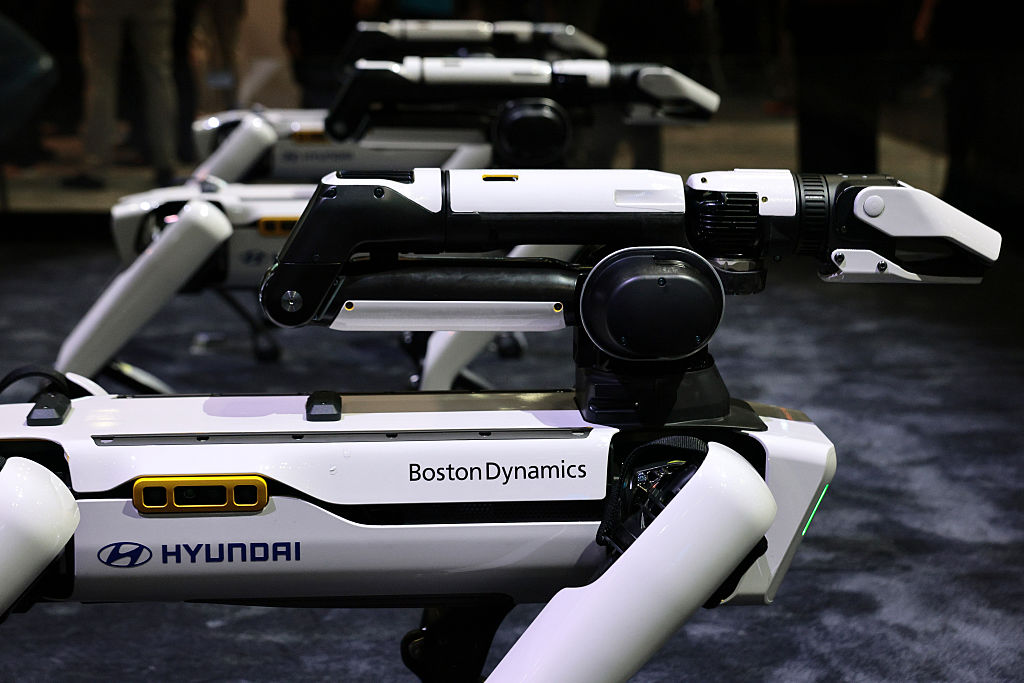
We’re long used to seeing dogs do tricks with balls in movies and home videos, but they tend to be real dogs, not robots. So it may have been a tad off-putting when one person visiting the AT&T Stadium in Arlington ahead of the FIFA World Cup noticed a few robot dogs prancing around.
The TikTok video from user “Downtown Dallas” shows a Boston Dynamics/Hyundai robot dog approaching a person, and shaking its head back and forth like a confused puppy, except with a blue light shining from it. The video claims the dog is a facial scanning robot there to verify ticket holders, which has Black Mirror written all over it.
It may not be quite as dire. The dogs are actually four-legged patrol robots aptly called Security Spot, which Hyundai says in a press release “will support on-site security operations, helping contribute to a safer tournament environment” during the World Cup. Chron reached out to Hyundai and FIFA Dallas for additional details and will update the article when we hear back.
It’s not clear if they are truly scanning faces or taking tickets, the latter unlikely at least for the moment since the tournament hasn’t started yet. The Boston Dynamics creations tend to be used for security patrolling around crowded areas, to assess scenes with hazardous chemical spills or radiation, and for search and rescue reasons, sometimes by police for bomb detection and armed standoff situations.
They can occasionally do back flips as well. Hopefully, that’s all that’s required from them in the upcoming tournament.
While this may feel like another example of Texas security overkill, it should be noted that Mexico has their own robotic canines deployed for the World Cup. They’re being used to help scout dangerous areas and send live videos back to security forces so they can assess before approaching.
But Spot is no lightweight. The Boston Dynamic robot features a 360-degree camera; can walk, run, and travel up stairs and over multiple terrains (take that, Roomba); and includes sensors that can detect sound, thermal, and chemical anomalies. And in case you’re wondering, no, you’re generally not supposed to pet them.