
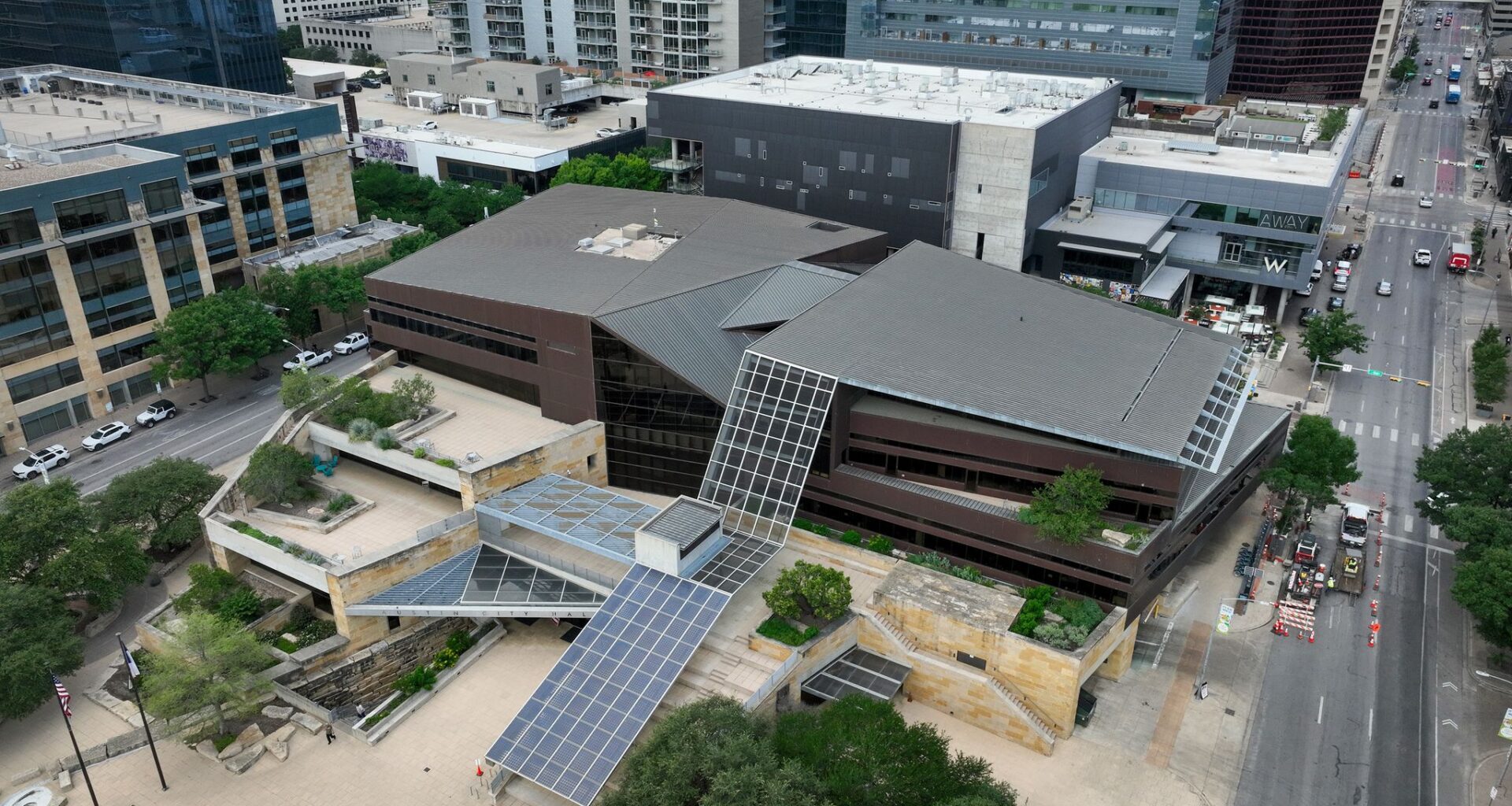
Austin City Hall on Monday, May 18, 2026.
Jay Janner/Austin American-Statesman
Over loud objections from Mayor Kirk Watson, the Austin City Council on Thursday voted to change the city’s financial policies so it can hold a bond election this fall without violating longstanding rules governing when the city can ask voters to approve more debt.

The 7-2 vote — with two council members absent — removes a requirement that the city wait to call another bond election until it has no more than two years’ worth of voter-authorized but unissued bonds remaining. The change sets the stage for a November vote on a bond package worth hundreds of millions of dollars to finance projects the cash-strapped city otherwise could not afford.
Article continues below this ad
Critics, including Watson, said the policy change weakens the city’s financial guardrails and could further erode public trust after voters overwhelmingly rejected a tax rate increase six months ago.
Read More: Austin voters approved $1 billion in bond projects that still aren’t built
The resolution directs City Manager T.C. Broadnax to incorporate changes to Austin Energy and Austin Water revenue rules, but most of the debate focused on loosening the city’s requirements for how far along bond projects must be before council can call another bond election.
Broadnax must bring back proposed financial policy changes for council consideration and assess whether the city could comply with its bond “decision tree” if the changes are adopted. The decision tree is the city’s framework for determining when it should call another bond election.
Article continues below this ad
The American-Statesman recently reported that the city called for bond elections almost every two years despite rules requiring proposed projects to be completed within six years of voter approval and limiting new elections until only two years of authorized but unissued bonds remain. Those decisions left the city with more than $1 billion in voter-authorized but unissued bonds and a backlog of unfinished projects dating back to 2008.
Mayor Kirk Watson and Council Member Marc Duchen both voted against the policy changes.
Watson said that if council followed the city’s financial and debt policies, he believes there should not be a bond election this year. In the past, he said, if the policies got in the way of the election, council would just hold the election anyway.
“I think this waters down our policies,” he said of Thursday’s policy change. “If we only support financial guardrails until they become inconvenient, then we shouldn’t be surprised when the public questions whether we really mean them and frankly, whether we can be trusted.”
Article continues below this ad
Council Member Mike Siegel, who supported the policy changes, said he interpreted financial staff’s presentations differently and believed that calling a bond election in 2026 would still keep the city well within its overall debt limit goals.
“I’m just going to disagree with your characterization that we’re putting the city at risk or that we’re undermining the confidence that voters,” Siegel said.
The council also moved the bond election process forward by ordering staff to continue developing the bond proposal. Watson and Duchen voted against that measure, and Council Member Krista Laine abstained. Council Members Natasha Harper-Madison and Vanessa Fuentes were not present.
City staff, who have already formally recommended holding a bond election, and advisers have floated several different bond proposals with varying price tags. An initial recommendation worth $700 million included major infrastructure projects like bridge repairs, watershed projects, park upgrades and additional library renovations. A more recent recommendation from the Bond Election Advisory Task Force that totals $440 million includes many of the same types of projects.
Article continues below this ad
At Thursday’s meeting, Council Member Chito Vela explicitly voiced his support for a 2026 bond. Council Ryan Alter stopped short of that but noted that many city parks are in desperate need of support.
Duchen, who voted against the resolution, said that if council orders a partial bond now, it will also be forced to order a 2028 bond to make up the gap, perpetuating the cycle of asking voters for money every two years.
Watson also voted against the resolution, saying the city has drifted away from its financial policies for the last decade. He pointed to the failed tax rate election and said he only supported a compromise position that was higher than he wanted because he was trying to build consensus.
“I won’t do that again,” he said. “I don’t believe we’ve yet done enough to justify asking the voters this quickly for additional debt while we remain outside the financial alignment that we said, that we acted like, mattered.”
Article continues below this ad
He added that changing policies to get the result the council wanted could risk adding to the distrust and lack of confidence the city saw after Proposition Q.
Watson said he trusted city staff, who recently recommended a bond election in 2028 rather than 2026.
Broadnax will bring back the policy changes and an analysis of whether a bond election complies with them no later than the Aug. 12 council budget meeting.
Article continues below this ad