
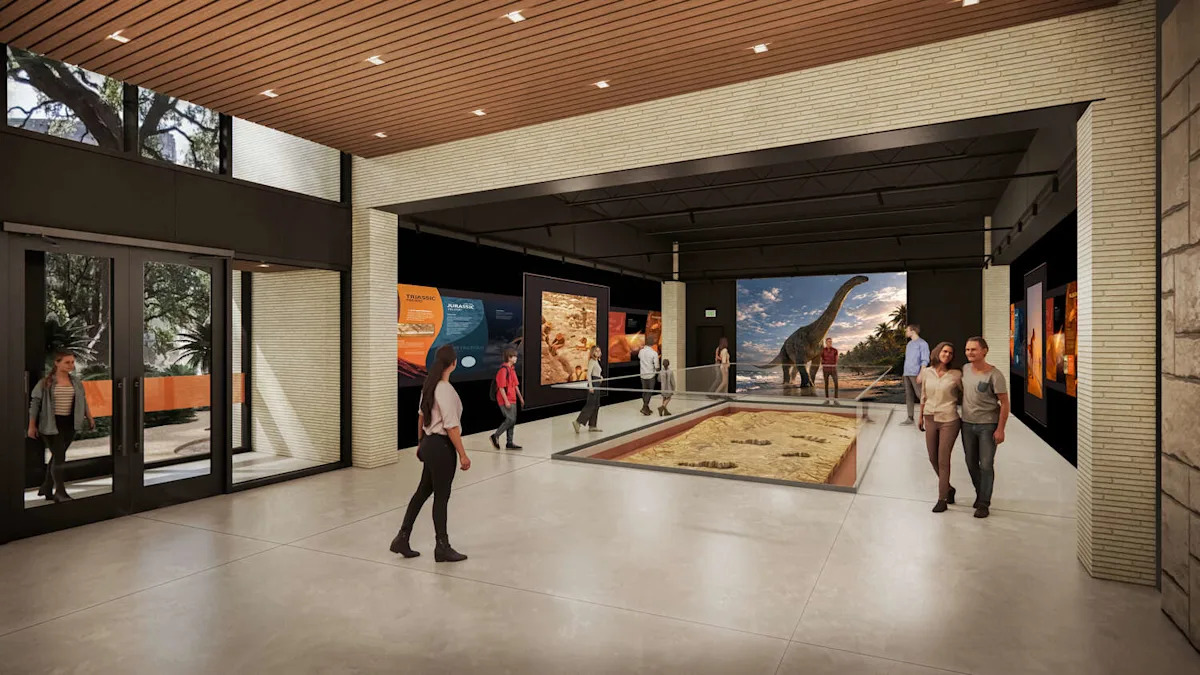
Dust off your encyclopedic dinosaur knowledge, y’all: A tyrannosaurus-sized dinosaur attraction is en route to the Lone Star State.
The Texas Science & Natural History Museum, hosted on campus at the University of Texas at Austin, is kicking off a massive, multimillion-dollar endeavor to preserve and display some of Texas’ most famous fossilized dinosaur discoveries. The museum is slated to begin construction on its new Sarah and Ernest Butler Dinosaur Trackways Building this summer, with the crown jewel display en tow: a 113-million-year-old set of dinosaur tracks uncovered near Glen Rose, just southwest of Fort Worth.
Construction is poised to begin on the project in early August and wrap in October 2027, according to preliminary project filings registered with the Texas Department of Licensing and Regulation (TDLR) on Tuesday, May 26. The project featured an estimated $4.2 million sticker price, per TDLR filings, with its scope defined as the construction of a 2,100-square-foot, single-story museum building.
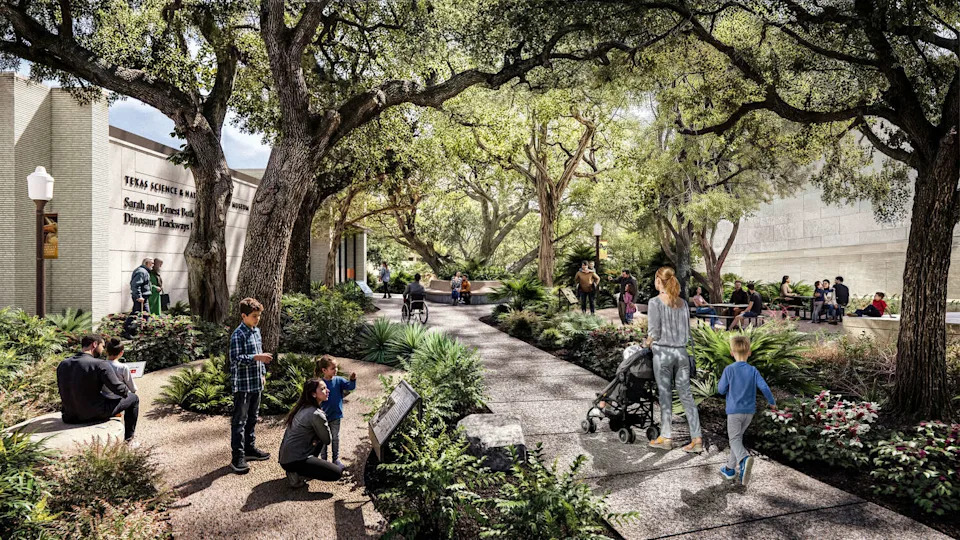
The Texas Science & Natural History Museum will begin construction on its new Sarah and Ernest Butler Dinosaur Trackways Building this summer, displaying a historic, 113-million-year-old set of dinosaur tracks discovered in Texas. (Rendering by McKinney York Architects/Courtesy of Texas Science & Natural History Museum)
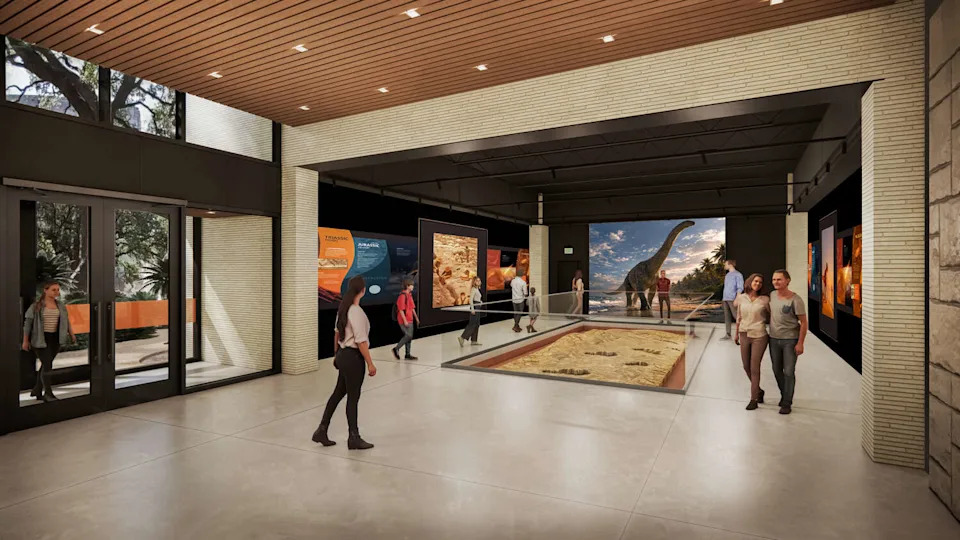
The Texas Science & Natural History Museum will begin construction on its new Sarah and Ernest Butler Dinosaur Trackways Building this summer, displaying a historic, 113-million-year-old set of dinosaur tracks discovered in Texas. (Rendering by McKinney York Architects/Courtesy of Texas Science & Natural History Museum)
The historic dinosaur tracks aren’t only significant within Texas, but also in the United States at large. Their discovery, capturing footprints of a sauropod dinosaur and a theropod predator, marked one of the most substantial dinosaur fossil breakthroughs across North America, officials noted online. Found fossilized within limestone along the Paluxy River, the fossils date back to the Early Cretaceous period – a measly 100.5 to 145 million years ago.
“This project represents a once-in-a-generation opportunity to safeguard one of Texas’ most iconic fossil discoveries,” Carolyn Connerat, the museum’s managing director, shared online. “With the Butlers’ support, we will preserve these remarkable fossils while creating new ways for visitors, students and researchers to engage with Texas’ deep natural history.”
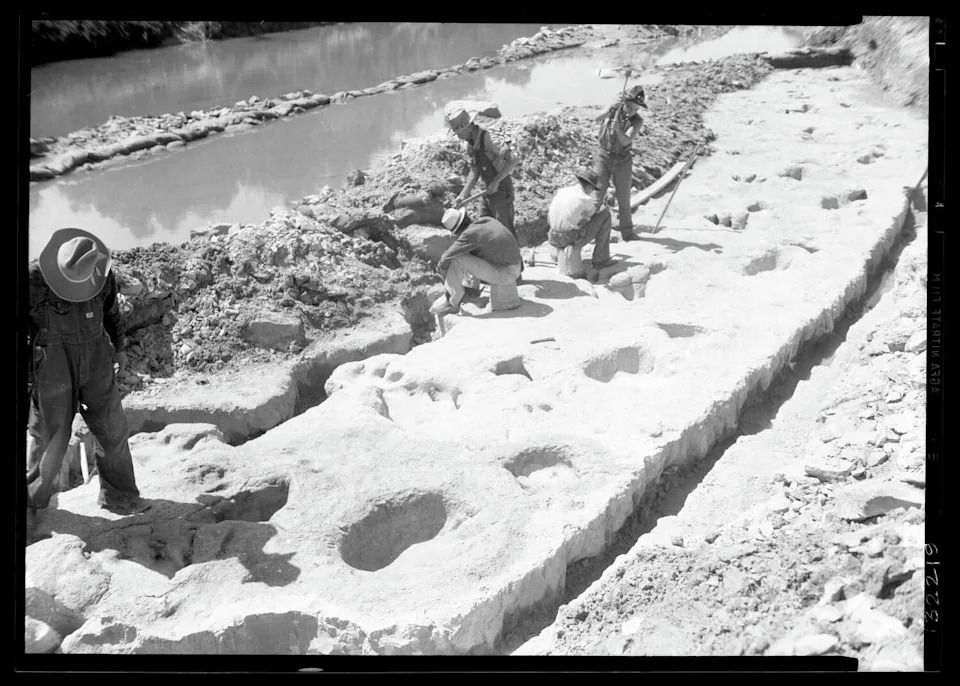
Paleontologist Roland T. Bird discovered the fossilized dinosaur tracks near Glen Rose, Texas back in the 1930s. One slab of stone was sent to the American Museum of Natural History in New York and the second was maintained in the Lone Star State. (Courtesy of American Museum of Natural History, Texas Science & Natural Museum)
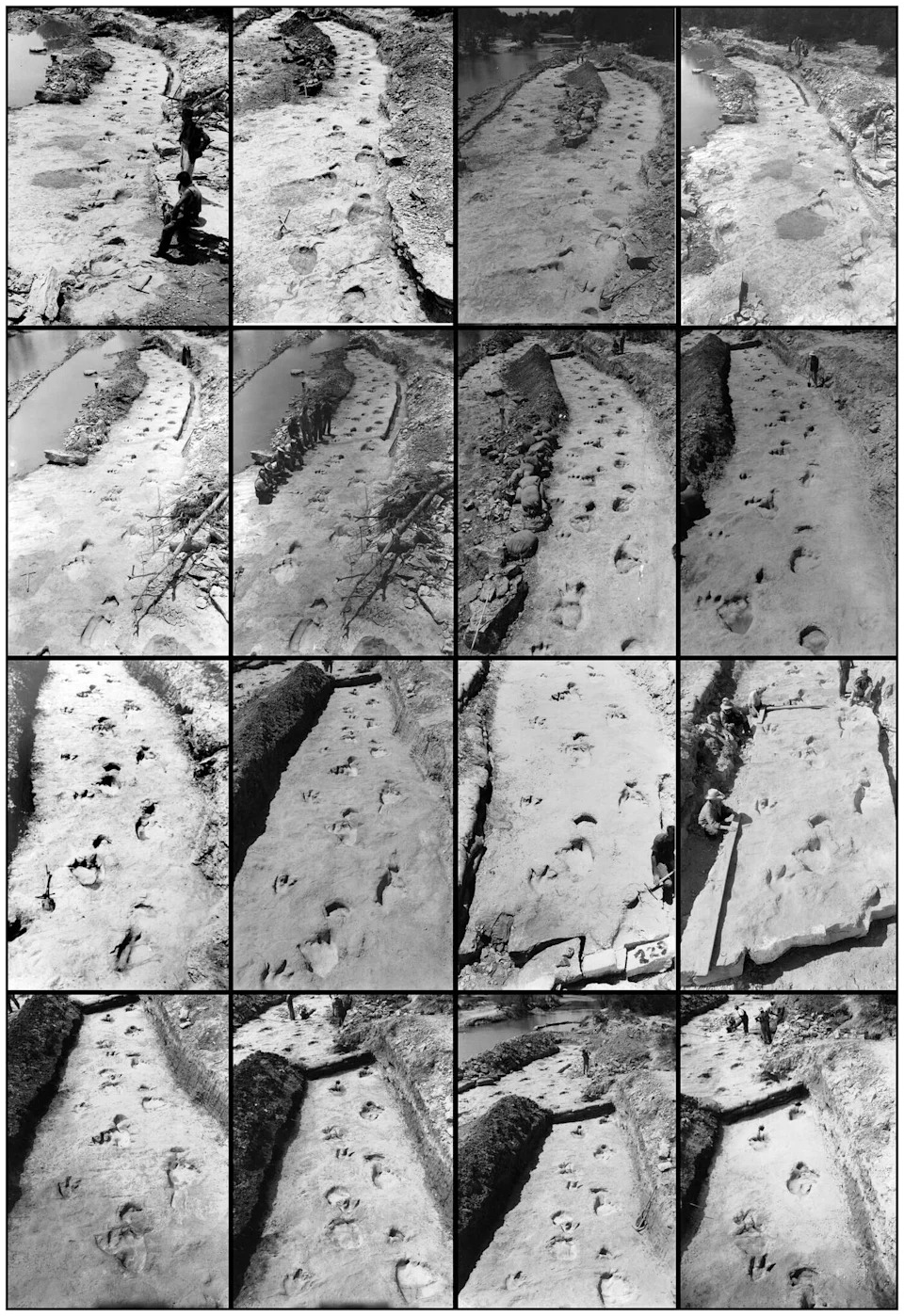
Paleontologist Roland T. Bird discovered the fossilized dinosaur tracks near Glen Rose, Texas back in the 1930s. One slab of stone was sent to the American Museum of Natural History in New York and the second was maintained in the Lone Star State. (Courtesy of American Museum of Natural History, Texas Science & Natural Museum)
The new display building comes almost 100 years after the trackways’ first discovery back in the 1930s. Paleontologist Roland T. Bird worked on that limestone removal process, with one slab of stone sent to the American Museum of Natural History in New York and the second maintained in the Lone Star State.
For decades, UT officials had preserved the trackways in a tiny building next to the museum. That property has been closed to the public since 2013 amid environmental and structural threats to the fossils’ preservation. Alongside the new building, the property will include educational exhibits and programming as well as garden spaces for visitors.
This article originally published at New Texas museum gets prehistoric, preserves 113-million-year-old dinosaur tracks.