
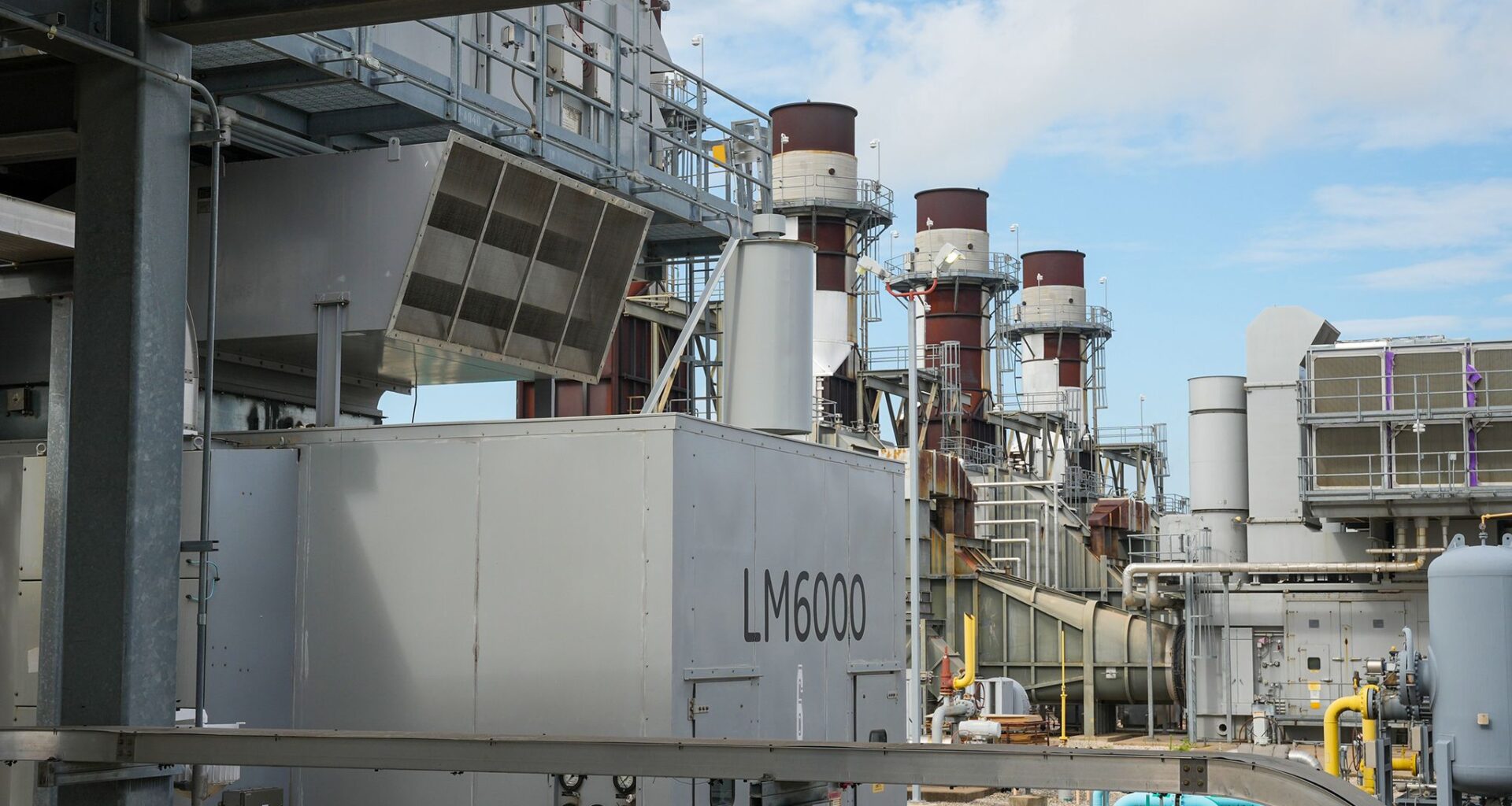
Peaker units are seen at the Austin Energy Sand Hill Energy Center in Austin, Tuesday, May 19, 2026.
Jay Janner/Austin American-Statesman
Pollution guardrails for controversial gas plants. A smaller — but still sizable — TV equipment contract. And exploring a way to stretch Austin’s affordable housing dollars.

Austin City Council greenlit all three policies this week, in the kind of meeting where the agenda did not exactly scream “read me.” But the decisions were still consequential, impacting how much pollution residents are exposed to during power emergencies, the continued public broadcasting of city business and the possibility of more funding for affordable housing.
Article continues below this ad
Here’s a quick rundown of each item and why it matters.
Council adds guardrails for new natural gas plants
One week after approving controversial natural gas plants, Austin City Council added rules meant to keep the new units from worsening air pollution and furthering climate change.
With the unanimous approval of three resolutions, council directed City Manager T.C. Broadnax to develop policies to cap total emissions, reduce community impacts and address where the so-called “peaker” plants should be located.
Article continues below this ad
One of the measures, authored by Council Member Mike Siegel, also calls for a program to support residents affected by past and future energy generation.
“These are kind of our collective effort to mitigate the impacts of the Austin Energy Peaker decision,” Siegel said.
Council Member Ryan Alter, who authored a resolution to cap the level of total emissions from the plants, said its passage “means that when these new units come online, they will not result in greater overall emissions than exist today.”
Article continues below this ad
Some residents praised the added limits, while others warned they may not go far enough.
Raphael Schwartz, who works with the Austin Sierra Club, said he supported the guardrails and recognized the compromise it took for council to pass them.
Resident and environmentalist Paul Robbins said he was confused about part of the resolution establishing a program to benefit residents negatively impacted by fossil fuel generation facilities. The resolution suggests possible benefits such as solar power generation, battery storage and other improvements requested by neighbors.
Robbins said few homes are within a mile of Sand Hill Energy Center and noted that Decker Lake was originally built in a rural area.
Article continues below this ad
“To the extent that mitigation is needed, it seems to me that it would be needed for noise and possibly traffic as opposed to solar cells,” he said. “This resolution will probably pass unanimously, but unless you amend it, you may not be addressing the real concerns.”
Broadnax must report back to council by the end of 2027 with plans to limit emissions, reduce impacts and develop a program for affected residents. He must identify options for distributing the natural gas plants more equitably by the end of 2026.
The city’s TV equipment contract got cheaper, but still isn’t small
Austin City Council also approved a five-year contract for audio, visual and television equipment and services after city staff lowered its maximum price from $36 million to $27 million.
Article continues below this ad
The original version was pulled from last week’s agenda after scrutiny from the public and council members.
The contract would cover equipment and maintenance for control rooms at city facilities, airport conference rooms, Austin Energy, the new Central Library and other city sites. It would also help replace outdated equipment and install new audio-visual systems at the new public safety headquarters and other facilities. A full breakdown can be viewed here.
Keith Reeves, a communications and public information administrator, said the total was lowered after staff reviewed the contract again and reduced funding that had been built in for unknown needs.
The full $27 million is not being spent immediately. Only $2 million is included for the contract in the city’s current budget. The agreement has an initial two-year term, with options for up to three one-year extensions.
Article continues below this ad
City officials said the contract is meant to keep essential audio-visual systems running, including the equipment used to broadcast public meetings.
If the city did not have a contract in place and a key monitor or system broke, officials said, it could make it harder to broadcast meetings.
Reeves said the contract also allows the city to spend less than the allotted amount.
The city’s current contract for audio and visual equipment, which is priced at a similar amount, is set to expire at the end of next week.
Article continues below this ad
Council wants to study a new affordable housing tool
Council also directed Broadnax to study whether Austin could use developer fees to make affordable housing cheaper or build more affordable units.
The proposal, brought by Council Member Ryan Alter, would look at whether developers could pay a fee instead of keeping some affordable units at restricted prices for the full required affordability period. The city could then use that money to make other affordable units even less expensive or to build additional affordable housing.
Article continues below this ad
The idea is still in the research stage. Broadnax is expected to bring findings back to council by Nov. 19, 2026.