
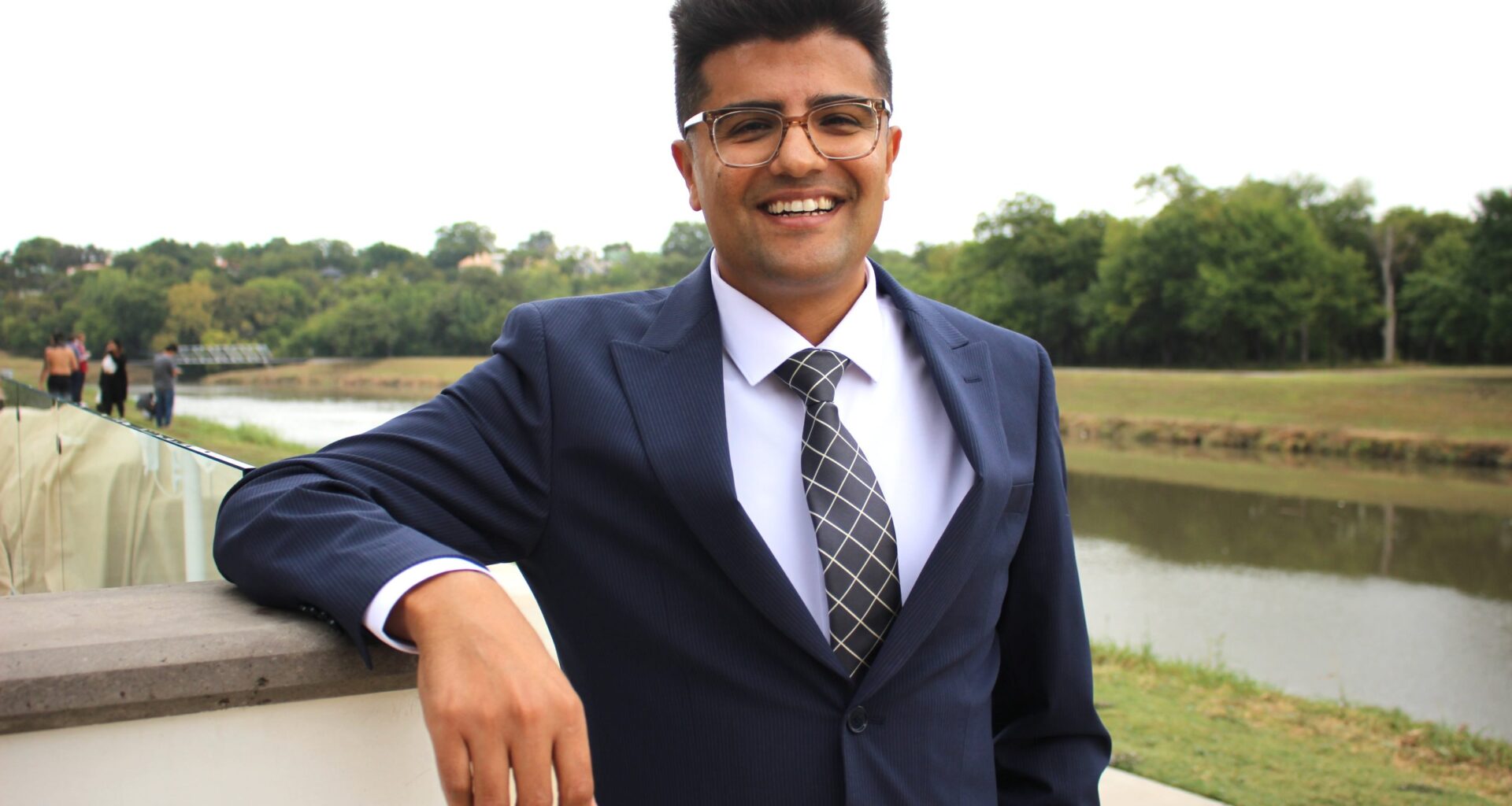
Editor’s note: Made in Tarrant is an occasional Q&A series on small businesses started in Tarrant County. Submit your business here.
Aoka Engineering, a fast-growing privately owned Fort Worth company, occupies a unique space in construction and development services — a building department for smaller cities whose growth has outstripped their capacity to keep up with permitting development and construction.
Aoka, solely owned by founder and CEO Ganesh Chapagain, offers its services to cities for everything from plan reviews to inspections. Some cities pay Aoka to take over their building departments; others, like Fort Worth and Dallas, pay Aoka to take on other pieces of the pie.
Chapagain, who grew up in Nepal, came to the United States years ago to study mechanical engineering at Texas Tech University, and worked in California and Utah before founding Aoka in Utah in 2019 and moving it to Fort Worth in 2022 to be closer to clients. He also earned a master’s in engineering management from San Jose State University. He says the firm is nearing eight figures in gross revenue, and he wants to grow revenue by 10 times in the next three years. Chapagain sat down with senior reporter Scott Nishimura at the firm’s Fort Worth office at 1751 River Run on the Trinity River.
Aoka Engineering
Contact information: info@aokaengineering.org
Website: aokaengineering.com
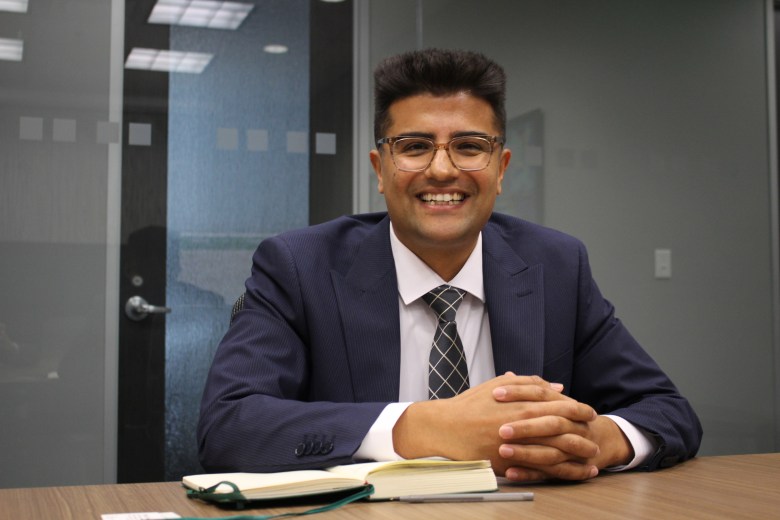 Ganesh Chapagain’s company, Aoka Engineering, offers itself up as an outsourced building department to fast-growing cities that can’t keep up with their growth. (Scott Nishimura | Fort Worth Report)
Scott Nishimura: Tell us about Aoka and how you came to found it.
Ganesh Chapagain: I’m an engineer by background. I went to Texas Tech for my undergrad, and I did my grad school in California. As a mechanical engineer, I picked the data center, pharmaceutical lab type of design as a profession, and I was doing really well in my career. In my last job before I started this company, I was building Facebook’s data center in Utah. There were 80 companies working on that job site at a time. It was chaos. I noticed this city inspector who came to the job site every day to do inspections. I learned that person did not work for the city. He worked for another company based out of California. And I was like, “Why isn’t there a local Utah company doing this type of work?” I just saw that need and quit that job, started a company, and the company’s goal from Day 1 is to support those small local jurisdictions.
Nishimura: Let’s back up here a little. You grew up in Nepal and you moved to the United States to go to Texas Tech. How was Lubbock?
Chapagain: That was a shock to my system, going from the Himalayas of Nepal to Lubbock, Texas, where it’s so flat and tumbleweeds and sandstorms. It was a big shock.
Nishimura: Why Fort Worth?
Chapagain: No. 1 reason is because our clients are in Texas. We work with a lot of fast-growing small communities, and Texas has so many of those. They don’t have the infrastructure, the manpower, the processes and technology to scale. We ended up moving the family, the employees, to Texas.
Nishimura: How many employees did you have then, and how many do you have now?
Chapagain: At that point, I would say we had about 10. Today, we’re approaching 50.
Nishimura: And in how many offices? I see you have offices in Missouri, Tennessee, Oklahoma and Utah.
Chapagain: We have quite a few, but we also work remotely. Most of us are based out of either Tarrant County, Wise County or San Antonio.
Nishimura: Tell us about moving to remote work and how that’s gone.
Chapagain: We adopted and embraced the work-from-home culture during COVID. Our idea was the workforce is headed in that direction. Let’s be the pioneer, build the guardrails, build the processes, build the systems to work remotely, hire the individuals who can work independently and communicate really well. Let’s build a training system where we can train our remote workers. That allows us to attract top talent.
Nishimura: Do you work with a lot of 1099 contractors?
Chapagain: Not really. Most of us are W-2.
Nishimura: What’s the origin of the company name?
Chapagain: It’s a made-up word. It starts with the letter A. If we are to ever be on the list of vendors providing these services, we want to be on the top. And another reason we picked Aoka is because it’s hard to find a domain. To find a domain, to build a website, you need a unique name.
Nishimura: Tell us more about the work the company does.
Chapagain: We are that quiet partner with the city, where Aoka will do the plan review and Aoka will do inspections. You’re still going through the city, and you’re paying the fees to the city. You are getting a permit from the city. It feels like you have a city inspector coming out there and doing inspections for the city. But in reality, it’s Aoka providing that manpower. We’re basically the building department, planning and zoning, for about 60 different cities here in the state.
Nishimura: For the small towns that are your clients, do you provide 100% of services?
Chapagain: Absolutely. A good example of a city is Boyd; we are their building department, we are their building official, we are their plans examiner, we are their inspector, we are their software. We are their process. We do intake, we do the whole thing.
Nishimura: Are you less expensive than what Boyd was doing in-house?
Chapagain: If they did all the work in-house, they would have had to hire a building plans examiner, a building inspector, a building official, fire plans examiner, fire inspector, planning and zoning planner, and a public works civil engineer. We’re talking about how many people, six, seven people, easily, half a million dollars, right? They’re paying us less than half.
Nishimura: Did they already have all that in place when you took over the building department?
Chapagain: They did not. They had some staff, and the one person doing the job of several people was ready to leave.
Nishimura: Do you talk about revenues?
Chapagain: We’re getting close to eight figures, and we’re looking to (grow) 10x that in the next three years.
Nishimura: How fast are you growing annually?
Chapagain: We did 200% last year. We’re looking to do another 200% this year, and prior to last year, we did 300%. It’s a lot to manage.
Scott Nishimura is a senior business reporter at the Fort Worth Report. Contact him at eric.garcia@fortworthreport.org.News decisions are made independently of our board members and financial supporters. Read more about our editorial independence policy here.
Related
Fort Worth Report is certified by the Journalism Trust Initiative for adhering to standards for ethical journalism.
Republish This Story

Republishing is free for noncommercial entities. Commercial entities are prohibited without a licensing agreement. Contact us for details.