
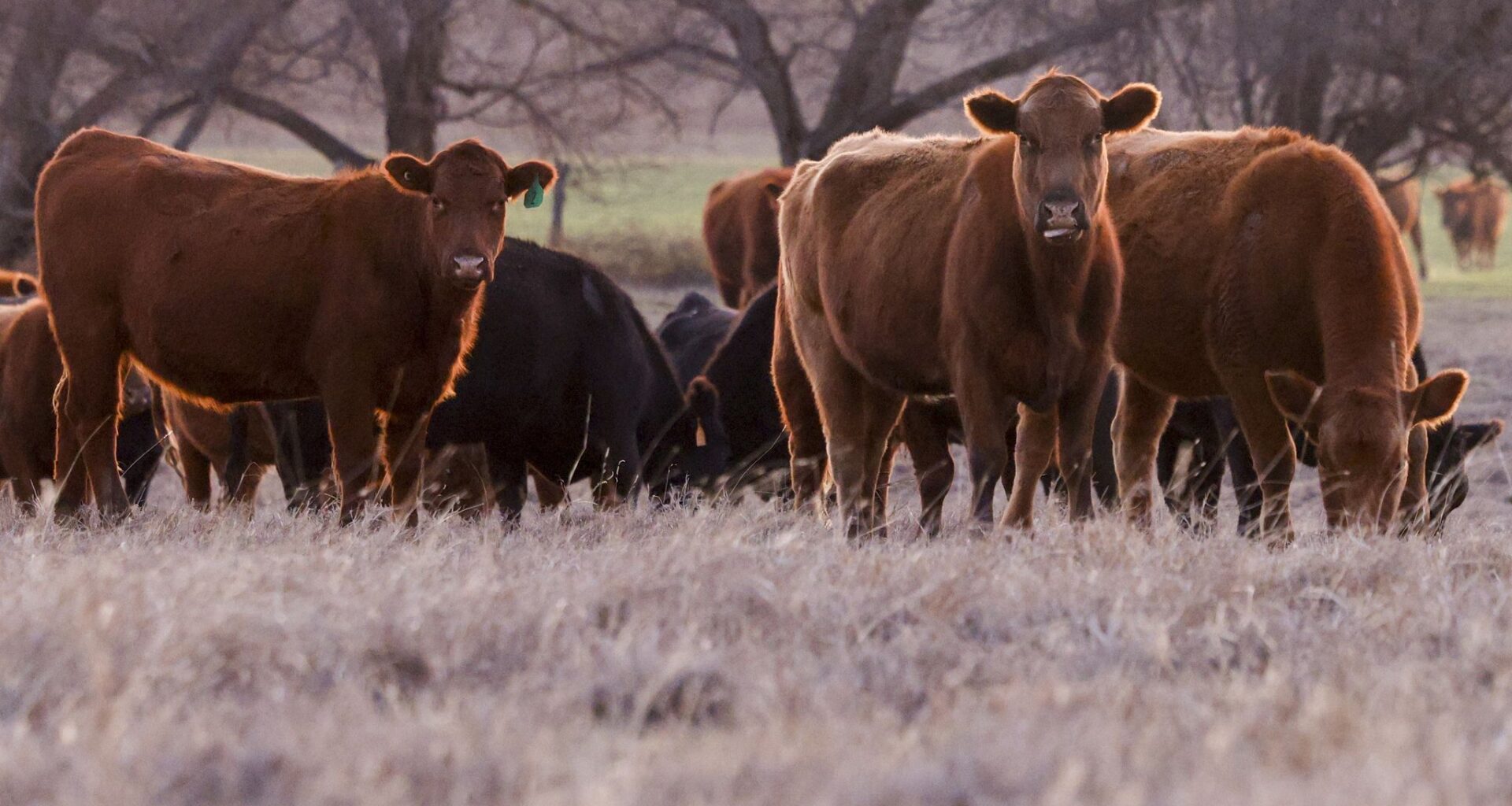
The New World screwworm fly has been detected in South Texas, federal and state officials confirmed Wednesday, marking the first time in decades the flesh-eating insect has threatened the U.S. cattle industry, nationwide beef prices and the state’s wildlife.
A sample collected from a 3-week-old calf in Zavala County was identified and confirmed as the fly’s flesh-eating larvae at the U.S. Department of Agriculture’s national veterinary lab in Iowa, the Texas Parks and Wildlife Department said in a news release. The agency said no other cases have been detected in animals in the Lone Star State so far.
TPWD is working with USDA, Texas Animal Health Commission and other state officials in a joint incident response. TAHC has established an infested zone in the area, and animal movement restrictions are in effect to prevent further spread of the pest.
“NWS can have devastating impacts on free-ranging wildlife populations and rural communities,” David Yoskowitz, TPWD executive director, said. “TPWD, in partnership with our state and federal partners, will work diligently to respond to suspected cases of NWS, and to urge the public to monitor and report signs of an infestation in warm-blooded animals.”
The main threat to livestock stems not from the adult fly, but its larvae.
NWS maggots can infest livestock and other warm-blooded animals, including in rare cases people. They most often enter an animal through an open wound and feed on the animal’s living flesh.
Officials and cattle industry leaders have been sounding the alarm about the insect’s movement across Mexico for more than a year. Last June, Gov. Greg Abbott directed officials to create a Texas New World Screwworm Response Team, warning a “reemergence” of the parasitic fly could have devastating — and deadly — consequences for the state’s livestock.
“Our food supply is 100% safe,” she wrote in the post. “This potential New World Screworm detection is being fully contained and is not a harm to the American food supply or consumer safety.”
The case confirmed in Texas comes just a day after Rollins held a news conference to highlight how close the insect was to the state’s border with Mexico, saying the pest had been detected as near as 25 miles.
This reporting is part of the Future of North Texas, a community-funded journalism initiative supported by the Commit Partnership, Communities Foundation of Texas, The Dallas Foundation, the Dallas Mavericks, the Dallas Regional Chamber, Deedie Rose, Lisa and Charles Siegel, the McCune-Losinger Family Fund, The Meadows Foundation, the Perot Foundation, the United Way of Metropolitan Dallas and the University of Texas at Dallas. The News retains full editorial control of this coverage.