
A sports management expert explains why teams are leaving the AAC, and why the impact to Dallas might be “less than people fear.”
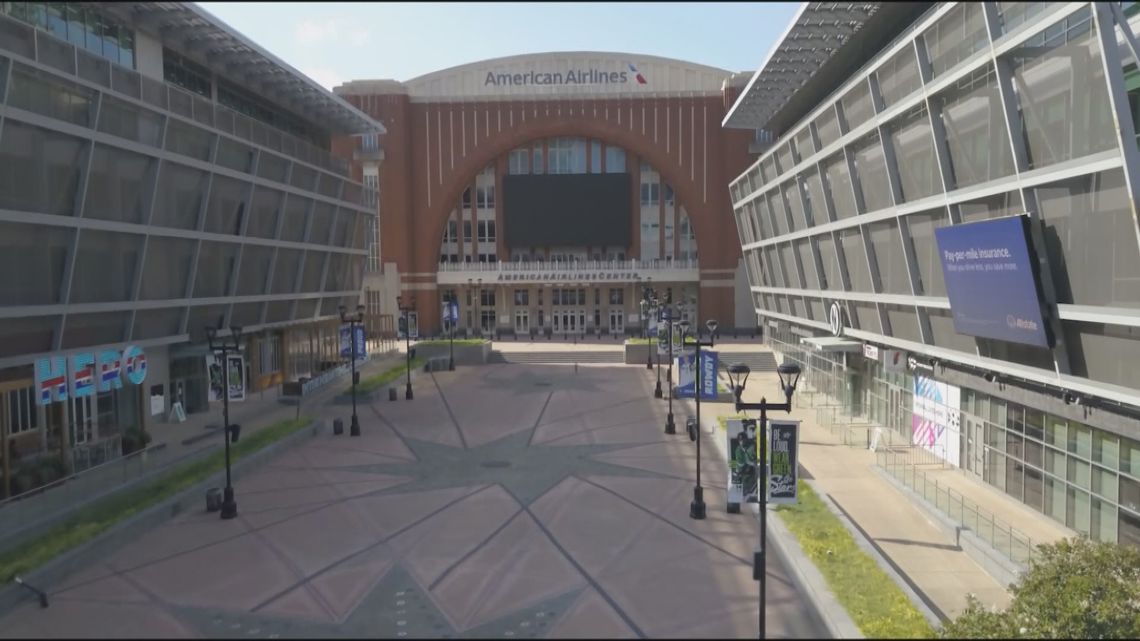
DALLAS — A party on the streets and The Eagles on the stage were the centerpieces of the American Airlines Center’s 2001 debut.
Just 25 years later, are we witnessing that arena’s demise?
“The AAC you will fill. I’m not worried about that,” said Bob Heere, a professor in the University of North Texas’s Department of Management and the Executive Director of the UNT Sports Innovation Space.

This story continues below.
“They might lose a little bit, but a lot less than people are fearing right now,” he said.
Dallas Mavericks minority owner Mark Cuban told WFAA he has “a lot of concern,” about the moves of both the Mavs and Dallas Stars, announced on back-to-back days.
The Mavericks revealed a plan to move to the old Valley View Mall site in North Dallas on Monday.
Barley more than 24 hours later, the Dallas Stars announced the signing of a letter of intent with the City of Plano.
Cuban’s concern is about the future of the AAC.
“For the people that have businesses down there, who live down there to be close to games. I hope both teams do something to help,” Cuban said.
The teams’ leases with the AAC expire in 2031.
The arena will lose a combined total of 82 home games a year.
Heere said he doesn’t think the arena will have trouble filling many of those empty dates.
But, he acknowledged that once both teams’ new arenas are in operation, that means additional competition to the AAC trying to ink deals for concerts and comedy acts.
The American Airlines Center has undergone renovations in its relatively short lifespan.
And it’s not regarded as a building that’s in need of an overhaul.
But Heere said it doesn’t offer the kind of experience teams now want to deliver.
“For the normal fan like you and me, there’s nothing wrong with it, it’s a beautiful arena,” Heere said. “Where it misses out and makes it harder to compete is in the upper echelon, so the luxury suite environment and the club environment.”
“This new generation of fans is not necessarily a generation who grew up sitting in a chair watching something passively. They want to move around, drink, eat, and socialize while there’s a game going on.”
He said the Rangers’ Globe Life Field in Arlington is a good example of a new venue that gets it right.
“The AAC, if you want to get a drink or want to get food, you have to leave your seat. You can’t see the game. You go to the concourse. That kind of environment is what we’re trying to change.”
Heere also said the AAC lacks the kind of real estate ownership groups want for entertainment districts, like Texas Live in Arlington.
The Mavericks are staying in Dallas, so they will continue to contribute to the city’s tax base.
And Heere is a reminder that not all fans are disappointed in the move.
“Let’s define fan. I live in Frisco and I had a wonderful day because both my teams are moving closer to me!” he said. “As a non-Dallas Dallasite, I’m just excited.”