
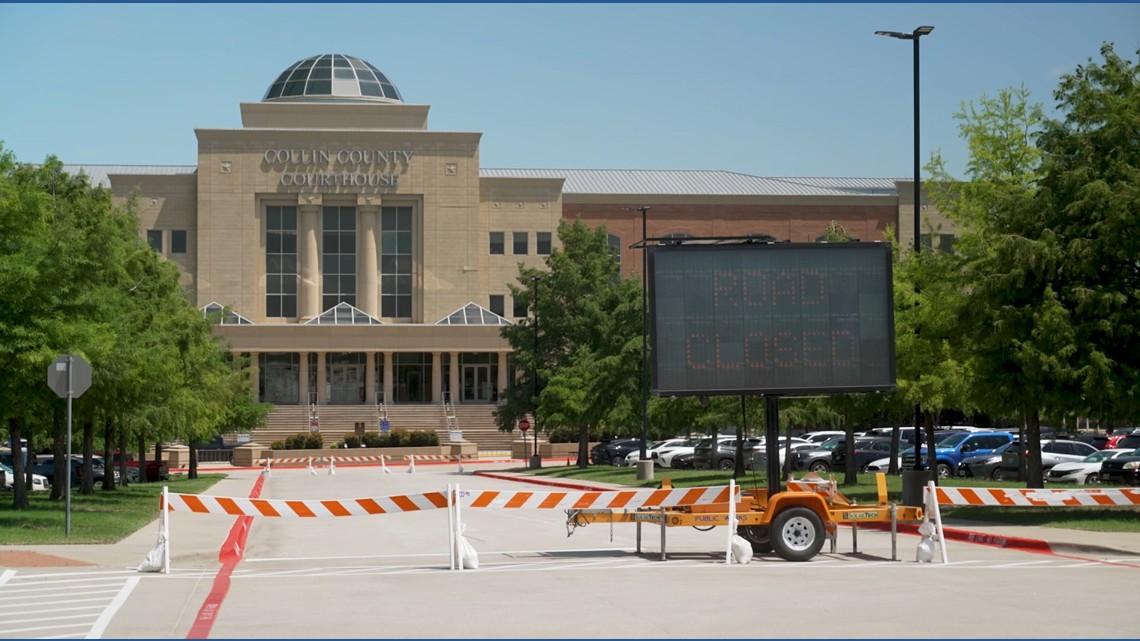
The Collin County judge overseeing the case denied a defense objection that jurors who said they are African-American were excluded on the basis of race.
MCKINNEY, Texas — Defense attorneys in the Frisco track meet stabbing trial argued Wednesday prosecutors unlawfully excluded from the jury three people who were the only potential jurors remaining in the case who said they were African-American.
“Those three were 100% of the available African-American jurors,” Defense Attorney Mike Howard told the judge.

This story continues below.
But Judge John Roach ruled against the defense challenge and in favor of prosecutors, who said their reason for excluding the three people was because they are educators — not because they are Black.
Cameras are not allowed in the court — and members of the press and public watched jury selection via a remote feed — so the racial, gender and age makeup of the final jury will remain unknown until Thursday when opening statements begin.
Karmelo Anthony, who is black, is accused of stabbing and killing Austin Metcalf, who was white, at a Frisco ISD track meet last April. The case has garnered national attention.
Wednesday’s juror challenge led community activists to express “outrage.”
“This action raises serious concerns about the fairness and integrity of the judicial process and undermines public confidence in the promise of equal justice under the law,” said the Next Generation Action Network in a statement.
“When qualified jurors are excluded in a manner that appears to systematically eliminate representation from a community directly impacted by the outcome of a case, it creates legitimate concerns about whether justice can truly be administered fairly and impartially,” the NGAN statement continued.
WFAA’s independent legal expert Vanita Parker watched jury selection from inside the Collin County courtroom. She said the defense challenge of the removal of the three African-American jurors stood out to her.
“You have to give race neutral why certain jurors or a group of individuals were struck. And in this case the state had a reason, they were educators,” she said.
Parker said questions lawyers asked potential jurors were pretty typical. They included questions about self-defense, Anthony’s age and whether his race would make it difficult for jurors to render an impartial verdict.
“They went over everything that you would go over in a normal murder case,” she said.
The 18 selected panelists — 12 jurors and 6 alternates — were sent home Wednesday night by the judge and ordered not to speak about the trial or research it on their own. Opening statements are set to begin Thursday.
“Being a juror — especially in this kind of case, it’s a big burden,” Parker said.