
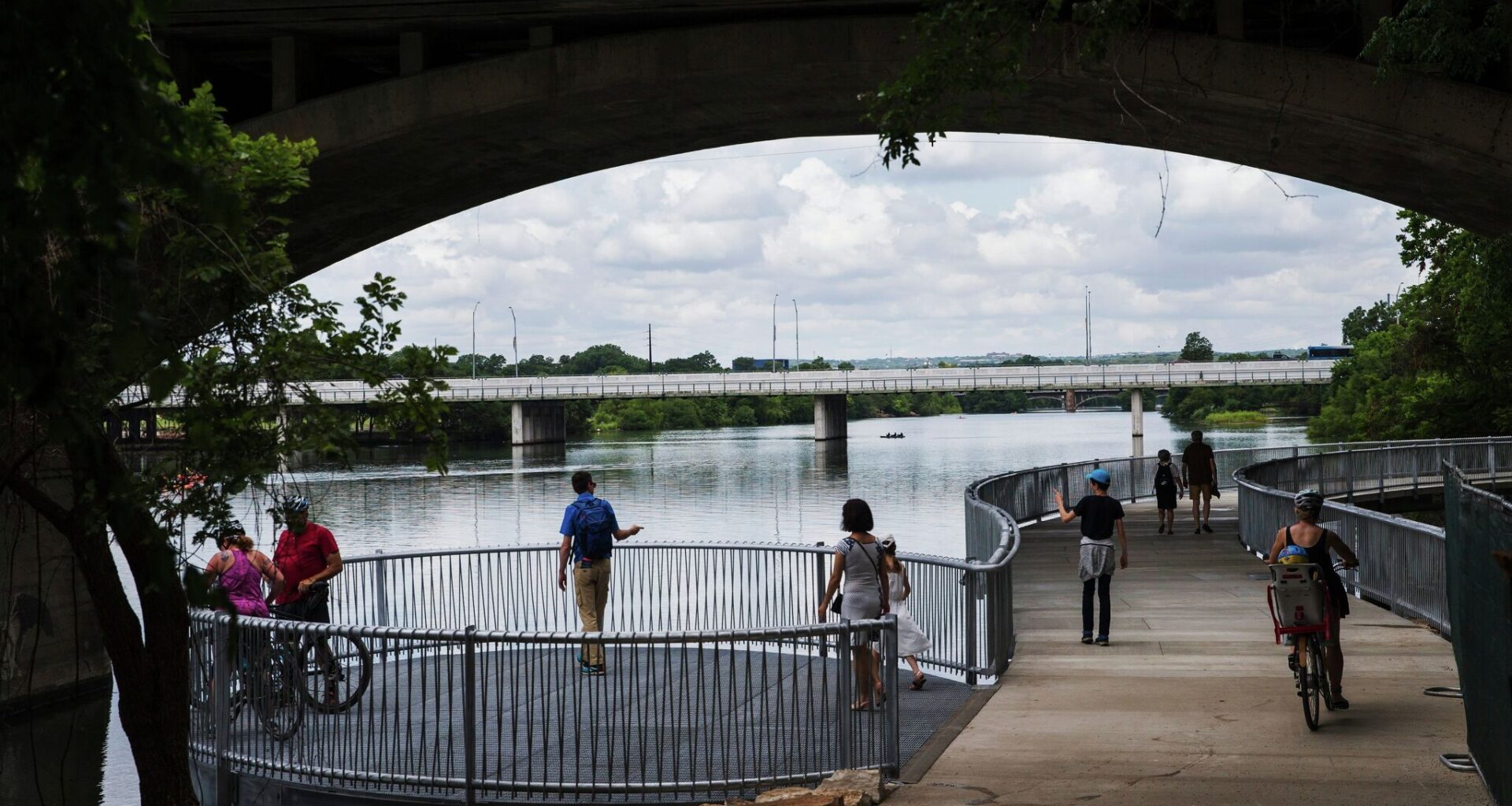
Pedestrians use the Butler Hike and Bike Trail beneath the Congress Avenue Bridge. The city plans to spend $25 million on a new section of boardwalk between South First and South Congress, even as East Austin parks need greater investment, Paul Saldana writes.
AMERICAN-STATESMAN FILE
Austin is at an inflection point. As we turn the page from Proposition Q and evaluate a new budget and possible 2026 bond package, our commitment to transparency, equity and accountability in how our public dollars are spent must be strengthened.

The current debate surrounding $25 million in discretionary mitigation funds from the Texas Department of Transportation is not simply about a proposed boardwalk along the Ann and Roy Butler Hike and Bike Trail. It is about process — who is involved, who is heard and whether decisions reflect urgent community priorities or not.
Article continues below this ad
The state is providing the $25 million to the city of Austin because the expansion of Interstate 35 will disrupt some city parkland, permanently absorbing about 0.8 acres and temporarily occupying another 2.5 acres during construction. With little public engagement, plans solidified for the money to fund a boardwalk on the south shore of Lady Bird Lake between South First Street and South Congress Avenue.
There is no question that improving mobility and safety along the trail has value. But when a project of this scale and impact to Austinites appears to advance with limited transparency or meaningful public discussion, it raises legitimate concerns. Public dollars — particularly those intended to offset the impacts of the I-35 expansion — should be deployed through an open and inclusive framework.
Multiple East Austin parks such as Edward Rendon Sr. Metro Park, Palm Park, Guerrero Park and Onion Creek Metropolitan Park continue to face substantial, unmet needs despite long-standing master plans approved by both the community and City Council. Steering $25 million to a proposed boardwalk while much higher priorities in East Austin remain unfunded risks reinforcing disparities the city has worked to address.
SIGN UP FOR THE AUSTIN ANGLE and get Statesman commentaries in your inbox
Article continues below this ad
East Austin faces historical park investment inequities, with predominantly Black and Latino neighborhoods in the “Eastern Crescent” experiencing significantly less access to quality green space. Decades of segregation and underinvestment have left these areas with fewer amenities, while rapid development now drives displacement, threatening to leave long-term residents with limited access to improved parks.
Fundamentally this is an issue of equity. Public parkland is a shared asset, and its stewardship must reflect a balanced and deliberate allocation of resources. When decisions appear concentrated or influenced without clear public accountability, trust erodes.
The city’s nonprofit partners, including The Trail Conservancy, must operate within clearly defined boundaries that preserve public oversight. Public-private partnerships succeed when they are transparent, structured and accountable — not when they substitute for the public process or put their own needs above those of the greater public interest.
Austin should use this moment to strengthen its governance framework. At a minimum, that means clear standards for how state mitigation funds are prioritized, full disclosure of stakeholder engagement in funding decisions, and most importantly, a formalized role for City Council and the public before major allocations are finalized.
Article continues below this ad
An independent review of Austin Parks and Recreation Department’s process in determining how public money is spent in our shared park system would provide needed clarity and reinforce public confidence. This is not about revisiting a single project. It is about ensuring that future decisions are guided by principles that reflect the values of the entire city.
Transparency is not a procedural formality; it is the foundation of effective public service. As Austin continues to grow, the expectation must be clear: every public dollar is allocated with integrity, equity and with the full trust of the community it is meant to serve.
Public dollars demand public accountability. Austin deserves nothing less.
Article continues below this ad
Paul Saldaña is a native East Austinite and co-founder of Hispanic Advocates Business Leaders of Austin (HABLA).