
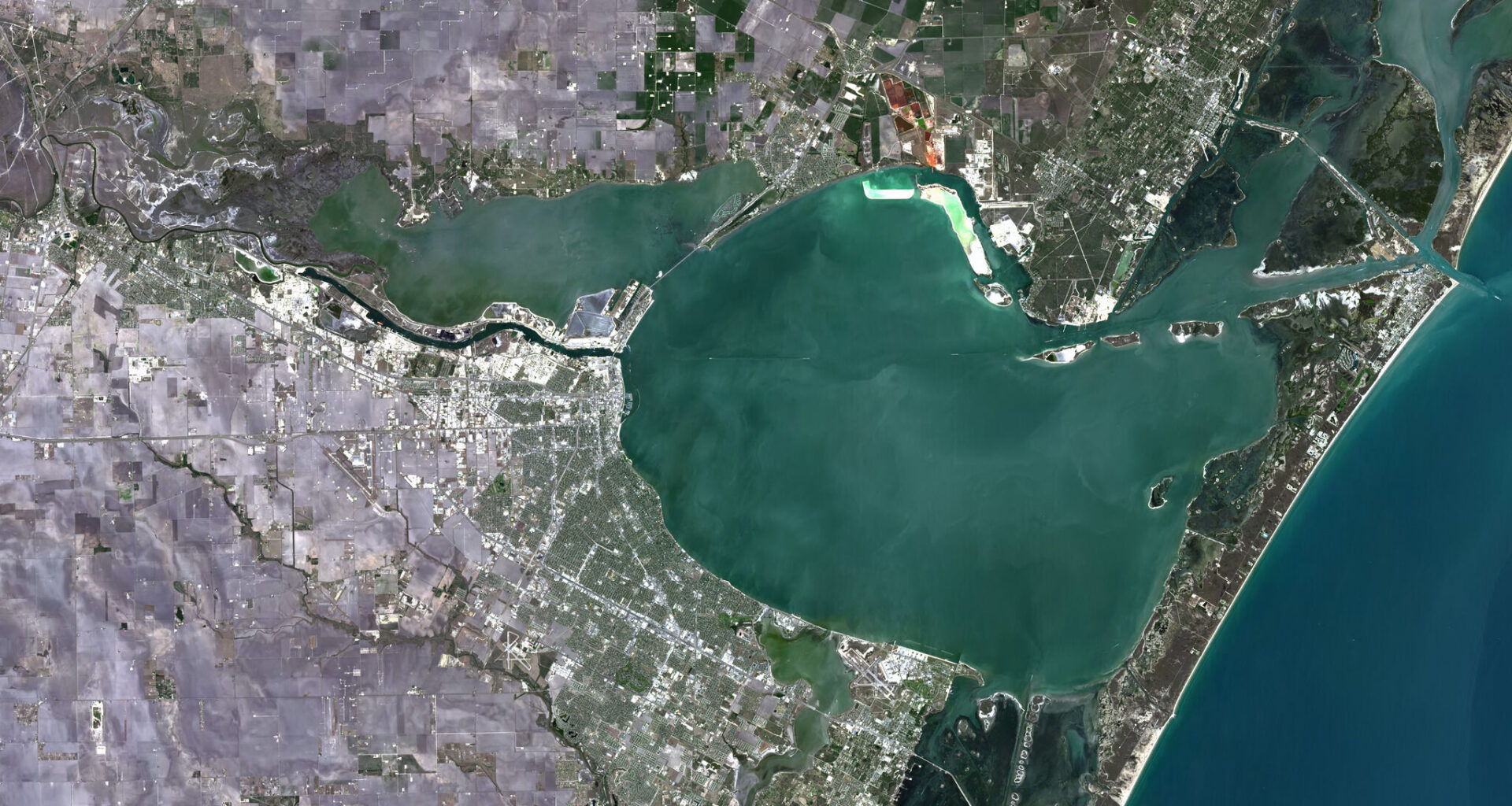
Corpus Christi is running out of water, and along with it, so is much of the Coastal Bend. But, after more than a dozen hours of discussion — including comments from over 100 members of the public — city leaders have once again put off making a decision on the controversial Inner Harbor desalination plant.
At stake during Tuesday’s lengthy meeting — which stretched from 9 a.m. until after 2 a.m. Wednesday — was a proposal to award a $78.6 million contract for the design of the Inner Harbor Desalination Plant. But rather than approving or denying the contract, a split Corpus Christi City Council chose to do nothing — at least until September 1.
“I wish that today we would have moved this forward for a thousand reasons, and it all has to do with certainty for the people of this city and for this region. I know there’s… a motion to table on the floor, but I would ask that you would reconsider that motion,” Corpus Christi Mayor Paulette M. Guajardo said with an audible note of defeat in her voice.
When the rest of the council remained silent, she responded, “OK, alright. I tried. I just want to put that on the record.”
In the end, seven of the council’s nine members voted to postpone the contract vote, further delaying the on-again, off-again desalination plant project that has polarized the Coastal Bend for years. This week’s vote would have given new life to the billion-dollar project that the city council killed last fall amid concerns over ballooning costs. Had the council greenlit the design contract award, it still would have taken a year — until August 2027 at the earliest — before construction could have begun, according to a presentation delivered by Nicholas Winkelmann, Corpus Christi Water’s chief operating officer. From there, “mechanical completion” of construction would have taken nearly three years — well into 2030.
But the Coastal Bend is staring down a looming water crisis now — one that could make Corpus Christi the first city in the United States to run out of water. Despite the region’s desperate need for new sources of water, opposition to the desalination plant continues to grow. Local residents worry it would come at too high a cost, and not just in terms of dollar figures. They lambasted the project’s potential to damage the environment. They also criticized the impact the plant would have on the Hillcrest neighborhood, where the plant will be built. The city has previously faced penalties for Civil Rights Act violations associated with building the new Harbor Bridge through the heart of the historically Black community.
“When historically Black communities continue to be surrounded by industrial development, residents have every right to question whether equity and environmental justice are truly being considered,” District 2 resident Tina Butler said.
The desalination plant isn’t the only water infrastructure project Corpus Christi is pursuing. The city is also investing more than a billion dollars —- most of it through loans — in digging dozens of groundwater wells, water reclamation projects, brackish water treatment plants, and in buying additional water rights. All together, the projects are expected to cause a nearly $30 increase to a resident’s average monthly water bill, Winkelmann said.
But the true cost of financing all the projects could wind up higher than that. That’s because earlier this week, one of the nation’s largest credit rating companies, Fitch Ratings downgraded Corpus Christi’s credit outlook, which will make financing debt a more expensive proposition. Fitch — a subsidiary of MySA’s parent company, Hearst — cited the city’s poor leadership and its “failure to address (water) supply deficiencies” as the reasons behind its new negative outlook.
“Given the system’s heightened risk profile, including concerns related to management and governance, anticipated performance is more consistent with the ‘A-’ rating level,” the credit rating company said on Monday, June 1.