
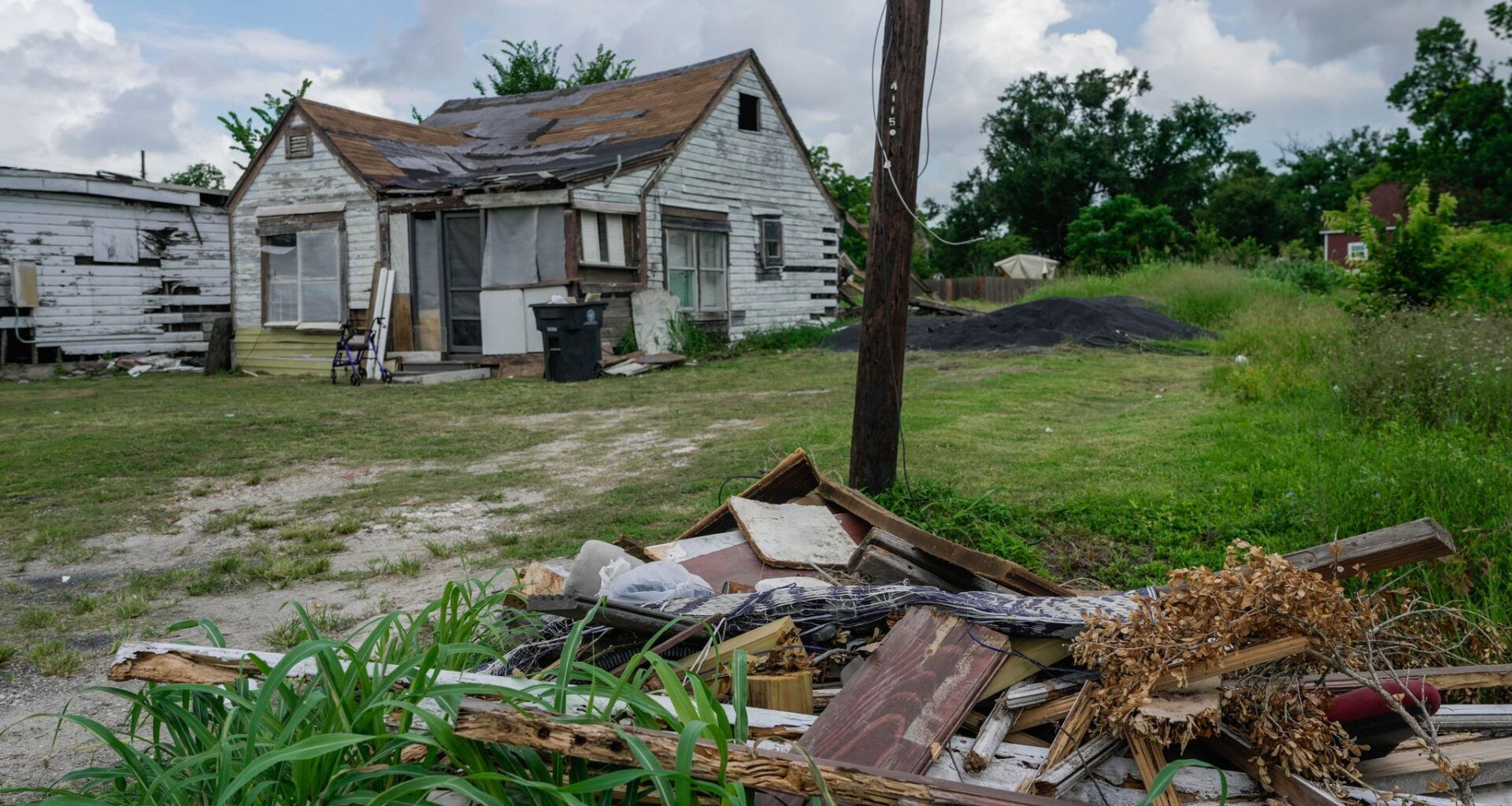
Illegal dumping is seen on a residential street in the neighborhood of Kashmere Gardens in Houston, Tuesday, June 2, 2026.
Raquel Natalicchio/Houston Chronicle
Illegal dumping is seen on a residential street in the neighborhood of Kashmere Gardens in Houston, Tuesday, June 2, 2026.
Raquel Natalicchio/Houston Chronicle
Keith Downey, president of the Kashmere Gardens Super Neighborhood Council No. 52, is photographed in the Kashmere Gardens neighborhood of Houston on Tuesday, June 2, 2026.
Raquel Natalicchio/Houston Chronicle
Illegal dumping is seen along the medians of Cavalcade Street in the Kashmere Gardens neighborhood in Houston, Tuesday, June 2, 2026.
Raquel Natalicchio/Houston Chronicle
Mayor John Whitmire’s proposed budget for the upcoming fiscal year no longer includes funding specifically set aside to combat illegal dumping — a change that frustrates residents who want the city to take a more aggressive approach to the problem.
Piles of furniture, construction debris, tires and trash often sit for weeks in medians and vacant lots in neighborhoods such as Kashmere Gardens, Hiram Clarke and Sunnyside. Community advocates say the problem contributes to blight, attracts additional dumping and places a disproportionate burden on historically underserved parts of the city.
“It becomes a revolving door and it happens every month, a couple of times a month,” said Keith Downey, president of the Kashmere Gardens Super Neighborhood.
Article continues below this ad
MORE: Critics warn Mayor John Whitmire’s budget could strain Houston water-sewer system for years to come
Illegal dumping is seen on a residential street in the neighborhood of Kashmere Gardens in Houston, Tuesday, June 2, 2026.
Raquel Natalicchio/Houston Chronicle
Illegal dumping cleanups will continue, city officials say, as part of a larger budget reorganization that would add a new $5 monthly fee on city trash customers and fold the Solid Waste Management Department into the city utility system within Houston Public Works.
“What we’ve allocated in this budget is the operational needs of the department to be able to respond to all trash concerns,” Public Works Director Randy Macchi told council members May 26. “We haven’t broken that out specifically. There’s not an illegal dumping group.”
Article continues below this ad
A group of city council members are pushing for a more targeted approach, submitting a budget amendment to reallocate $3 million to illegal dumping cleanup, enforcement, cameras, signage, education and expanded disposal options. The amendment was filed by Council Member Alejandra Salinas and signed by council members Tarsha Jackson, Martha Castex-Tatum and Mario Castillo — who represent districts where residents have reported chronic dumping.
Salinas noted last year’s budget included $1.3 million for illegal dumping activities, and a city-commissioned study estimated the city would need roughly $2.9 million annually to fully address the problem.
MORE: Whitmire wants to charge a $5 fee for trash pickup. His own study suggested charging more.
“When we took a look at the budget, one of the first things we looked for was money specifically allocated toward illegal dumping,” Salinas said. “Given what a significant public health crisis it is, given that 92% of the illegal dumping occurs in African-American and Latino communities, you have to immediately realize that the city needs to make it a priority.”
City officials also have said illegal dumping will be addressed through heavy trash operations, using a “route-based response” system.
Article continues below this ad
The city did not respond to questions about the topic. Whitmire’s office has not responded to requests for comment from the Houston Chronicle since August.
Illegal dumping is seen on a residential street in the neighborhood of Kashmere Gardens in Houston, Tuesday, June 2, 2026.
Raquel Natalicchio/Houston Chronicle
A persistent problem
Standing beside a median littered with discarded furniture and trash bags, Downey said illegal dumping often worsens when people are evicted and their belongings end up outside.
“When people see a pile like this, they dump it on top of the pile, and they think somebody’s going to come along and pick it up,” Downey said.
Article continues below this ad
Downey said Solid Waste crews have been more responsive recently, but he remains concerned that illegal dumping will not get the attention it needs without dedicated funding. He said the city should increase its solid waste budget, create a specific illegal dumping line item and consider holding landlords accountable when eviction debris ends up in public medians.
Houston’s broader solid-waste system has struggled for years: missed garbage pickup was the city’s top 311 complaint in 2025, generating 36,604 complaints, missed recycling pickup generated 30,020 complaints and missed heavy trash pickup generated 19,923 complaints, according to city data.
Longtime Hiram Clarke advocate Linda Spurlock, who’s lived in the area 49 years, said unreliable heavy trash pickup can contribute to illegal dumping. When residents have trash outside their homes for weeks, they tend to move it elsewhere, she said.
“There were times when people had stuff in their yard, the trash truck didn’t come,” Spurlock said. “I remember last year it was three months that nobody came to pick up the trash. So what do you do?”
A family walks along a road as illegal dumping is seen nearby in the Kashmere Gardens neighborhood of Houston on Tuesday, June 2, 2026.
Raquel Natalicchio/Houston Chronicle
Luke Metzger, executive director of Environment Texas, said if the new fee improves bulk trash services, it could reduce some incentives for dumping.
Article continues below this ad
“If the trash fee leads to better service, which the mayor’s office says it will, then if you’ve got more reliable and consistent pickup, you would think that would lead to less illegal dumping,” Metzger said.
Spurlock said illegal dumping has worsened in recent years. She pointed to Holmes Road as a notorious dumping corridor where people have left abandoned cars, construction debris and even boats.
Increased funding alone won’t solve the problem, she said. Spurlock believes the city needs stronger education so residents know where to dispose of waste legally.
In Sunnyside, some residents have taken cleanup efforts into their own hands. Since launching last year, the nonprofit Clean the Block has organized weekly cleanups and attracted more than 600 volunteers, according to founder Andrew Beaver.
“Builders are coming in, trying to cut corners and are dumping their construction material everywhere. Landlords are trying to cut corners when they evict people,” said Andrew Beaver, Clean the Block founder. “And when they cut corners, they dump them in places that are uncared for and neglected.”
MORE: This Houston nonprofit, fed up with illegal dumping, is reclaiming its neighborhood
For Salinas, the issue is one of dignity for neighborhoods that have long dealt with chronic dumping.
“Just because you may live in a community where you don’t see this every day, take a moment to think about what it would be like if you walked outside your house and you saw not only a pile of garbage, but carcasses, environmental toxic waste, all these horrific things,” Salinas said. “We cannot leave any Houstonian behind.”