
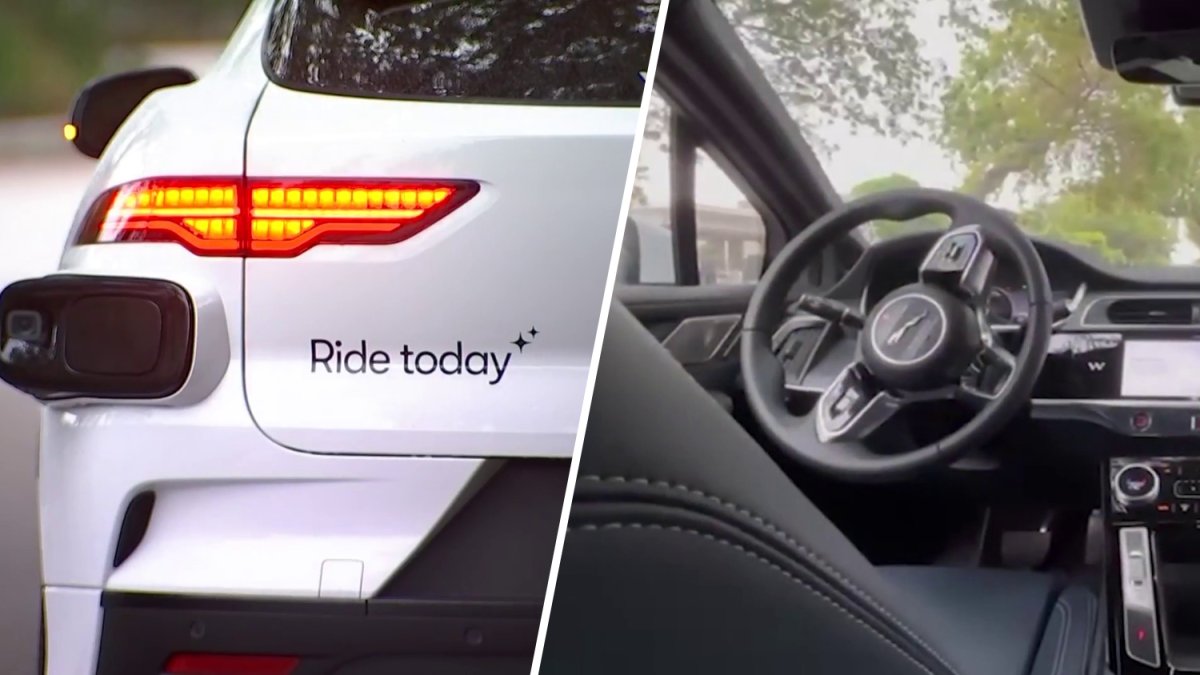
As crisis unfolded in Oak Cliff on Thursday, with firefighters battling a 5-alarm fire at the Clyde apartment complex, a Dallas County constable’s body camera captured a showdown between himself and a driverless Waymo.
“Go forward! Go on. Go! Come on! Go!” the constable is heard as he tries to move the vehicle seen blocking the street as smoke billows nearby.
Waymo said the vehicle was in the process of making a three-point turn to leave the area, and that it was yielding to other traffic when the officer approached.
One minute into the recording, the officer is connected with a remote assistant.
“Can you hear me?” asks the voice.
“Okay. Yes. You need to move this car ASAP, please. There’s a fire around the corner. Move this car. You’re blocking the roadway,” responds the officer.
He spends another minute and 49 seconds going back and forth, asking for access to move the vehicle himself.
“Give me one more second. The system seems to be having a minor issue,” says the voice.
Eventually, the officer granted access.
“I mean, it’s incredibly concerning, right?” said law enforcement expert Alex Del Carmen.
Del Carmen said last week’s video, and another of a Waymo blocking an ambulance after a mass shooting on Austin’s 6th Street earlier this year, shows the technology has gotten ahead of the law.
“In any other circumstance, you’re talking about people dying during those seconds that are passing by. Timing is of the essence, and I think law enforcement needs to be given the keys to the operational aspect of these vehicles at some point,” he said.
In its statement, Waymo said, “Safety is fundamental to everything we do, and that includes how our vehicles are designed to interact with law enforcement and first responders.
The company says its trained over 35,000 first responders across the country, including thousands in the state of Texas.
Still, Del Carmen said last week’s incident shows more regulation is needed, along with an answer to who’s held accountable if help can’t arrive in time.