
LUBBOCK, Texas (KCBD) – The Department of State Health Services is alerting Texans to the presence of New World screwworm in the state following confirmation of a detection in a bovine in Zavala County, Texas.
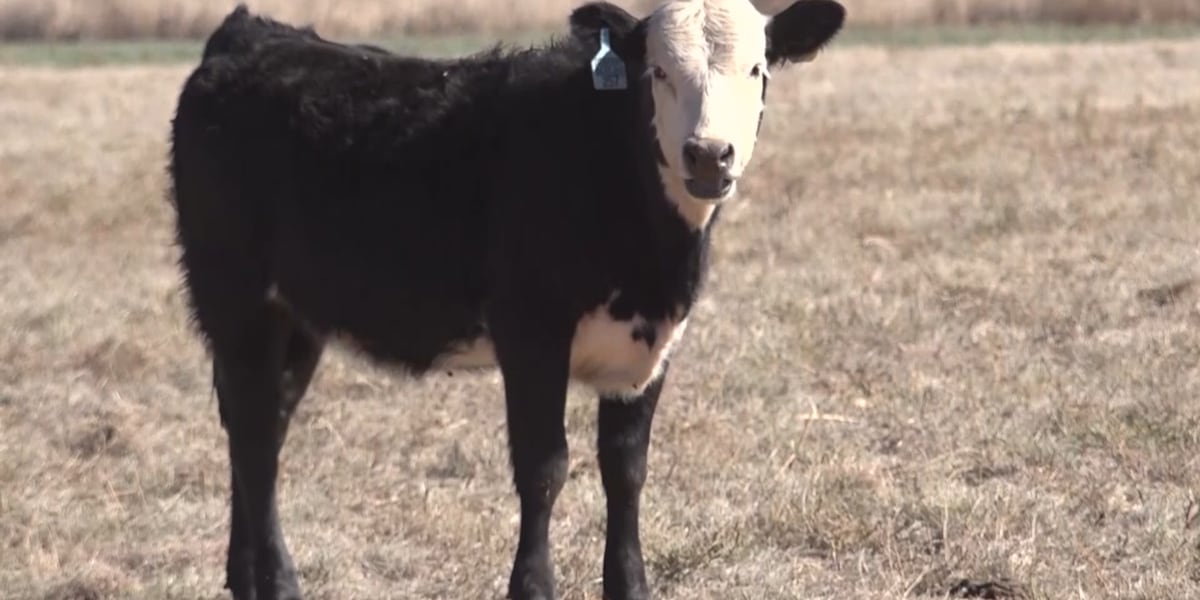
The three-week-old affected calf was found with larvae from the parasitic fly in its umbilical area.
New World screwworm flies have been moving north through Mexico since they were first detected there in November 2024.
The current outbreak is considered to have begun in Panama in 2022, with the flies migrating north since that time. NWS flies are now present in all countries of Central America and much of Mexico.
NWS flies were endemic in Texas and many southern states until their eradication from the U.S. mainland in 1966. That outbreak is estimated to have cost $800 million in today’s dollars.
Chad Cross, a One Health professor with the Texas Tech School of Veterinary Medicine, said authorities are prepared for the parasite this time.
“I think it’s important to point out that even though sterile flies were able to move further north than what we certainly wanted or expected quite rapidly, we should remember that we weren’t surprised this time around,” Cross said.
The parasite was thought to be contained 50 years ago after sterile flies were released to disrupt reproduction.
“Back when we did beat it, that took about 400 million sterile flies a week and that was back in the 1960s and 70s. For years we as a country, we as a hemisphere, had taken our eyes off the ball thinking it was eradicated. We got down to only 100 million sterile flies in production a week in a facility in Panama,” Brooke Rollins, the U.S. Agriculture Secretary, said. “That’s what we relied on to keep it out of Central America and Mexico.”
NWS flies lay eggs on or near open wounds and body openings, such as the eyes, ears, nose, mouth or genitals. When the eggs hatch, the larvae burrow into and feed on the living tissue of the mammal, which can cause severe harm and even death.
The larvae of the parasitic fly primarily infest livestock, but Cross says wildlife can be infected as well.
“Wildlife are an important component of New World screwworms’ life cycle because they’re less monitored than livestock,” Cross said. “So they play an important role – not just in terms of infestation, but also in providing an opportunity for larvae to be transported across different geographies prior to being able to fly.”
Pets are also a concern. Rollins said cats and dogs in Mexico were infected by the screwworm.
Humans can become infected, too. The CDC reports more than two thousand people were infected in Central America, 10 of whom died.
“This New World screwworm is primarily passed to animals, but it does affect humans as well,” Dr. Paul Cantey, parasitic diseases branch chief at the CDC, said. “So we have had an interest and have been coordinating with the USDA for quite some time now.”
Texas DSHS is urging everyone to keep an eye out for screwworm infestations.
“Now with confirmation of its presence in South Texas, we ask all healthcare professionals and clinicians to be on the lookout for NWS larvae infestations in their patients and to alert their local health departments immediately if they suspect a screwworm case,” Imelda Garcia, chief deputy commissioner at DSHS, said.
While not common in people, if you notice a suspicious lesion on your body or suspect you may have contracted screwworm, seek immediate medical attention. Providers should consider NWS in patients who have traveled in areas with animal or human cases of NWS and who suffer from a painful, foul-smelling wound containing visible larvae.
Texans may be at risk if they live in areas where the flies are present and they spend a lot of time outdoors during the day. Sleeping outdoors and working or living with animals near reported NWS fly populations are also risk factors. Because any break in the skin can attract NWS flies, open wounds of any size should always be cleaned and covered.
Anyone who sees or feels larvae in a wound should cover the wound and contact their healthcare provider immediately. Larvae should only be removed by a healthcare provider to prevent further tissue damage and illness.
The USDA is directing cattle ranchers to limit the movement of their livestock, saying the flies won’t travel unless the infected animals do.
While it has the potential to disrupt the cattle industry across the country, Wayne Cockrell, the second vice president of the Texas and Southwestern Cattle Raisers Association, said consumers should not panic.
“This is not a food safety issue. None of the animals that are affected by this will enter the food chain. This is not something that’s passed on through the meat to a consumer at all. Our product is still safe,” Cockrell said.
Current state or federal meat inspectors examine each animal to ensure they do not have signs of disease or pests, including screwworm.
The USDA has more information about the screwworm, and what you should do if you suspect an infestation, here: www.aphis.usda.gov/sites/default/files/nws-response-playbook.pdf
Copyright 2026 KCBD. All rights reserved.