
U.S. health officials have confirmed the year’s first known case of New World screwworm in Texas.
The Department of Agriculture announced on Wednesday that the flesh-eating parasite native to the Caribbean and Central America was found in the umbilical area of a 3-week-old calf in Zavala County, Texas. There have been no other confirmed cases so far.
USDA Secretary Brooke Rollins said in a press briefing on Thursday that a “couple” of other possible cases were being investigated but that they were not expected to be positive for screwworm. “Certainly none like the one we saw yesterday,” she said, referring to the infected calf.
The department said it was establishing a 12-mile “infested zone” around the detection site, increasing traps for screwworms along the U.S. border with Mexico, and releasing sterile flies to help prevent their spread. No animals are permitted to enter or exit that zone. Pets and livestock should “stay put,” and their owners should monitor them closely, Texas State Veterinarian Bud Dinges said during the press briefing.
New World screwworm was largely eradicated from the United States in 1966, according to the USDA. In 2017, there was a small outbreak that affected deer in the Florida Keys.
“The United States has defeated this pest before, and we will do it again,” the agency said.
What is New World screwworm?
New World screwworm is a parasitic fly that affects livestock, pets, wildlife and, in rare cases, people.
The first human screwworm infection in the United States was detected last summer in a person who had returned to Maryland from El Salvador. The person recovered, and there was no indication that the infection spread to any other people or animals.
The USDA’s Animal and Plant Health Inspection Service describes adult screwworms as “the size of a common housefly” with “orange eyes, a metallic blue or green body and three dark stripes along their backs.” Each screwworm has a 10-to-30-day lifespan and can lay up to 3,000 larvae during myiasis.
Screwworms “most often enter an animal through an open wound and feed on the animal’s living flesh,” the USDA says.
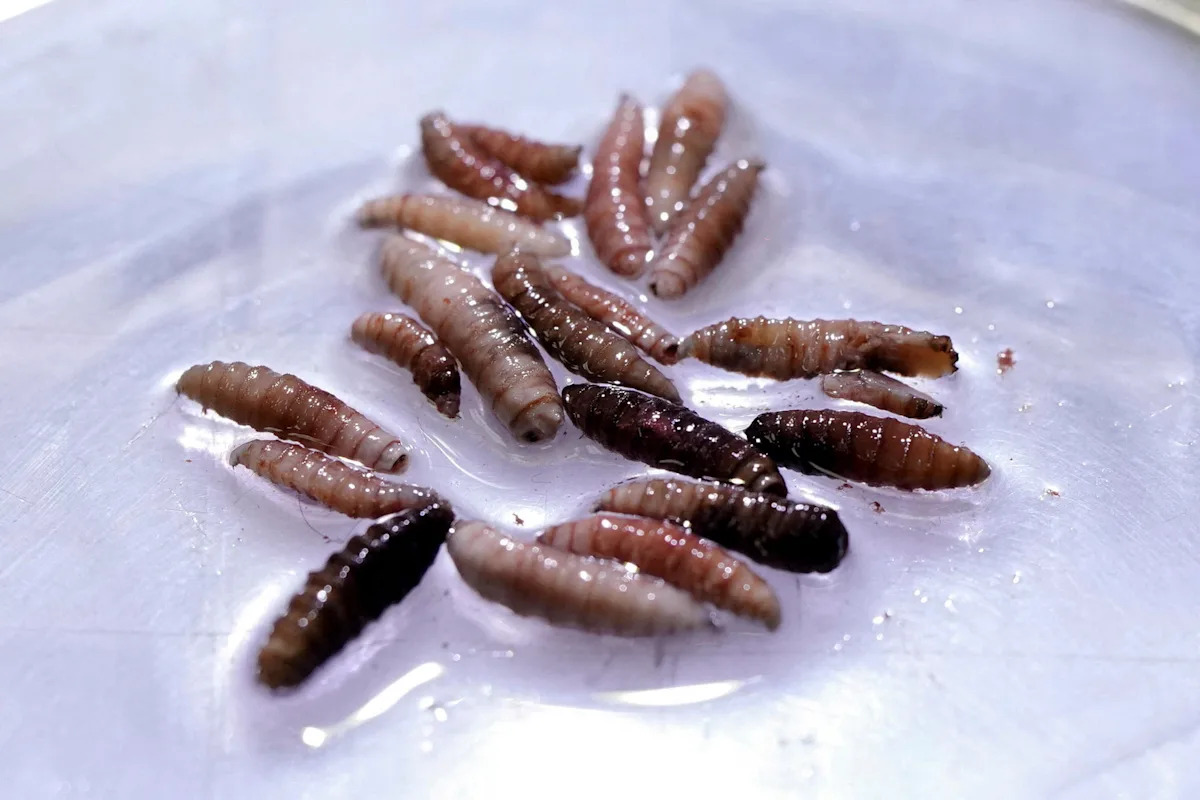
The screwworm name comes from the way the larvae tend to burrow themselves into open wounds. The maggots will tear apart skin tissue with their hooks, expanding and deepening the wound so more larvae can hatch and feed.
What are the symptoms of a screwworm infection?
Officials are urging ranchers and residents in south Texas to check their pets and livestock for signs of “enlarging wounds and signs of discomfort.”
“Also look for screwworm larvae (maggots) and eggs in or around body openings, such as the nose, ears, and genitalia or the navel of newborn animals,” the USDA said. “If you suspect your animal is infected with screwworm, contact your state animal health official or USDA area veterinarian in charge immediately.”
There are currently no FDA-approved drugs for treating or preventing screwworm infections in animals. Again, in such cases, it’s best to contact a veterinarian to treat the larvae.
What about humans?
Screwworm infections are extremely painful, and an infected person might be able to see or feel the screwworm larvae in or around an open wound, according to the Centers for Disease Control and Prevention. Symptoms include:
Unexplained, painful wounds or sores that do not heal
Seeing maggots or feeling movement in open wounds or sores
A foul-smelling odor or bleeding from the site of the infestation
The CDC strongly recommends contacting a health care provider immediately if you believe you are infected with screwworm larvae, as doctors should be able to remove them. Do not try to remove the maggots yourself.
How do I protect myself from screwworms?
If you are in areas where New World screwworm flies are present, the CDC recommends that you:
Keep open wounds clean and covered, no matter how small they are or their location on the body.
Wear loose-fitting, long-sleeved shirts and pants, hats and socks to limit exposed skin.
Use an EPA-registered insect repellent to prevent insect bites.
Treat clothing and gear with products containing 0.5% permethrin.
Sleep indoors or in rooms with screens.