
Vendors say the new system could end repeated costly permits each time they work in a different city or county.
AUSTIN, Texas — FDood truck vendors across Texas are preparing for a major change in how they operate, as the state will shift to a new statewide licensing system beginning on July 1.
The Texas Department of State Health Services (DSHS) will now handle mobile food vendor licensing under House Bill 2844, allowing operators to apply for one state license instead of separate permits in different cities. DSHS says the move is meant to streamline the process.

This story continues below.
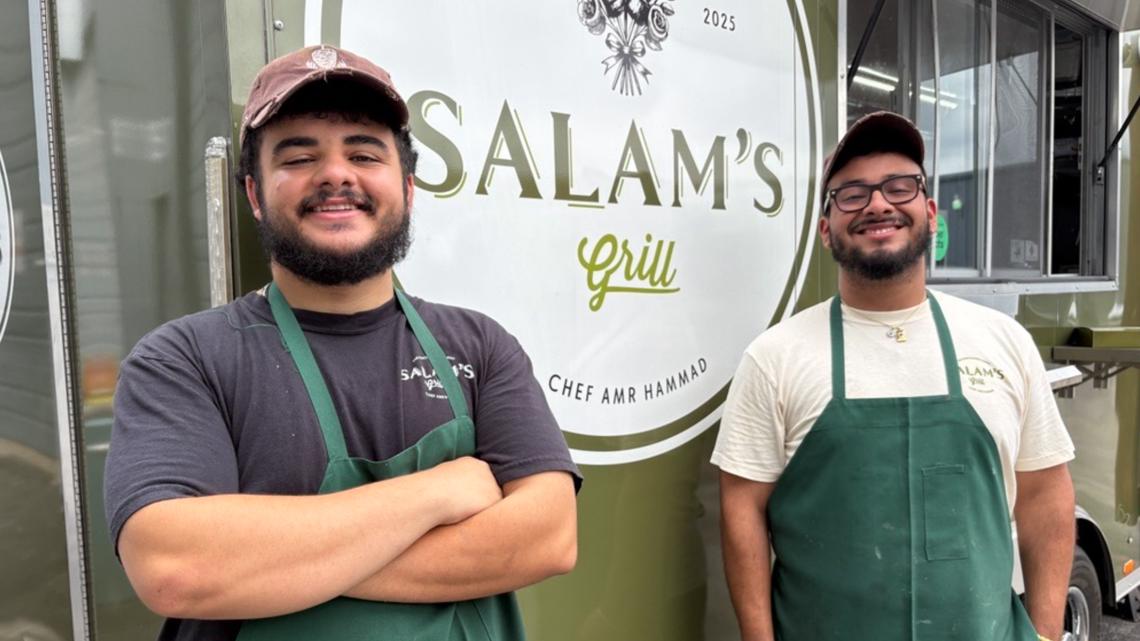
At Salam’s Grill in South Austin, co-owner and chef Amr Hammad says the change could make it easier to grow the business and reach more customers. He’s been serving shawarma out of his truck in South Austin since October 2025.
“I mean the whole point of opening a business is to make more money and spread your word, and spread your food and spread your love, so if they do this, that would give us the opportunity to,” Hammad said.
Currently, food truck owners in Texas have to pay each city’s permitting fees if they want to operate there. Hammad said in just Austin alone, he’s paid almost $800 just to set up an appointment for an inspection.
“A festival outside of the city– you have to follow their permits and regulations and a lot of it is the same, but why would we pay another $800 for the same thing we already have,” Hammad said. “If we wanted to do events in Houston, Dallas, Plano, Amarillo, that’s what, $3,000 to $4,000 just to make $5,000 to $6,000? So it’s not really worth it.”
Hammad also says it takes time to schedule inspections, and they aren’t allowed to operate until after the inspection is finished, which he says is time consuming and forces them to lose revenue.
“Gotta get the date to get inspected, you gotta tow your trailer in, you gotta close down for a day,” Hammad said. “It’s frustrating to say the least, for sure.”
What the new rules say
Under the new guidelines, Hammad says it could potentially ease financial pressure on food truck operators.
The new rules split food trucks into three types based on how they handle food. Type I vendors sell mostly prepackaged food, Type II vendors do some limited food prep and Type III vendors cook and prepare food on the truck. The more food prep involved, the higher the fees and the more inspections required.
At the time of application, the guide lists fees of $309 for Type I, $618 for Type II and $876 for Type III. Type II vendors also pay a $400 pre-licensing inspection fee, and Type III vendors pay $500. After that, Type II vendors will be inspected once a year and Type III vendors twice a year.
The idea is that food trucks will only need one state license to operate in Texas, but they still have to pass health inspections and follow safety rules. Supporters say that will cut down on paperwork and make it easier for vendors to travel from city to city. Cities, though, are worried about losing fee revenue.
Local impact
Austin Public Health (APH) says it has entered into an agreement with DSHS to help conduct inspections. In an April memo, city leaders said Austin’s on-site mobile food vendor inspection program would end at the end of June due to the city’s current fee structure differing from the state’s new plan.
However, Hammad said the statewide license could help food trucks expand beyond Austin and other major cities.
“I mean, it allows us to go wherever we want, whenever we want,” Hammad said.
Hammad said the change could also create new opportunities in smaller communities.
“If you’re in a small town and we bring a food truck there, that’s positive cash flow,” Hammad said.
DSHS has opened applications, giving vendors time to get ahead of the July 1 launch. After a vendor applies, DSHS will review the paperwork and schedule a pre-licensing inspection before issuing a license.