
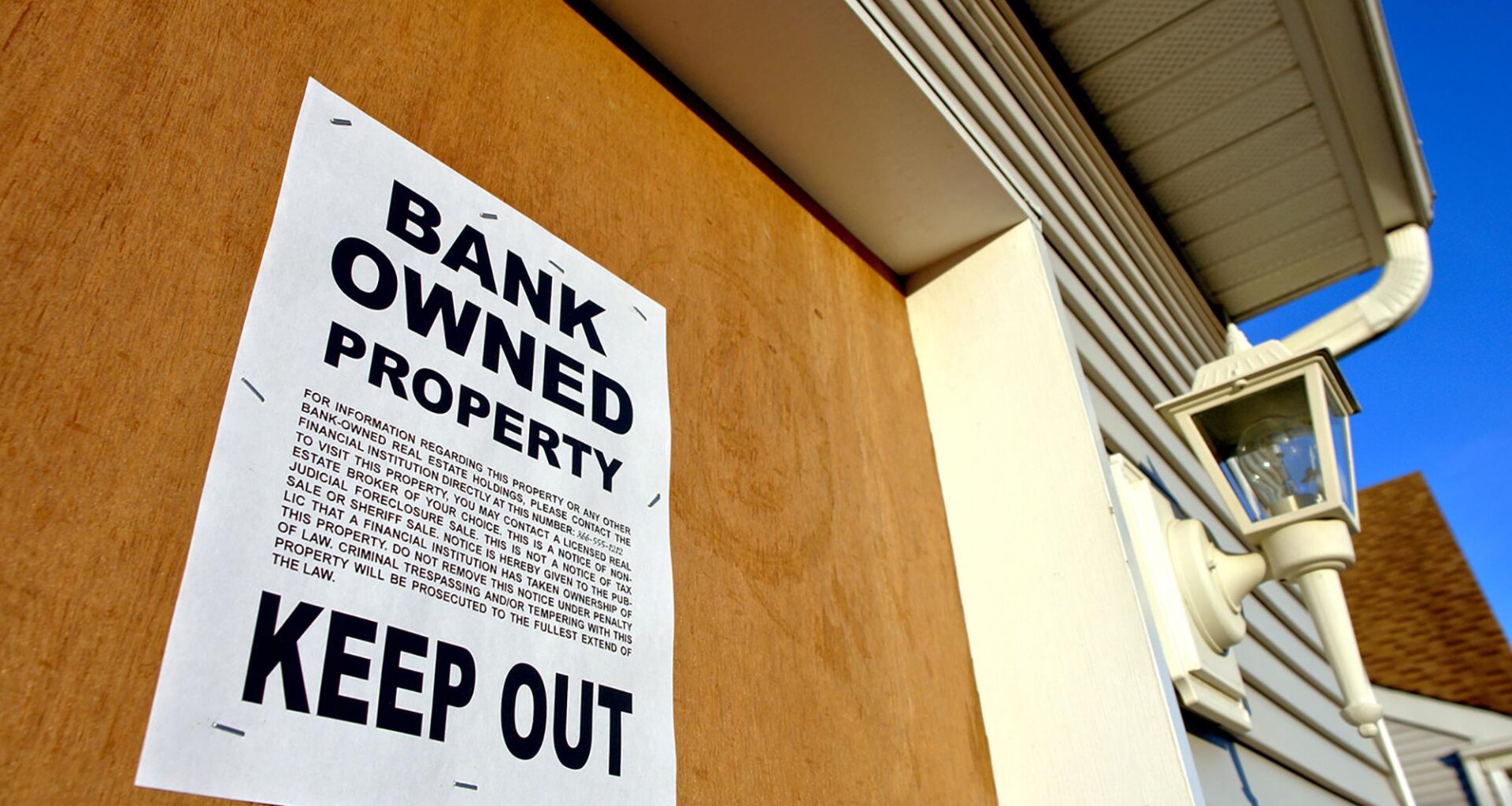
One in 2,377 homes went under foreclosure in San Antonio in April, according to a report from property data firm ATTOM. Austin had an even higher rate, with 1 in every 2,053 properties in foreclosure.
Dreamstime/Tribune News Service
The San Antonio-New Braunfels and Austin-Round Rock metro areas ranked in the top 50 among major metros with the highest housing foreclosure rates in April.

ATTOM, which provides nationwide property data, recently released its April 2026 U.S. Foreclosure Market Report, which collects foreclosure filings from more than 3,000 counties across the U.S.
Article continues below this ad
The Austin metro ranked No. 32 among metro areas with a population larger than 1 million, with 1 in every 2,053 properties in foreclosure in April. In the San Antonio metro, 1 in every 2,377 homes went under foreclosure that month, earning it the No. 45 spot on the list.
Nationally, 42,430 properties had foreclosure filings, which includes default notices, scheduled auctions and bank repossessions, according to ATTOM. That’s an 18% increase from the same time last year.
READ MORE: San Antonio adjusts to slower-paced housing market as prices hold steady and inventory sits
San Antonio Express News Logo
Make us a Preferred Source on Google to see more of us when you search.
Add Preferred Source
“Foreclosure activity continued its gradual trend higher in April, with both foreclosure starts and completed foreclosures posting annual gains,” said Rob Barber, CEO at ATTOM. “The year-over-year increases suggest lenders may be working through distressed inventory as higher borrowing costs and affordability challenges impact some homeowners. Even so, foreclosure activity remains significantly below prepandemic levels.”
Article continues below this ad
Homeowners typically go into foreclosure due to economic distress. If they face sudden unemployment or are burdened by the rising cost of living, it might be their only option if they’re can’t afford their monthly mortgage payments, especially if what they owe is higher than the current value of their home.
Texas ranks high for foreclosures
Texas as a whole had the second-highest number of foreclosure starts at 3,154. It trailed behind Florida and was followed by California, Georgia and Illinois. The Lone Star State also had 640 repossessions — the highest number of any state in April.
“Texas has to be in the top three because we’re one of the largest states, but on top of that, April marked the 11th consecutive month of price declines, which could have a bearing on some of the foreclosure numbers we’re seeing,” said Yanling Mayer, research economist for Texas Real Estate Research Center at Texas A&M University.
Article continues below this ad
MORE HOUSING NEWS: More than half of San Antonio homes lingering on the market for 60 days or more
Following the volatile demand, bidding wars and homebuying frenzy of the pandemic era, the state’s housing market is cooling. Prices are on the decline, and inventory is on the rise across the board. The competition now lies among sellers, rather than buyers.
Austin home prices add to distress
The Austin metro, in particular, had one of the largest year-over-year increases in foreclosure starts, with a jump from 158 in April 2025 to 396. Mayer said it could be due to the steady decline in housing prices — in the wake of rising inventory, many sellers are cutting prices to find a competitive edge. But lower prices can lead to upside-down mortgages, or negative home equity
Article continues below this ad
“Home prices in Austin are some of the weakest in the state,” Mayer said. “On average, they’re declining at close to 3% per year. Declining prices play into this homeowner’s distress. Many borrowers who can’t afford their payments attempt to sell their home to repay loans, but if it’s not worth the same amount as when they purchased it, they’re left without a lot of options.”
Homeowners who purchased during the peak of the 2022 post-pandemic boom are now facing a deficit as the market continues to cool down. Hannah Jones, senior economist for Realtor.com, said this is a natural shift following the volatile state of the market in those years, especially as mortgage rates began to rise.
“We saw historically low foreclosures during that pandemic period when mortgage rates were low and the market heated up,” she said. “Homebuyers were in a good position because if they got to a point where they couldn’t afford their payments, they still had a viable option to sell their home since values were still on the rise.”
San Antonio homeowners face equity challenges
San Antonio did see a slight 0.22% decrease in foreclosures year-over-year, but an 18% increase from March. Because the metro area historically has a high number of low-income households, homeowners don’t always have enough cushion to avoid foreclosure if housing payments become a challenge.
Article continues below this ad
RELATED: Homeownership in San Antonio costs more than renting, but it’s better off than Austin, study finds
Within Military City USA, several buyers use veteran loans to secure little to no down payment. These homeowners then face higher mortgage payments and accrue equity more slowly in comparison with typical borrowers. If an unexpected financial challenge arises, this makes them more vulnerable to foreclosure.
“Borrowers who have very little equity are more exposed to shifting market conditions because there’s no cushion in the accrual to absorb any adverse impact on their household finances,” Mayer said.
Mayer also added that the steady increase in foreclosures also could be a result of the Federal Housing Administration’s stricter borrowing requirements. On Oct. 1, 2025, the agency extended its permanent loss mitigation rule from 18 to 24 months. Borrowers in a bind can now receive a long-term solution to help with mortgage trouble, such as a loan modification or partial claim, only once every 24 months.
Article continues below this ad
“Now, there’s less wiggle room to refinance,” she said.
SA INC.: Get the week’s top local business stories in your inbox
Despite these challenges, the market hasn’t reached a crisis level of foreclosure rates, as it did in 2008-10. Jones said there’s no need to panic yet, as rates sit below pre-pandemic levels.
Article continues below this ad
“Buyers who bought in the last four years are likely in a more challenging situation, but if you take a step back, there are people who can refinance at low rates and people who have owned their home for a long time who are in a solid position financially,” she said. “There are definitely households struggling to make their housing payment, and a lot of first-time homebuyers who are not able to get into the market because of high rates and high prices. But by and large, homeowners are sitting on near-record high home equity still, which will continue to keep the foreclosure situation and housing market somewhat stabilized.”