
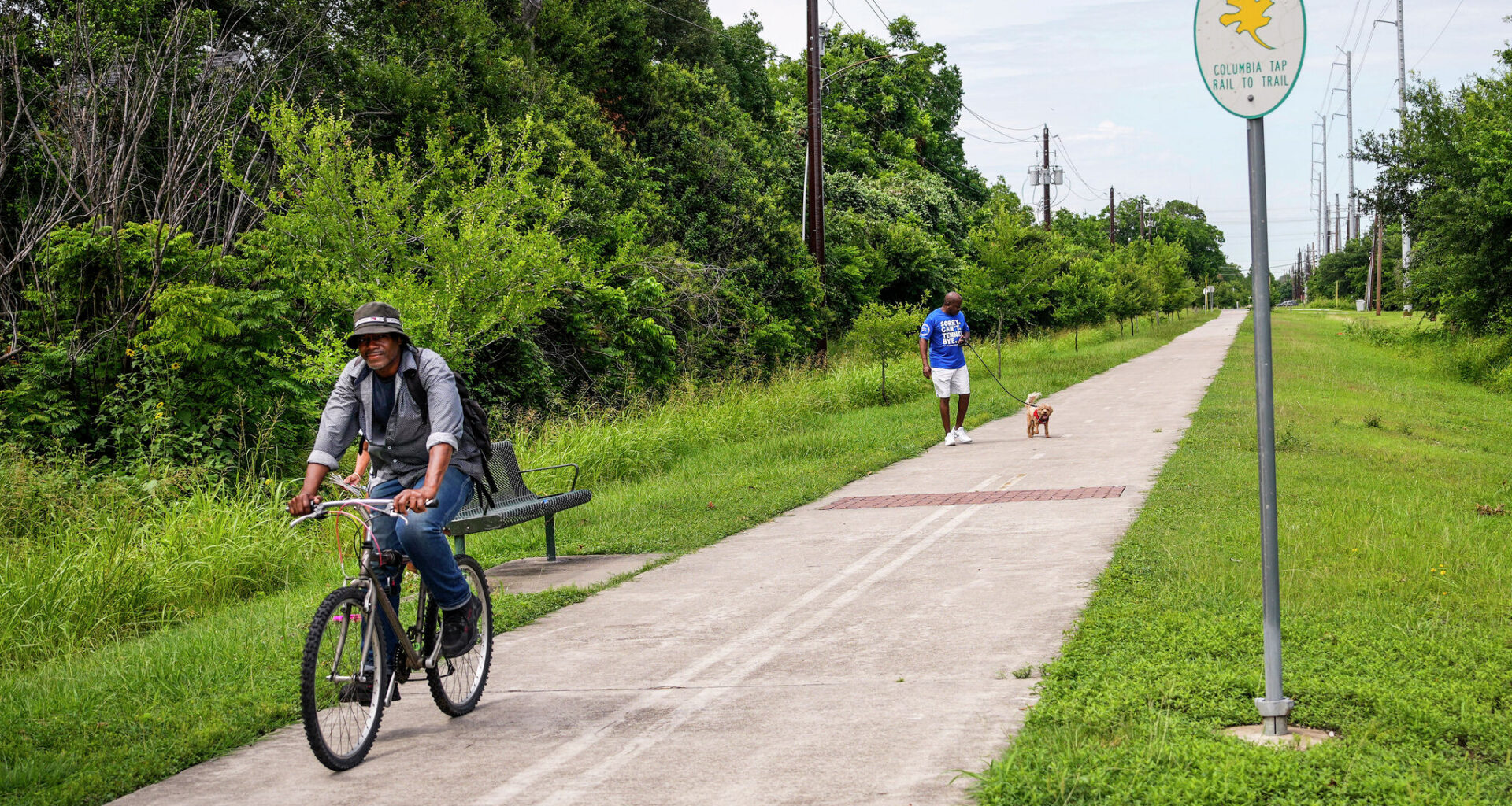
With the FIFA World Cup in Houston this summer, there seems to be an urgency to get things done around the city.
Since the trail’s completion in 2009, residents and the Friends of Columbia Tap, a nonprofit organization that has championed the trail, have raised persistent alarms about security, illegal dumping and crime. When the $7.5 million grant was awarded in 2024, it marked a major victory.
Friends of Columbia Tap founder Ed Pettit confirmed that improvements will include at stop signs along trail intersections, a glaring omission in the initial design that anyone who rides the trail knows too well.
Most drivers don’t stop. Many don’t even slow down. The signs are a small fix with real consequences.
The project, which is a coordinated effort between Greater Southeast Management District, East Downtown Management District, Houston-Galveston Area Council, Federal Transit Administration and the City of Houston, will add more than 300 solar lights along the trail, with 50 installed before the 2026 FIFA World Cup.
For background, the Columbia Tap Bike Trail was once part of a nearly 50-mile rail line built by enslaved Black men to transport sugar and cotton from Brazoria County plantations to Houston. It was one of the first rail lines to be constructed in Texas before the Civil War and later used to transport Black leased convicts to work the plantations.
By 1985, the tracks had been removed, and the area became a dumping ground for old cars and trash.
In 2022, the Houston Housing Authority announced $150,000 would be used to renovate the trail, along with funding from Evans-Shabazz, who represents the area.