
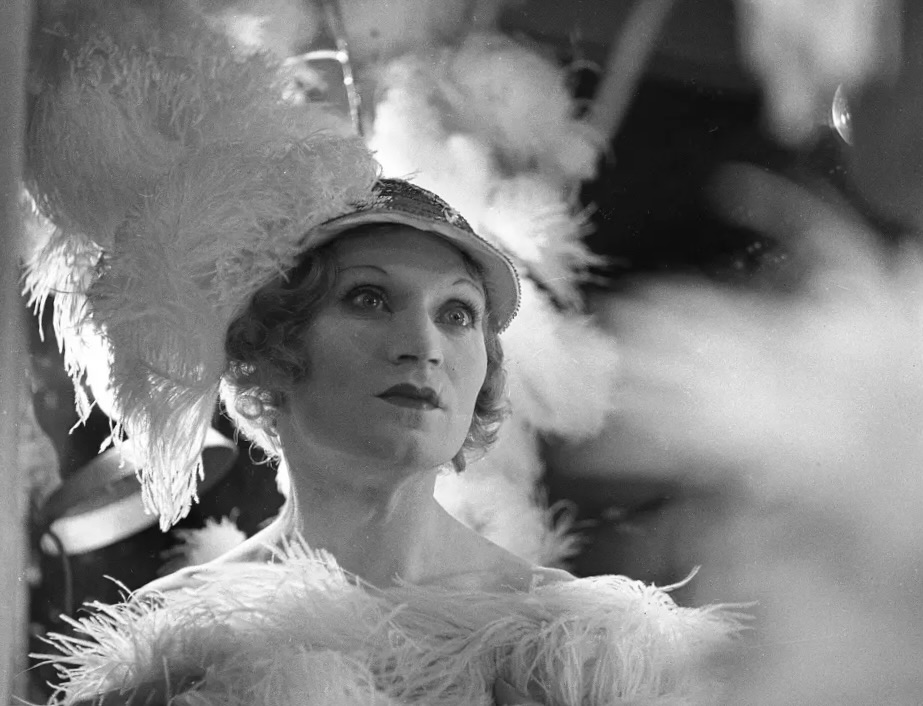
Vander Clyde Broadway, better known by his stage name Barbette, was born in Trickham, Texas, in 1897 before moving to Round Rock and graduating from Round Rock High School in 1913. During the 1920s, Broadway rose to international fame for his tightrope and trapeze routines performed in drag.
Come 1923, he had taken his talents to Europe for tours, serving as an inspiration for Jean Cocteau’s essay, “Le Numero Barbette,” which featured images of Barbette preparing for a performance. After retiring from aerial work following a bout of pneumonia in the late 1930s, he later served as a consultant and choreographer for aerial performances, including those in Ringling Brothers circus shows and in films like Some Like It Hot.
“His acclaimed act included stunning aerial and trapeze feats,” Barbette’s marker read in part. “He would perform as a woman, complete with wigs, lavish outfits and makeup, and at the end of his set, he would remove his wig and strut about the stage, flexing his biceps to leave no doubt he was, in fact, a man, to the amazement of unsuspecting audiences.”
Broadway died by suicide in 1973, with his ashes buried in Round Rock Cemetery.
Barbette’s marker came via the Texas Historical Commission’s “undertold markers” preservation program. For 20 years, the commission has allocated funds from a mandatory $100 marker application fee to a specialty account, which provides funding incentives for specialty markers. Those designated account dollars are designed to support undertold markers, which “address historical gaps, promote topics, and proactively document significant underrepresented subjects or untold stories,” per the program’s website.
Now on display, Barbette’s designation is one of the few across Texas that pertain to LGBTQ+ historical figures, places and events.
Barbette’s Legacy Foundation referred to the marker’s dedication ceremony as “one for the history books” and an opportunity “to celebrate a Texas trailblazer whose story deserves to be remembered.”
“This marker has been more than a decade in the making, and seeing it finally unveiled was a powerful reminder that LGBTQ+ history is Texas history,” the foundation wrote in part. “I’m grateful to everyone who helped make this moment possible and to all who came out to share in this historic occasion.”
Find it: Round Rock Cemetery, 1400 Sam Bass Road, Round Rock, TX 78681