

KNOXVILLE, Tenn. (WATE) — The U.S. Department of Agriculture is working to contain an outbreak of the flesh-eating screwworm parasite in Texas, after two cases were reported just six miles apart last week.
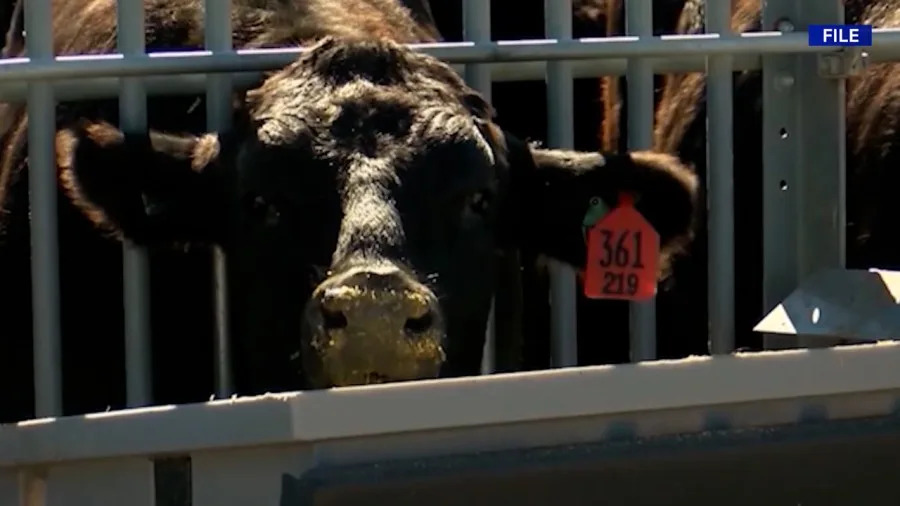
In the 1950s and 60s, the USDA eradicated the New World screwworm, named for its screwhead-shaped larvae, in the United States. Now the flesh-eating parasite is migrating north from Central America, and unlike some other blowflies, it feeds on living things — like cows.
“These were recently born calves, less than a few weeks old, and their umbilicus was still fresh. And that’s where they laid their larva,” said Lew Strickland, a professor of Animal Science at the University of Tennessee. “And so they’ll feed for a few days. They drop off into the ground, they’ll pupate, and it starts all over again.”
For the first time since 1966, there is a confirmed case of screwworms in Texas. Strickland said cattle farmers are being advised to check their livestock for screwworms twice a day.
TN Dept. of Agriculture issues alert after screwworm fly found in Texas
“It’s as hard as you want to make it. If you, as somebody who is checking cows every day, you’re going to notice things out of the ordinary. There’s some people that are not checking on those animals. They’re not going out, they’re not actively involved as much, so those things can seem to slip by,” said Hayden Sampson of Tri-Star Cattle Company.
The parasite can infect an animal through open wounds as small as a tick bite, leading animals to engage in odd behavior, such as rubbing themselves against trees and isolating themselves. Some symptoms are more obvious than others.
“It smells extremely bad,” said Strickland. “As I just mentioned, this larva feeds on living tissue.”
The female fly mates only once in its 20-to-30-day life cycle, so USDA plans to introduce sterile male flies into the environment, following the same playbook that eradicated the screwworm in the mid-20th century.
Raw sewage in the road, resident stuck without water at Tazewell mobile home park
“The process is to irradiate pupa. And when the sterile male is hatched, they’re released into the environment to mate with the female. And of course, as they mate, it does not result in further reproduction,” said Strickland.
The U.S. is releasing these sterile flies along the southern border, hoping to prevent the spread of the parasite that enters open wounds.
“So, we’re encouraging producers to do your typical husbandry that’s going to cause wounds, do that in colder temperatures,” said Strickland.
Any open wound presents a risk to animals if the screwworm migrates north. Both men grew up on farms, and both of them understand the risks the screwworm poses. However, Sampson added that he’s not too worried.
“Screwworm spreads very fast and can take out a large amount of cattle very quickly,” warned Sampson. “The one thing about the US and USDA, they do a really good job whenever things like this happen. […] We were one of the best countries when it comes to managing the quality of our livestock.”
‘Could have been much worse’ Driver cited after trailer fire sent fireworks over I-75
Strickland said in the event of a possible case, report it to the Tennessee Department of Agriculture.
“That’s what they’re there for. It doesn’t matter if it’s a false alarm. They want to know. We want to stop this before it goes any further,” said Strickland.
The USDA previously said a sizeable outbreak of the parasite could result in $1.8 billion in losses for the Texas economy and cost producers upwards of $732 million per year.
Copyright 2026 Nexstar Media, Inc. All rights reserved. This material may not be published, broadcast, rewritten, or redistributed.
For the latest news, weather, sports, and streaming video, head to WATE 6 On Your Side.