
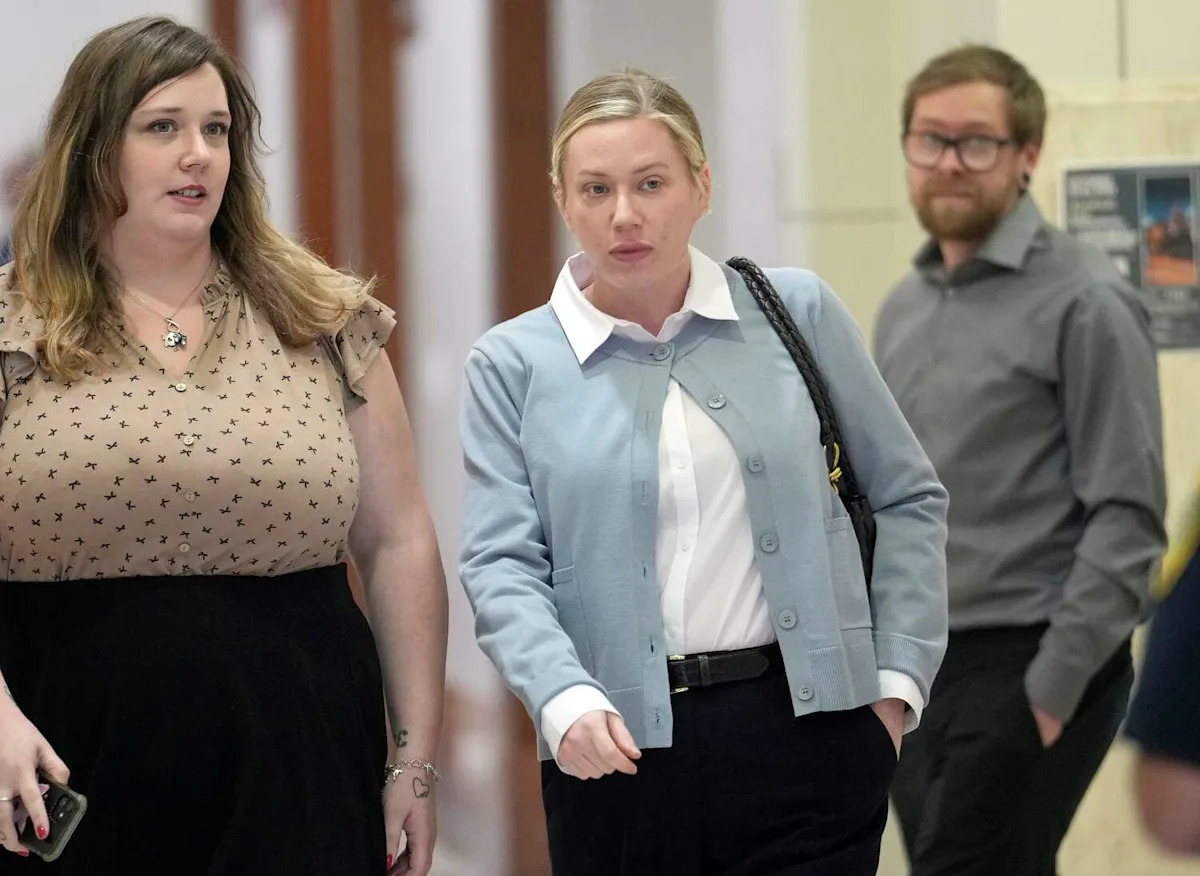
After being sentenced to more than 10 years in state prison, Kristina Chambers will join the small population of incarcerated expectant mothers.
For pregnant women spending time in prison, the Texas Department of Criminal Justice maintains specialty programs and facilities to ensure that expectant mothers receive the proper care. A total of 7,995 incarcerated women were admitted in 2024, only 87 of whom were pregnant, according to last year’s TDCJ report on pregnant inmates.
Chambers, who is four months pregnant, was sentenced Monday to 11 years and 14 days in state prison for the 2023 death of a pedestrian she hit with her Porsche 911 Carrera while driving drunk. As of Friday, she was awaiting transfer to prison from jail.
Here’s what to know about pregnant women in Texas’s prison system.
Where do pregnant women sentenced to prison stay in Texas?
All pregnant women who are sentenced to state prison are housed at the Carole S. Young Medical Facility in Dickinson, near Texas City, said Timothy Fitzpatrick, director of classification and records for TDCJ. The facility opened in 1996 and was specially designed by the department’s medical providers and health services team, he said. The air-conditioned facility is not solely for pregnant inmates.
Nurses are available 24/7, and medical providers are on-site five times a week at the facility, Fitzpatrick said. The facility is also equipped with an obstetrician clinic and provider, Fitzpatrick said.
“The staff that are assigned to those facilities, this is stuff that they deal with every day,” he said. “They go through specific training, dealing with all types of medical needs. They are not medically licensed professionals, but they work side by side with the medical team and the nursing staff and their providers.”
‘WHAT JUSTICE FEELS LIKE’: Kristina Chambers convicted of manslaughter
Pregnant inmates are assigned to a bottom bunk, Fitzpatrick said, so they aren’t required to climb up and down and ladder to get into bed. Women who may be experiencing complications or require a higher level of care are assigned to a hospital-like room with a medical bed, he said.
Are restraints used on pregnant women in prison?
Pregnant inmates are not handcuffed, Fitzpatrick said. The department’s security and transportation staff are well-versed in procedures that ensure safety for the mother and baby when an inmate is transferred, he said.
“There’s never been an instance where public safety has been at risk during those types of transports,” he said. “That stuff is closely monitored and evaluated, and we implement other practices with chase vehicles and things of that nature to where that individual does not have to be handcuffed.”
Hand restraints in front of the body may be used on pregnant inmates when necessary, such as during escorts or transports, according to last year’s TDCJ report on pregnant inmates. Though restraints are not used when compelling medical reasons advise against them, such as when a pregnant inmate is in active labor or in immediate post-delivery recuperation, according to the report.
What kind of programs are available for pregnant prisoners in Texas?
There are several programs available to pregnant inmates, including programs focusing on prenatal hygiene and parenting, according to the TDCJ report on pregnant inmates.
One of the programs available is the Baby and Mother Bonding Initiative, or BAMBI, which provides education on child development and parenting training. A total of 393 mothers and 396 infants had participated in the program as of September 2024, according to the report.
Best for Baby is another program that focuses on childhood development and parenting skills through peer education. The program’s topics cover the importance of prenatal care and how pregnancy occurs, with each session ending with physical stretches that can help alleviate the discomfort of pregnancy.
The Day with Mom Program allows incarcerated mothers to spend roughly six hours with their children and the children’s guardians on a scheduled Saturday. Families can visit, eat and spend time with each other playing board games, musical chairs and participating in coloring competitions. The Women’s Storybook Project of Texas is another program focused on strengthening incarcerated mothers’ relationships with their children through literature.
These programs play a crucial part in ensuring all inmates leave the criminal justice system better than they came, Fitzpatrick said.
“We understand the importance of breaking generational incarceration and programs like the parenting programs or the storybook programs, Bambi, all those things all help toward that,” he said.
This article originally published at Inside Texas’ pregnancy care in prison: Where women such as Kristina Chambers stay and are treated.