
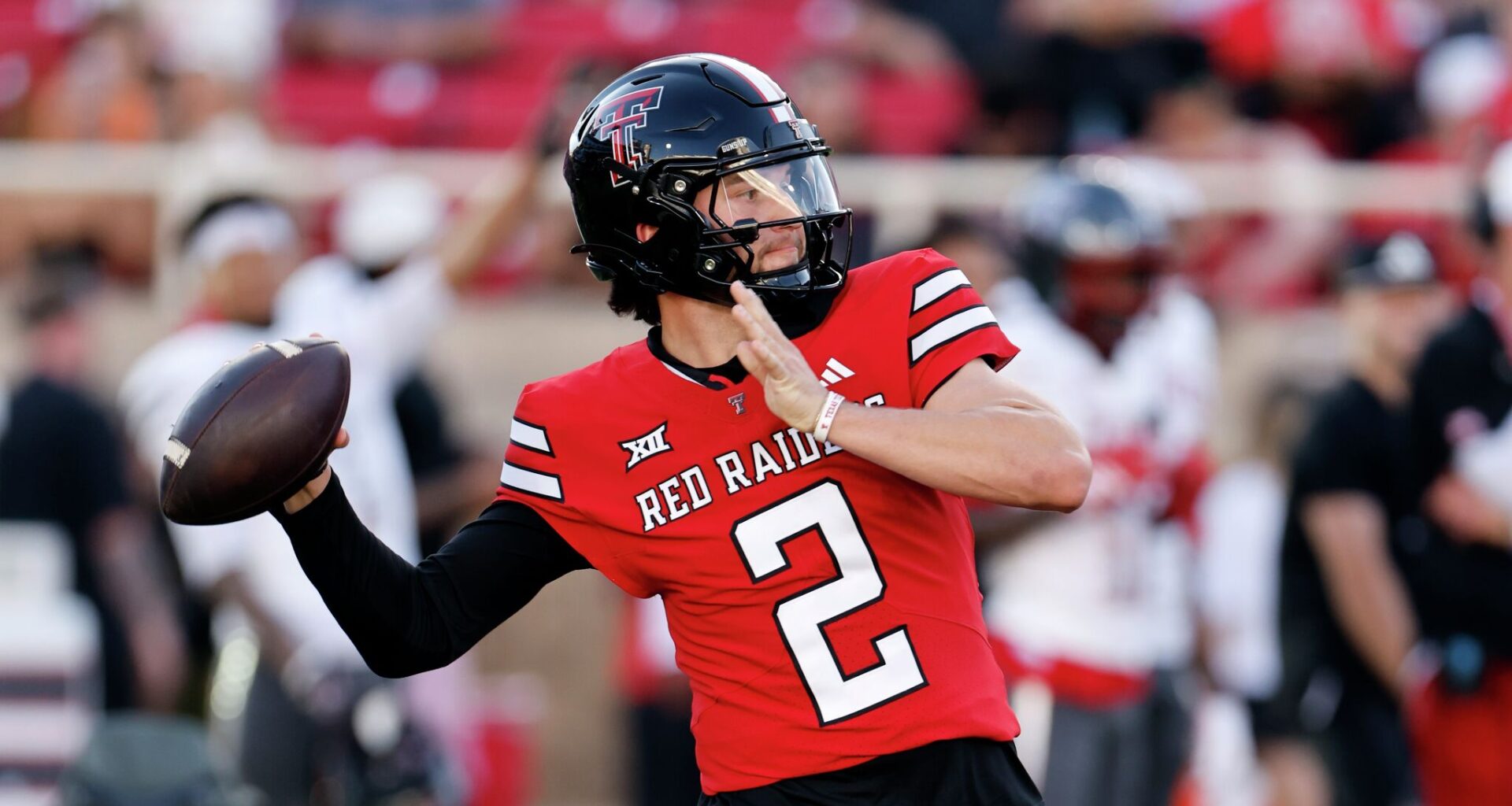
Texas Tech quarterback Brendan Sorsby will miss two games in the 2026 season after an injunction was filed allowing him to play college football again.
Ron Jenkins/Getty Images for ONIT
On Tuesday, Texas Tech’s billionaire booster and Chairman of the Board of the school’s regents—Cody Campbell—wrote a lengthy op-ed in USA Today, that said federal legislation (known as the Protect College Sports Act) is the only hope of saving collegiate athletics in America.

“College sports system has been pleading with Congress to take action, to save it from its own inevitable demise,” Campbell wrote, with mention of the millions spent on trying to make things better. “The crisis is real—and the solutions have been hard fought.”
Article continues below this ad
Campbell’s pleas, which carry some validity, will likely fall on deaf ears among many sports fans and institutional leaders across the state and country. This is because 24 hours before Campbell’s op-ed was published, a Lubbock County judge’s decision to rule Texas Tech quarterback Brendan Sorsby eligible after he acknowledged gambling on sports enraged many in college sports, with concerns that sports betting was truly running amok, to the point that rival schools threatened never to schedule Texas Tech in sports again.
The idea of Sorsby playing in 2026 after committing arguably sports’ biggest sin—not only admitting to making thousands of bets on sports, but also making over 40 on his own team—is too much of a cross to bear for many coaches and administrators in the state of Texas.
Chron reached out to several college football programs across Texas about the Sorsby ruling. Many declined to comment, and one requested anonymity. Additional quotes from ESPN’s Pete Thamel and Max Olson have been used to paint a clear picture of how coaches and athletic leaders feel about the issue.
“We live in a world where the rules are met with excuses, and when we don’t get our way, we find a judge to buy and get them to be on our side,” said Prairie View A&M head coach Tremaine Jackson in a text to Chron.
Article continues below this ad
It’s too far a stretch to suggest that the retired Judge Ken Curry, who hails from Tarrant County but was brought into Lubbock County for this case after District Court Judge Phillip Hayes—who holds two degrees from Texas Tech—recused himself, was paid to cook the books in Sorsby’s favor. His surprisingly lenient approach, combined with Sorsby’s financial backing from Jeffrey Kessler—who played a key role in establishing free agency in the NFL—indicated that a significant investment had been made to achieve the best possible outcome for the Red Raider football team.
“How is anyone ever going to trust the outcome of a game again?” said Sonny Dykes to ESPN on Monday, noting it’s “a bad day for college football.”
Dykes, a Texas Tech alum and former assistant coach, is also the son of the legendary former Red Raiders head coach, Spike Dykes.
“You would hope that there would be someone at some point that says, ‘Hey look, this is not a good thing for the game and I care enough about the game to not let this happen,'” Dykes said. “I think it’s sad that these adults and people who are supposed to guide college football aren’t guiding it. I think it’s a shame. Everyone is looking out for their self-interests. No one is looking out for what’s right in college football.”
Article continues below this ad
The NCAA has formally filed an accelerated appeal of Lubbock County injunction, but given the timing of these cases, it’s possible a ruling won’t be issued until after the Red Raiders’ 2026 season ends.
“At the core, for 50 years, grown-ups in charge of higher education have made decisions to do what’s right,” TCU athletic director Mike Buddie told ESPN on Monday. “This is a situation, there’s clearly an opportunity to do what’s right. I hope that’s where we end up.”
“This was strategic,” an anonymous FBS football coach in Texas said to Chron. “Even if they lose, they still win.”
Sorsby, diagnosed with gambling and anxiety disorders, checked into a rehab center in April and completed a 35-day program in Arizona. Court documents reveal he used accounts registered to family and friends to wager about $90,000 over four years and placed bets after transferring to Texas Tech last December. Per the injunction, he will only be suspended for two games.
Article continues below this ad
“As he returns to our football program, we remain committed to supporting Brendan’s recovery and ensuring his compliance with the court’s order,” Texas Tech athletics director Kirby Hocutt said in a statement to Chron. “A comprehensive support structure, including clinical care, monitoring, and compliance checks, will remain fully in place for the duration of Brendan’s time as a student at Texas Tech.”
The thought of playing football, while dealing with severe addiction, has rubbed many the wrong way.
“Football isn’t therapy for betting on sports,” said Jackson, who played college football at Louisiana-Monroe and Texas Southern. “It’s more temptation to bet again.”
Article continues below this ad
Some schools across the country are taking action against Texas Tech following Monday’s ruling. Per The Athletic, Georgia and Nebraska both told all of their coaches not to schedule Texas Tech in any sport. For teams in Texas, it’s a work in progress.
“We’re not tearing up our current contract, but it’s open for discussion for sure,” the anonymous FBS football coach in Texas said.
“We anticipate having conversations surrounding it,” Buddie told ESPN. “We’re all anticipating it, but this has not been formally discussed.”
“It wouldn’t bother me,” Jackson said on whether he would be okay having a team he coached play against Texas Tech.
Article continues below this ad
While many in Lubbock are rejoicing the return of their hired gun quarterback—Sorsby is on his third college team and is expected to earn $5 million to play in 2026—it’s clear that the Wild West sideshow happening in Lubbock could be a line in the sand for what ails college sports. Texas Tech had the chance to show dignity and humanity toward someone in need; instead, the program chose to be self-serving in the name of winning a game.
Campbell’s response to the backlash has been to point the finger at a broken system, when the real issue here is the decision to be abusive and to take advantage of a broken situation. That’s an integrity issue, and maybe this will be the line that actually creates real change, to prevent a sense of lawlessness that has taken place in Lubbock.