
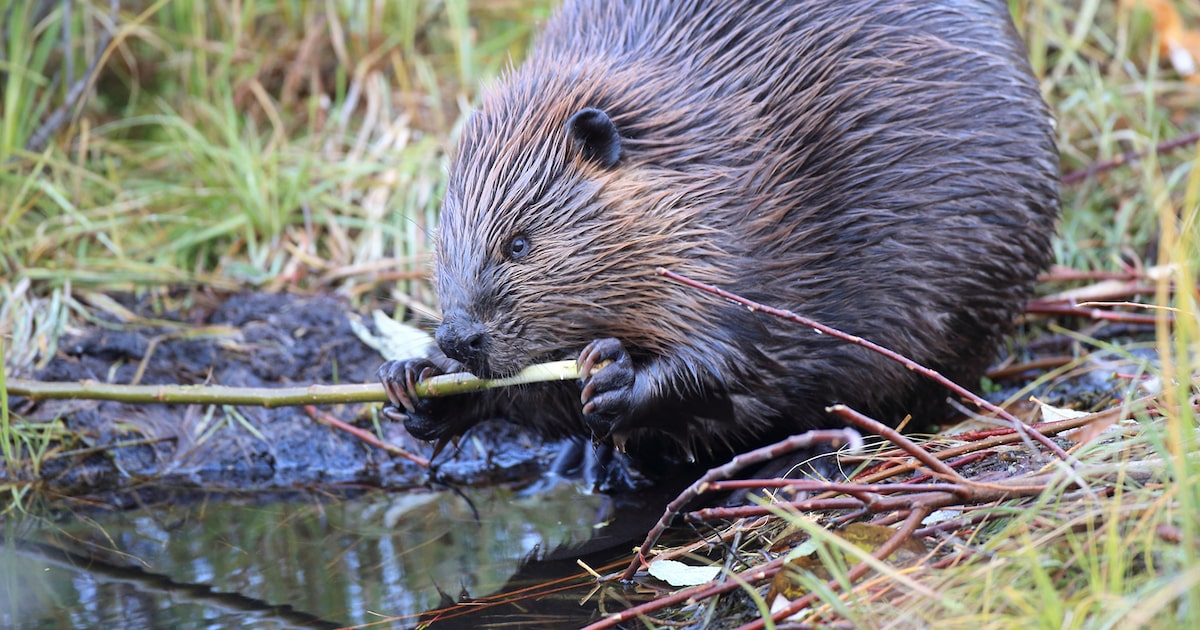
Felled trees. Gnawed tree stumps. Leftover wood chips. These are all signs that you’ve probably got a colony of busy beavers on your hand, particularly if you live near water.
And while these animals can be great for the ecosystem, they are a tree’s biggest nightmare.
“Beavers are phenomenal critters,” said Sam Kieschnick, urban wildlife biologist at Texas Parks and Wildlife. “They are just amazing … and they can be amazingly frustrating to some folks, especially if one of our prized trees ends up on the ground because of their little chiseled teeth.”
Here’s what you need to know about beavers and how to safeguard your trees from them.
Breaking News
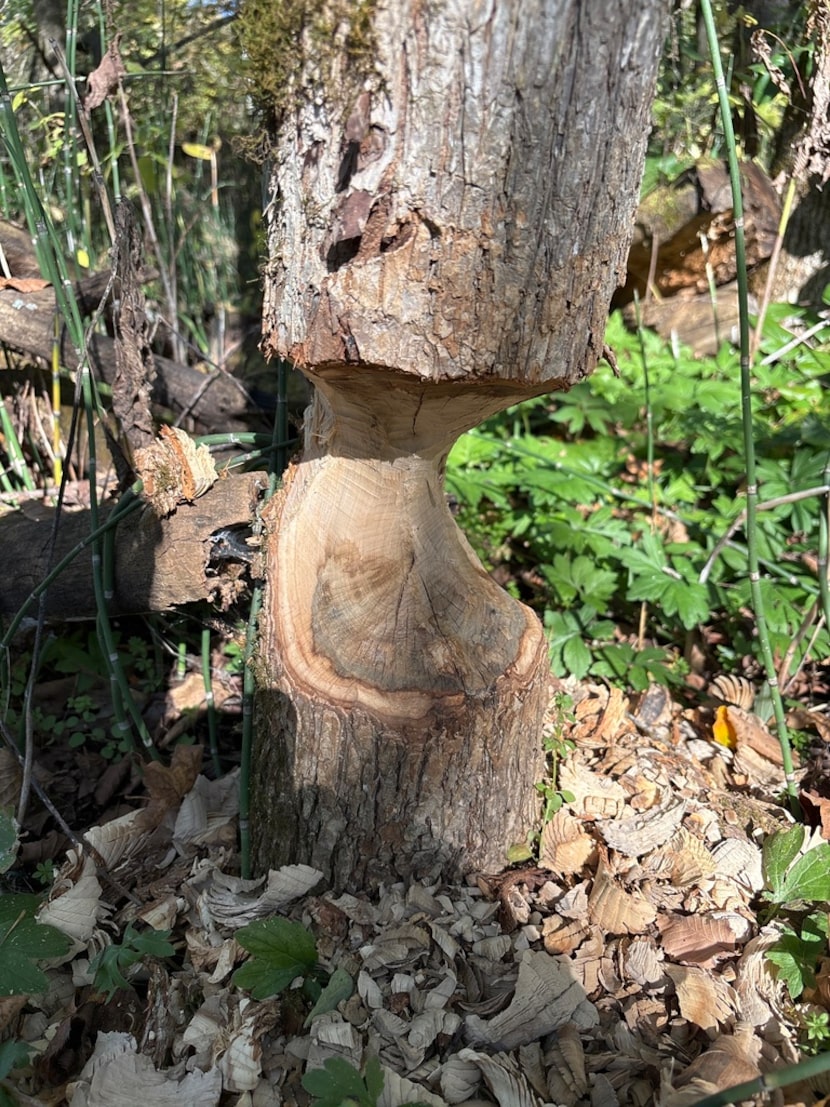
Beavers can be a tree’s biggest nightmare.
Sam Kieschnick, Texas Parks & Wildlife Department
Busy beavers
Ever heard the saying “busy as a beaver?” There’s a real meaning behind that.
Beavers work tirelessly to build their homes and dams, typically using a combination of trees and branches as well as mud, grass and rocks. Felled trees are common when beavers are near, because the large rodents have so many uses for them.
Kieschnick said beavers are “ecosystem engineers,” because they have the ability to create and alter the environment around them. Through their dam building, beavers are able to raise water levels, slow water speed and change water direction, according to an article from Defenders of Wildlife.
When beavers build dams, they are increasing the size of the wetland, Kieschnick said, which also allows them to store and eat food as well as protect themselves from predators.
Outside of building dams and their homes, beavers also use trees for filing their teeth. Kieschnick said beavers’ teeth never stop growing, so sometimes they are nibbling on trees to chisel down their teeth — it isn’t always for their lodges, dams or consumption.
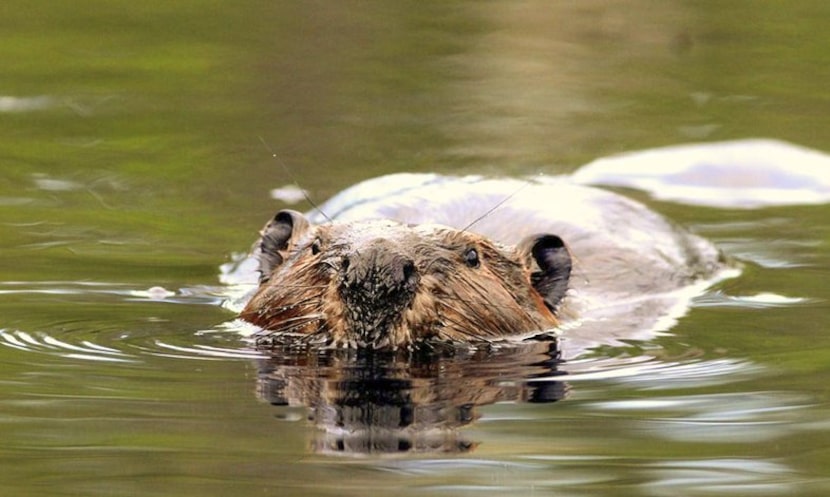
North American beavers can be found all across Texas, including the Dallas-Fort Worth area.
Texas Parks & Wildlife Department
North American beavers are native to North America, hence the name, and can be found all across Texas, including the Dallas-Fort Worth area. Kieschnick said they are nocturnal creatures, so they tend to fly under the radar and get all their work done in the shadows of the night.
“We don’t necessarily see the actual beavers out and about, but we see the evidence of the beavers,” he said.
According to Texas Tech’s Natural Science Research Laboratory, beavers are semiaquatic and require water, so they typically live in and around waterways, such as rivers, creeks, lakes and ponds. If you live near or close to water, you can almost expect your trees to be impacted at one point or another.
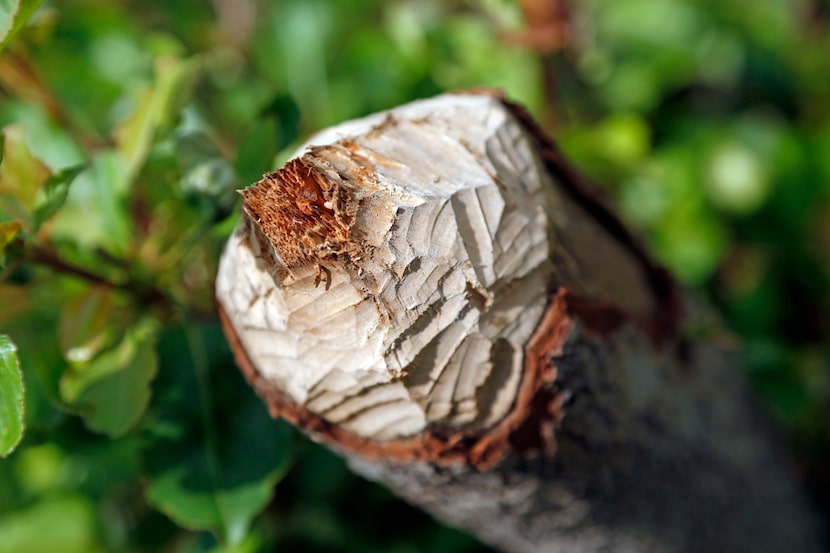
Beaver teeth marks are pictured on the stump of a tree.
DMN Archives
Protecting your trees
Kieschnick said TPWD gets a lot of calls about beavers, especially when really big or old trees are impacted.
“They can be considered a nuisance species,” he said. “But there are some things that we also tell folks to do, especially if they have a prized tree that’s living close to water that they don’t want to see fallen.”
The answer is wired mesh. It’s not the most aesthetically pleasing thing, but it is effective and keeps beavers away.
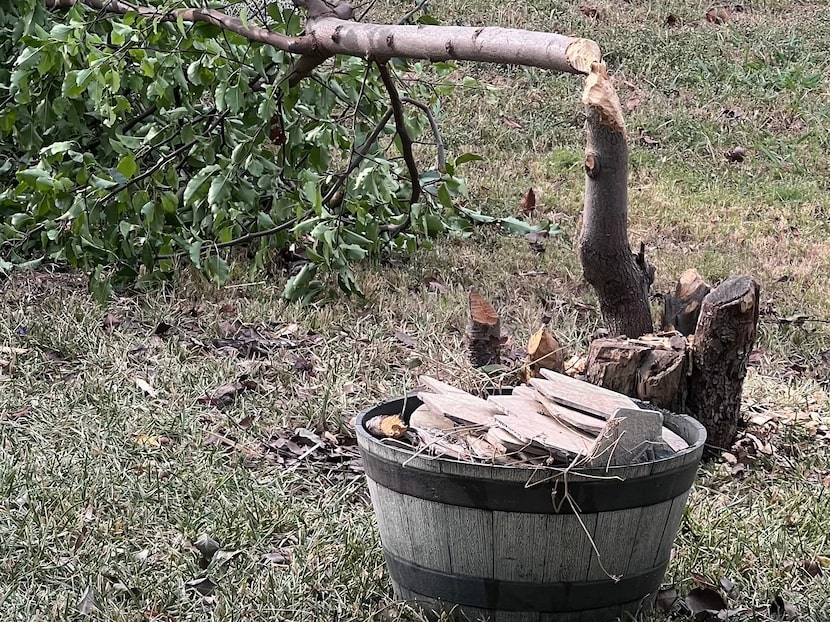
A Garland resident who lives near a small pond has had to deal with tree damage by beavers.
Jessica Sanchez
There are also other options to protect your trees from the jaws of a beaver.
According to the Beaver Institute, you could apply a sand-paint mixture at the bottom of the tree, which will last for years, but doesn’t work for saplings. Another option is to coat the tree in a mixture of cayenne pepper and oil, but this is known to kill thin barked trees and will need to be reapplied one to two times a year.
Trapping beavers is also an option, but that involves a specific process, and it does not correct the beaver problem, because they can just come back. Kieschnick said if you live near water and really want beavers to stay away from your trees, wire mesh, while unsightly, is the best option.