
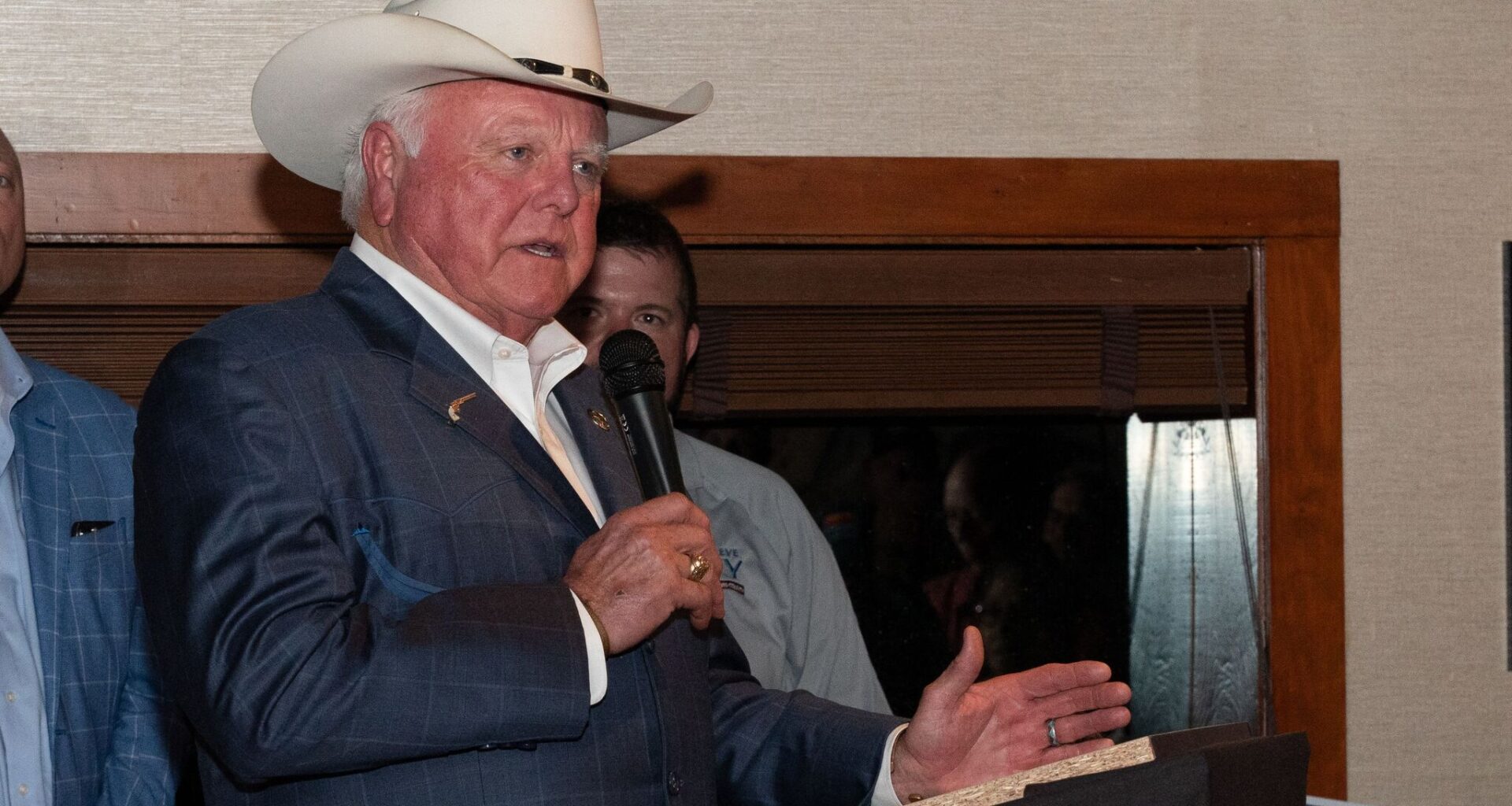
Commissioner of Agriculture of Texas Sid Miller speaks during a Texas Republican Party election night rally in Austin, Texas, on November 8, 2022. Miller has called on the USDA to act faster in response to the New World screwworm threat in Texas and New Mexico.
SUZANNE CORDEIRO/AFP via Getty Images
As Texas races to stop the spread of the flesh-eating New World Screwworm, a bitter dispute is erupting between state and federal officials over whether enough is being done to contain the threat.

Texas Agriculture Commissioner Sid Miller is publicly accusing the U.S. Department of Agriculture (USDA) of moving too slowly as the parasite moves closer to the state’s livestock industry.
Article continues below this ad
“I’ve got ’till the end of this year to solve this problem and then I’m out of office,” Miller told Chron on Tuesday. “I don’t want to leave this for the next person…I’ve got to move. I can’t wait. And farmers and ranchers are very frustrated.”
RELATED: Texas governor candidate seeks public hearing on screwworm threat
In a news release Monday, he called on the Trump Administration to declare the parasite a national agricultural emergency, among other measures aimed at containing the threat.
He has also warned that Texas may need to take unilateral action if federal efforts do not accelerate. Asked Tuesday whether he still held that view, Miller said he will continue pushing forward until he sees meaningful movement from the USDA.
Article continues below this ad
Miller’s criticism comes as confirmed New World Screwworm cases continue to surface near Texas. Four confirmed cases of New World screwworm have been reported in Texas across three counties, including three calves and a goat. A fifth screwworm case reported in a dog was initially attributed to Texas, but has since been reclassified to New Mexico.
The USDA did not immediately respond to Chron’s request for comment.
Cochliomyia hominivorax, the New World screw worm fly, or screw-worm for short, is a species of parasitic fly that is well known for the way in which its larvae (maggots) eat the living tissue.
Lidya Elfa Sari/Getty Images
RELATED: Flesh-eating screwworm found in New Mexico dog near Texas border
Article continues below this ad
Miller and Agriculture Secretary Brooke Rollins have publicly sparred over the USDA’s handling of the situation, with Rollins recently calling him “unserious,”, according to CNBC.
“I was a little disappointed that the secretary reverted to sophomoric name calling at a press conference yesterday about me,” Miller said. “I thought it was very childish.”
Miller recently argued that USDA quarantines could discourage people from reporting cases. Rollins called that claim “dangerous,” but Miller said the USDA has since softened its position, saying reported cases would trigger an inspection rather than a quarantine.
“If that’s what they meant to start with, they should have never called it a quarantine,” he said, urging Texans to report any suspicious fly or larva. “If you’ve got a positive on your ranch, they’ll come drop some sterile flies on your ranch or hopefully some bait, and you want that.”
Article continues below this ad
Miller is pushing for the USDA to deploy the Screwworm Adult Suppression System, or SWASS, which uses targeted bait to kill fertile adult screwworm flies before they can reproduce and was used to help eradicate the pest in the 1970s. He argues sterile fly releases alone are not enough because sterile males and females are released together, and many mate with each other instead of fertile flies.
The Texas Agriculture Commissioner said he’s been calling for the Trump administration to readopt the SWASS technique for some time to no avail.
“I brought this to Brooke Rollins’ attention over a year ago and they’ve just done nothing, absolutely nothing,” Miller said.
However, it seems like he hasn’t lost hope and that the technique appears to be getting a second look.
Article continues below this ad
“They’re actually looking at it now, which is very encouraging,” Miller said. “They’re going to try to develop something, but I still think we should use insecticides that are already labeled for screwworms and get this going now.”
Still, he said, Texas cattle ranchers are frustrated by the lack of movement from the USDA. He said he is working through the logistics of launching a SWASS pilot program in the state and that Texas will handle the situation as best it can.
“Texas is going to have to lead ourselves and we’ve got to fix this problem,” Miller said.
Article continues below this ad