
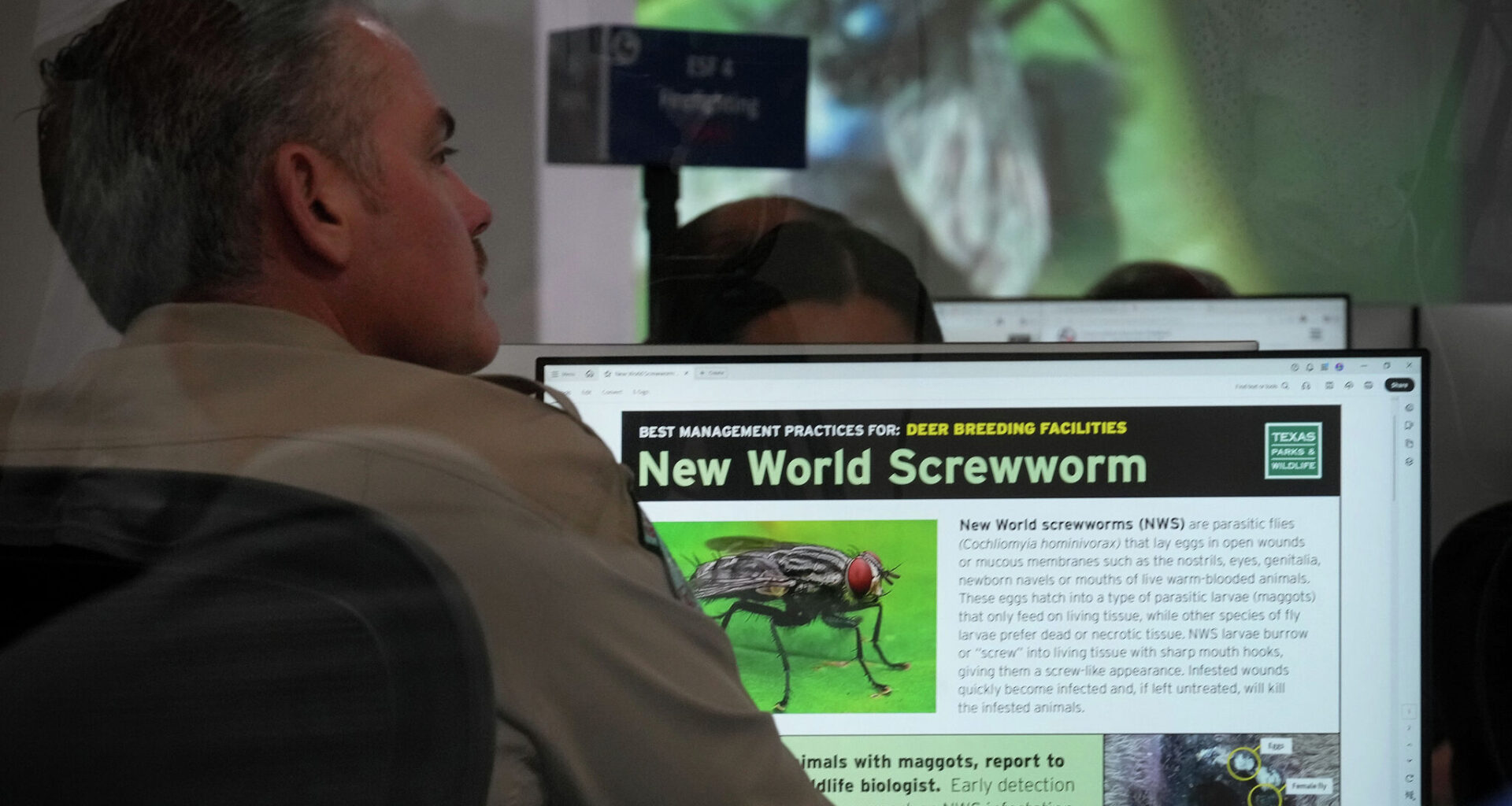
An official works at the State Operations Center during Texas’ response to the New World Screwworm in Austin on Friday.
Jay Janner/Austin American-Statesman
When news stories start mentioning flesh-eating parasites, it’s understandable that pet owners become anxious. Recently, concerns about New World screwworm have started appearing in headlines again, and I’ve already heard from pet owners wondering how it might affect their pets.

New World screwworm is the larval stage of a fly and is different from the common maggots people may occasionally see in wildlife or severe untreated wounds. Most maggots feed only on dead tissue. Screwworm larvae feed on living tissue, which is what makes them so dangerous. The adult fly lays eggs in openings in the skin, and unfortunately, those openings do not have to be large.
Article continues below this ad
ANIMALS MATTER: Adopt a Cat Month comes at a difficult time for shelters
According to Dr. Mark Stickney, medical director for Spay Neuter Network, even something as small as a tick bite, scratch, or hot spot – all common issues in pets – can potentially provide an entry point.
Still, Stickney says this is not a reason for pet owners to panic.
“The preventive recommendations really aren’t changing,” Stickney explained. “We already tell people to monitor wounds carefully, keep surgical incision sites clean and dry, prevent pets from licking wounds and incisions, and keep pets on flea and tick prevention. Screwworm is simply one more reason those recommendations are important.”
Article continues below this ad
There have been no reported screwworm cases in San Antonio. And the current conversation among veterinarians and veterinary organizations seems to be focused on awareness and prevention, not alarm.
Historically, Stickney says, animals most at risk for screwworm have included livestock recovering from procedures such as dehorning, newborn animals with healing umbilical cords, and animals with untreated wounds or heavy flea and tick infestations. For pet owners, however, much of the recommended prevention is already part of responsible everyday pet care.
“Fleas and ticks are already something we want to prevent because they make pets miserable and can spread disease,” Stickney said. “This is simply one more reason to stay vigilant.”
Pets recovering from surgery should also always be monitored closely, regardless of screwworm concerns. Anyone who has ever brought home a pet after a medical procedure already knows the drill: keep the pet quiet and preferably inside and use an e-collar to prevent licking of the incision.
Article continues below this ad
Stickney recommends pet owners call their veterinarian if any wound or incision “looks swollen, moist, painful, or worse instead of better. Any surgery creates a temporary break in the skin. That’s why veterinarians send home very detailed recovery instructions. We are not changing how we approach wound or surgical care.”
Stickney noted that if veterinarians suspect a screwworm infection, they will coordinate with the USDA’s Animal and Plant Health Inspection Service regarding testing, treatment recommendations and required reporting procedures.
“Treatment involves cleaning the wound, removing visible larvae or eggs, and administering approved medications and wound care,” he said.
For most pet owners, the takeaway is simple: Don’t panic. And the best protection is good parasite (flea and tick) prevention, proper wound/incision care, and paying attention to your pet during recovery from any surgery or injury.
Article continues below this ad
“Today, just as it always has been,” said Stickney. “This is really about maintaining good pet care.”
Send your pet questions, tips and stories to cathy@petpundit.com. You can follow her on Twitter at @cathymrosenthal.