
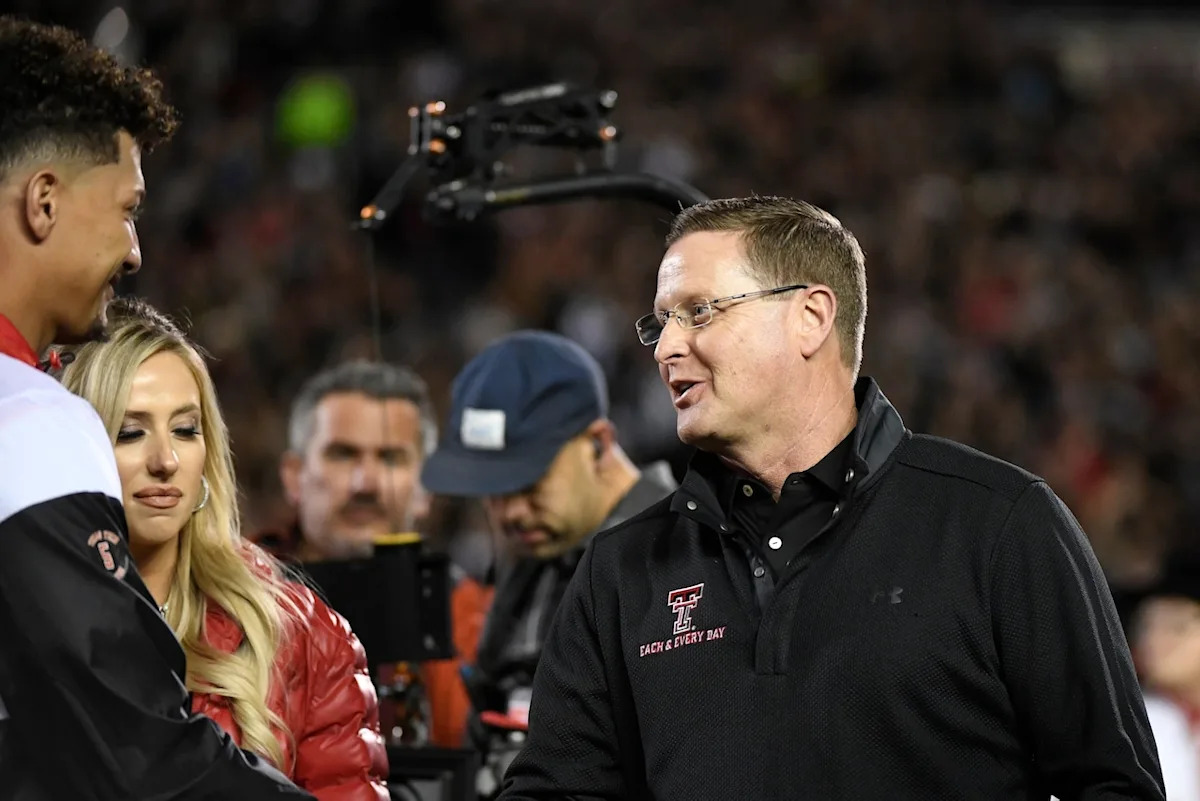
Athletic director Kirby Hocutt defended Texas Tech in the Brendan Sorsby case, addressing “integrity issues” others have cited.
“I’ve watched the reaction to Monday’s court ruling with great respect for my colleagues across college athletics,” Hocutt’s statement started. “Many of them are people I admire. But I also owe it to Texas Tech, and frankly to the truth, to offer a few facts that seem to be getting lost in the noise.”
Advertisement
Sorsby has his NCAA eligibility restored by the legal system for the upcoming season. A temporary injunction issued Monday by a Texas district court prevents the NCAA from enforcing its ban of Sorsby. The transfer QB had been ruled ineligible for what will be his final college season after he acknowledged years of gambling that included at least 40 bets on his own team while a freshman at Indiana.
“Brendan Sorsby has not played a single down of football as a Red Raider,” the AD continued. “He will miss the first two games of the 2026 season under the terms of the court’s ruling. What happens after that will depend, in no small part, on how his recovery continues to progress. We’re taking it one day at a time as he is. We’ll evaluate his recovery, compliance and readiness as we go. We are watching closely. We are deeply committed to his progress and well-being, and we are not operating on blind faith.
“We are operating on a comprehensive clinical and compliance structure that we committed to before the court ruled in Brendan’s lawsuit against the NCAA and that Brendan committed to as a condition of his return to our football program.”
Since NCAA rules call for a permanent loss of eligibility for any player who wagered on his own team, the judge’s decision sent shockwaves through college sports, including in Texas Tech’s own league.
Advertisement
“Texas Tech is not a party to Brendan’s lawsuit,” Hocutt continued. “We did not file it. We did not fund it. A young man in treatment for a clinically diagnosed addiction exercised his legal right to seek a remedy in court, and a judge agreed with him. Our role has been to support his recovery, not to engineer his eligibility.
“I’ve heard the word “integrity” used a great deal in the last 48 hours. As someone who has dedicated his career to college sports, I, too, believe integrity is central to our industry’s success. I also think integrity applies on more than one front. The integrity of sport matters. So does the integrity of how we treat a 22-year-old who sought help, entered residential treatment, and is working every day toward recovery. Those two things don’t have to be in conflict.”
Read the original article on al.com. Add al.com as a Preferred Source by clicking here.