
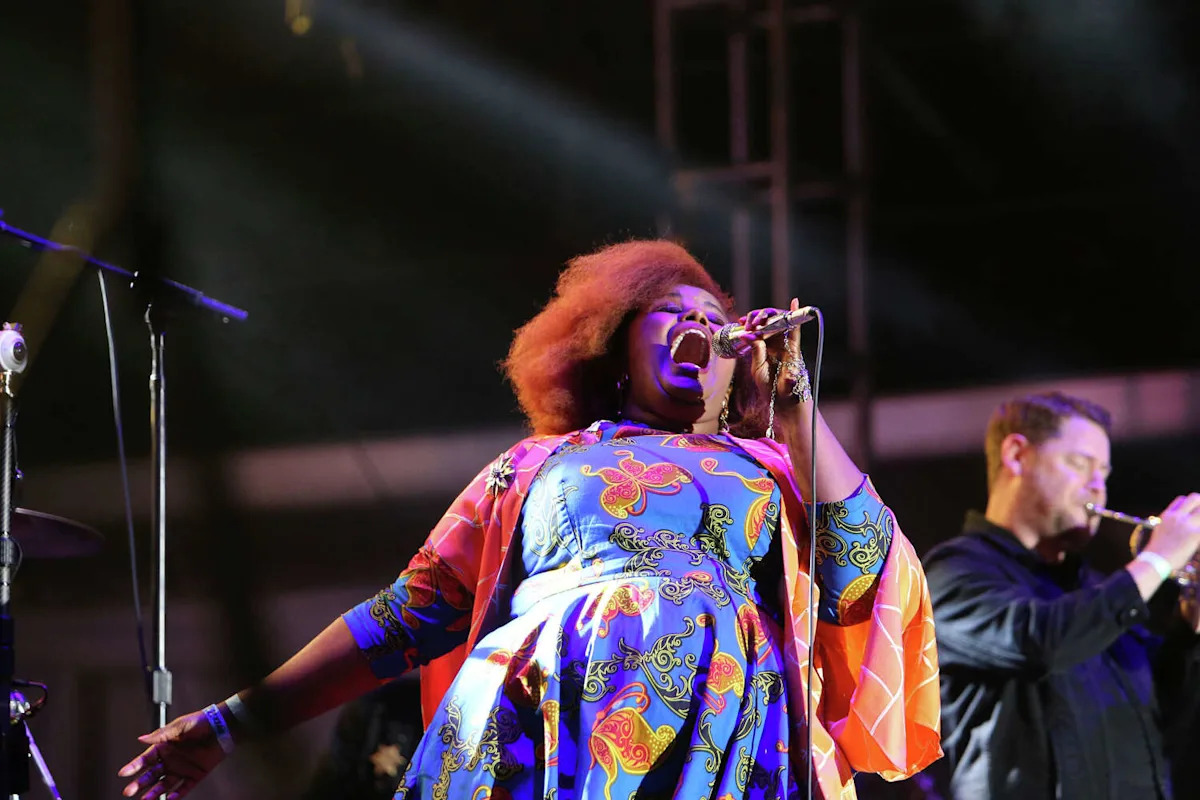
It happens all too often. The common saga of being a Houstonian and getting excited about a band or artist announcing a national tour. You scan the dates looking for where the fourth-largest city lies on the poster, only to realize they have skipped Houston in favor of Austin or Dallas.
It’s a conversation that comes up fairly often when Houston’s live music apparatus is discussed. Houston isn’t thought of as a music city despite the number of stars it’s produced, like ZZ Top and Beyoncé, and the local talent it still produces. When artists skip the city, it confirms that sentiment among music fans, but what is preventing this?
According to people with experience booking shows and performing, the city has a few problems holding it back and causing these annoying, recurring problems.
It’s not just NRG Stadium here. Where are our small venues?
Jack Freeman is an R&B and soul singer and songwriter from Houston who has been making music and performing for over a decade, opening for the likes of John Legend and Anthony Hamilton. Freeman has toured across the country and has tons of experience performing in and navigating Houston’s live music scene.
“I think what we have a lack of is small venues,” Freeman told Chron. “We just don’t have any, and a lot of the time when you want to deal with the few small venues that we have, like the Bronze Peacock Room at the House of Blues, you’ve got to go through Live Nation [booking] to do that.”
Live Nation, which owns several venues in Houston, including 713 Music Hall, Bayou Music Center, and House of Blues, is easily the biggest booker in Houston. Even dealing with an independent venue like the mid-sized White Oak Music Hall, the lack of choice means artists are at the mercy of these sparse mid-sized venues and have less incentive for artists to perform in Houston.
“When you’re the only game in town at the moment, then you kind of don’t have an issue really being booked,” Freeman said.
Houston native and singer-songwriter Kam Franklin has two decades of experience dealing with Houston’s live music scene. Franklin has had an almost 20-year career as a background vocalist and lead performer, and agrees there may be a lack of venues, but there are venues doing it right.
While the city could use about 25 more small to mid-sized venues, Franklin says, there are places making Houston worth a stop. She cited venues like Dan Electro’s in the Heights, Charlie’s Big Top Lounge, and even beer garden Axelrad’s new stage. Houston’s size ensures venues are spread throughout our suburban sprawl, which requires some ingenuity in finding them.
“A lot of the venues that I have found out about recently are not inside the 610 Loop as well. So when you’re talking about Houston, you can’t compare it to other cities,” Franklin said.
Houston’s “walk-up” mentality
Another problem with Houston’s live music scene is our mentality around actually going to shows, or at least showing interest outside of huge names.
Local icon and Houston rap great Paul Wall recently responded to a post on Threads complaining about artists skipping Houston, offering his perspective on Houston’s problem concerning musicians coming to the city, citing the city’s reputation as a “walk-up city.”
“Houston is considered a ‘walk-up’ city, known for low presale tickets,” Wall explained on Threads. “People ‘walk up’ and buy tix at the door. But usually with low presales, a lot of acts will cancel, thinking that it’s gonna be a low turnout, or not worth the risk. Or they’ll just skip Houston altogether.”
Freeman similarly categorized Houston as a walk-up city.
“We are known as a city to be late to pretty much anything. And not even just like late to the actual event, but late buying tickets,” Freeman said.
Freeman noted that Houston only shows up for presales when it’s the biggest artists coming to perform in our biggest venues: NRG Stadium and Toyota Center. So if it’s not Beyoncé, Houstonians aren’t going out of their way to get tickets early. Freeman says it comes down to risk assessment from venues and the artist.
“It’s not good in the eyes of the venue, because if I have a show eight weeks out and it’s a 600-cap venue, they’re expecting me to sell 600 tickets or at least 450 [ahead of it],” Freeman said of Houston’s walk-up problem. “But three weeks out, if I’ve only sold 200 tickets, then they’re going to look at me as a person that can’t sell a venue.”
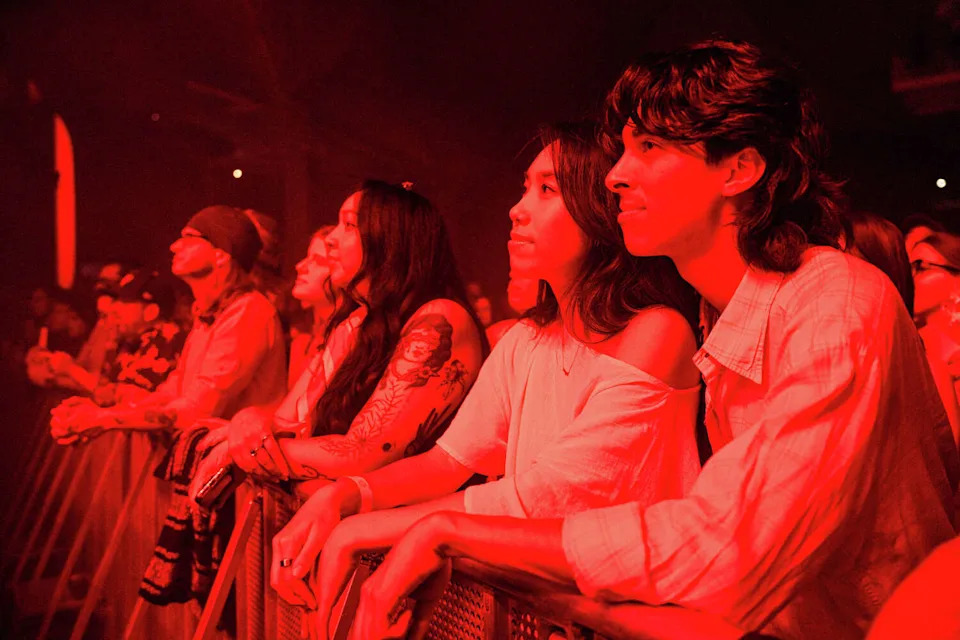
Fans enjoy Khruangbin as they perform at Cynthia Woods Mitchell Pavilion on Saturday, April 12, 2025 in Houston. (Houston Chronicle/Hearst Newspap/Houston Chronicle via Getty Imag)
Franklin says Houstonians know that Houstonians are going to wait until the last minute to buy tickets, but artists’ management doesn’t know that, and neither does the label. So when there are low presale numbers, that tells artists and labels that Houston isn’t the right market for them.
Houston’s reputation as a city in conservative Texas, despite being one of the most diverse cities in the country, could be a major reason why some artists skip Houston-or Texas-altogether.
“Some artists don’t feel safe coming here,” Franklin said. “Some artists see it as a boycott opportunity to skip not just Houston, but Texas, period. I’ve heard it many times.”
No dedicated music district
Another common complaint is that Houston lacks a dedicated corridor for live music. Austin has a bustling music district lined with venues that make it a place where concert-hopping events like South By Southwest make sense. Dallas has Deep Ellum, which provides an ecosystem for live music to thrive. Houston has no such district. Like most things in the city, our venues are spread out across our vast sprawl.
“I think for a city like the fourth largest city in America, we should have at least a strip or a district or something where venues that range from 100 cap to 750 should be,” Freeman said. “You go to Nashville, there’s a strip where there are venues everywhere. There’s a stage for somebody to play at everywhere, no matter the size.”
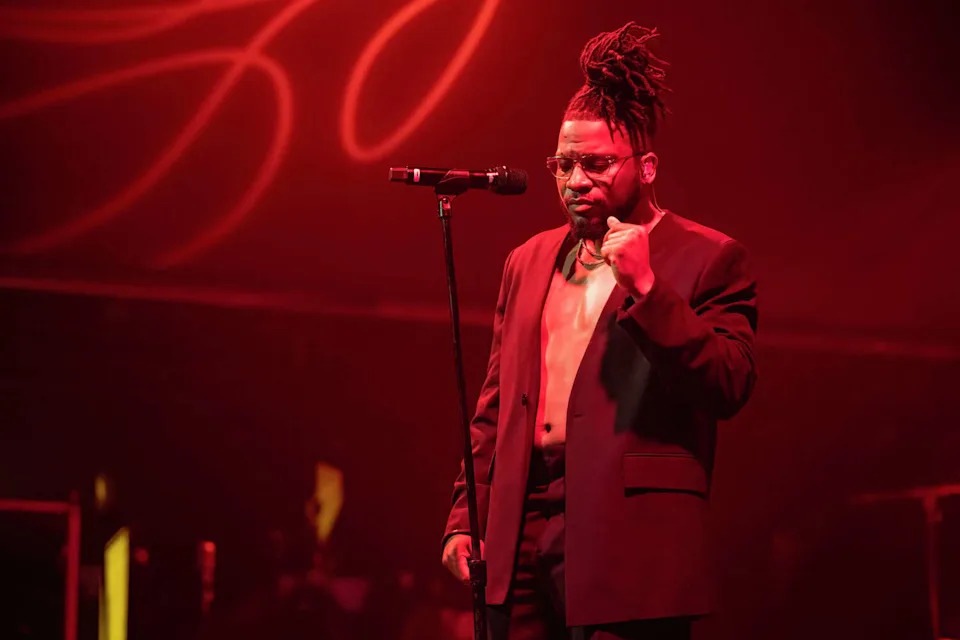
Jack Freeman performs at The You Gon’ Grow, Too! Tour 2025 at White Oak Music Hall on May 25, 2025 in Houston, Texas. (Eugenia R. Washington/Getty Images)
Freeman cited the gentrification of areas like Second Ward and the unused spaces within them as fertile ground for someone to take initiative and build a live music hub. But it’s an investment that would take a collaboration of several developers and music-minded business people willing to potentially lose money initially to establish something. Franklin worries that Houston’s communities could be left out to dry if a designated music corridor were pushed.
But marginalized communities being pushed out of their historic neighborhoods is very prevalent in Houston. The major concern for Franklin when it comes to Houston establishing a music hub like Austin’s is gentrification being used musically, possibly segregating and siloing the Houston live music scene.
“Gentrification will hit you like a motherf–ker. The next thing you know, that music corridor becomes a place where no musician can afford to live,” Franklin said.
Even with its flaws, Houston’s music scene still has its merits. The size and diversity of the city, which is reflected in the music scene, is something that it may want to embrace more if the city wants to change its reputation
“I want Houston to be equitable and accessible for all Houston musicians and all Houston zip codes. That’s how I feel about it. I feel like the entire city is one big music corridor.” Franklin said. “Great things come out of the water in this entire city, not just one neighborhood.”
More Culture
Drama | Controversial Virginia Buc-ee’s proposal moves forward
Transplants | Why so many LGBTQ Texans moving to Seattle may be an ’emergency’
Courts | Houston attorney admits to false testimony in ex-partner’s suit
Drama | UT Austin could lose this landmark, thanks to Greg Abbott
For the latest and best from Chron, sign up for our daily newsletter here.
This article originally published at Touring musicians are skipping Houston. There’s more than one reason why..