
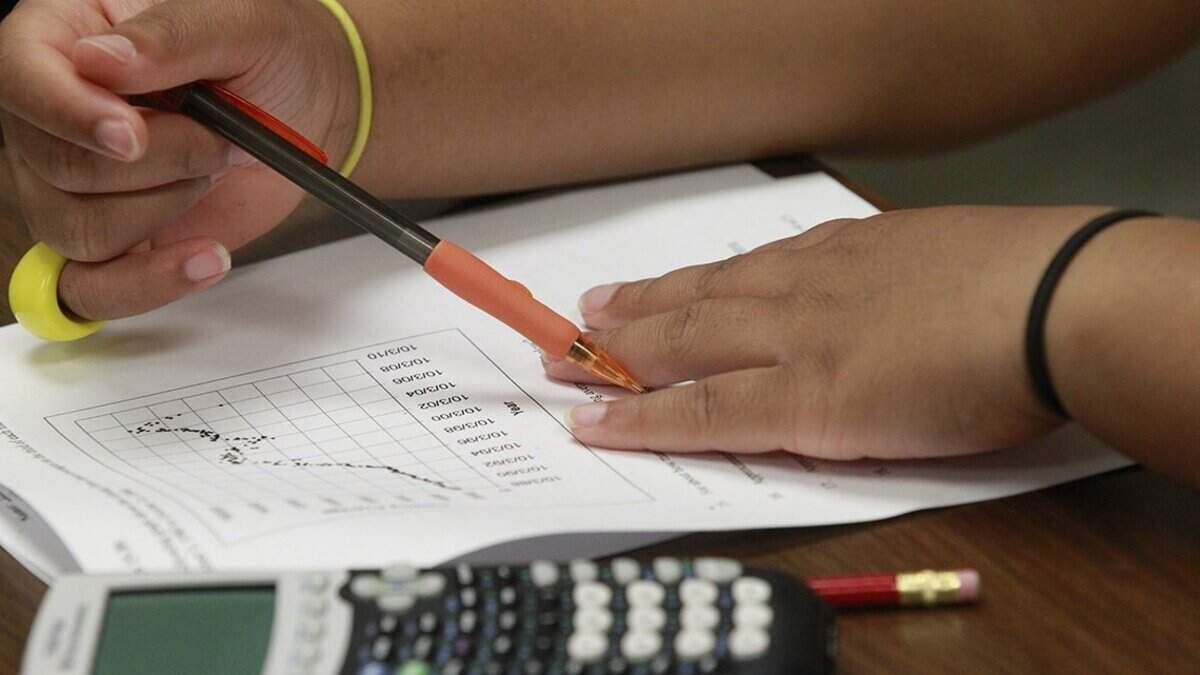
In an archive photo, a student takes a remedial math class at Haltom High School to study for the STAAR state standardized tests.
Ron Jenkins
Star-Telegram file photo
Students in grades 3-8 across Tarrant County’s public and charter schools stayed stagnant in reading performance compared to spring 2025, and they’re still trailing behind their statewide peers, according to new state test results.
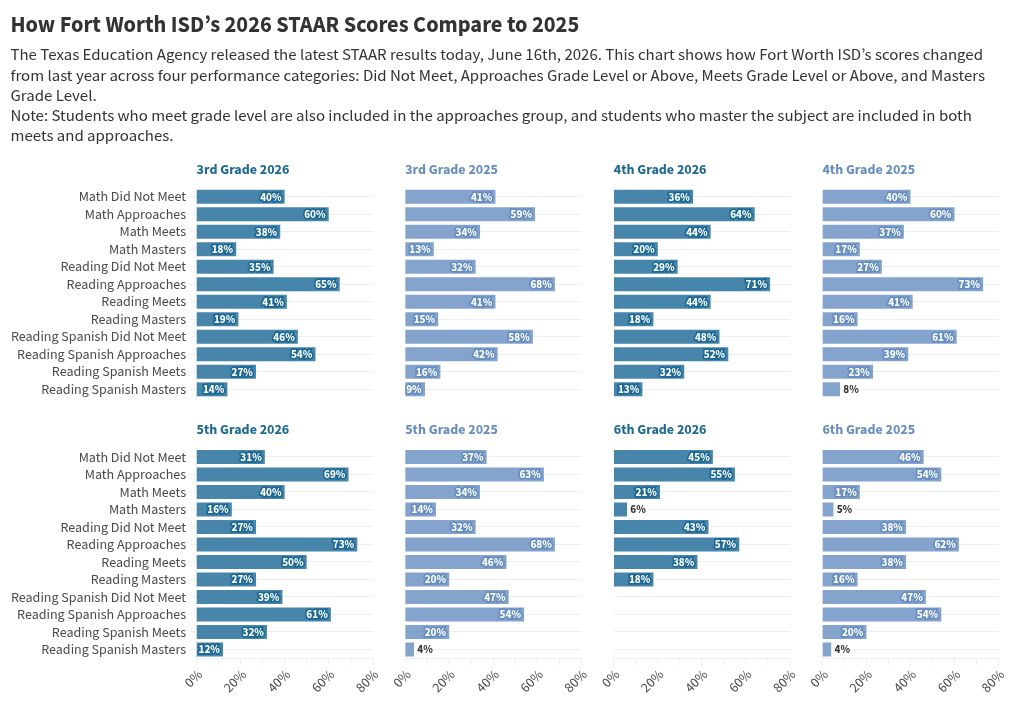
More than half of students countywide, 51%, were reading on grade level in spring 2026, according to the results from the State of Texas Assessments of Academic Readiness exam, or STAAR, released on Tuesday morning. Texas students in grades 3-8 were three points ahead of Tarrant students in this subject with 54% performing on grade level. Both groups saw no movement in student achievement compared to spring 2025, according to The Commit Partnership’s data dashboard.
In math, improvement was seen across grades 3-8 in Tarrant County and statewide. In Tarrant, 41% of students met grade level, accounting for an increase of two percentage points. Texas students also outpaced Tarrant students in this metric with 43% meeting grade level in math, which is one point higher than last year.
The mix of scores come forward as Tarrant County’s education and civic leaders hone in on literacy as a top priority while, at the same time, state takeovers have gone into effect for the Fort Worth and Lake Worth school districts due to poor academic performance.
Brent Beasley, CEO of the Fort Worth Education Partnership, said the nonprofit’s formula slightly differs from the Commit Partnership’s data, which accounts for a 1% difference in countywide reading proficiency. The education partnership’s analysis shows a 1% growth in reading across all grades, which includes individual public-school and charter campuses located in Tarrant County. Commit’s analysis includes school districts headquartered in Tarrant, in addition to charter campuses also located in Tarrant. Rounding numbers can also show up as differences of about 1%.
Beyond the countywide data, year-to-year growth was especially notable in math for Fort Worth ISD, Castleberry ISD and Lake Worth ISD. The districtwide growth spanned from about 6-9% compared to last year.
Beasley said the scores are a win in terms of growth, but there’s still recognition that gaps need to be closed with the state and peer school districts. But the ongoing efforts and focus on improving student performance from local officials, nonprofits and parents seem to be paying off.
“I’d like to think we’re seeing some results of some of this sort of community-wide effort and focus that we’ve had for the last several years, so that’s that’s gratifying,” Beasley said.
Beasley also noted how overall data can overshadow disparities seen between student groups. For example, the percentage of Black third -graders in Fort Worth ISD meeting grade level in reading declined from 29% to 25%.
“None of us thinks that’s OK,” Beasley said, adding that certain schools are also still struggling while others are thriving. “I think we have to keep in mind that the results are not the same across all different parts of the city and all different student groups.”
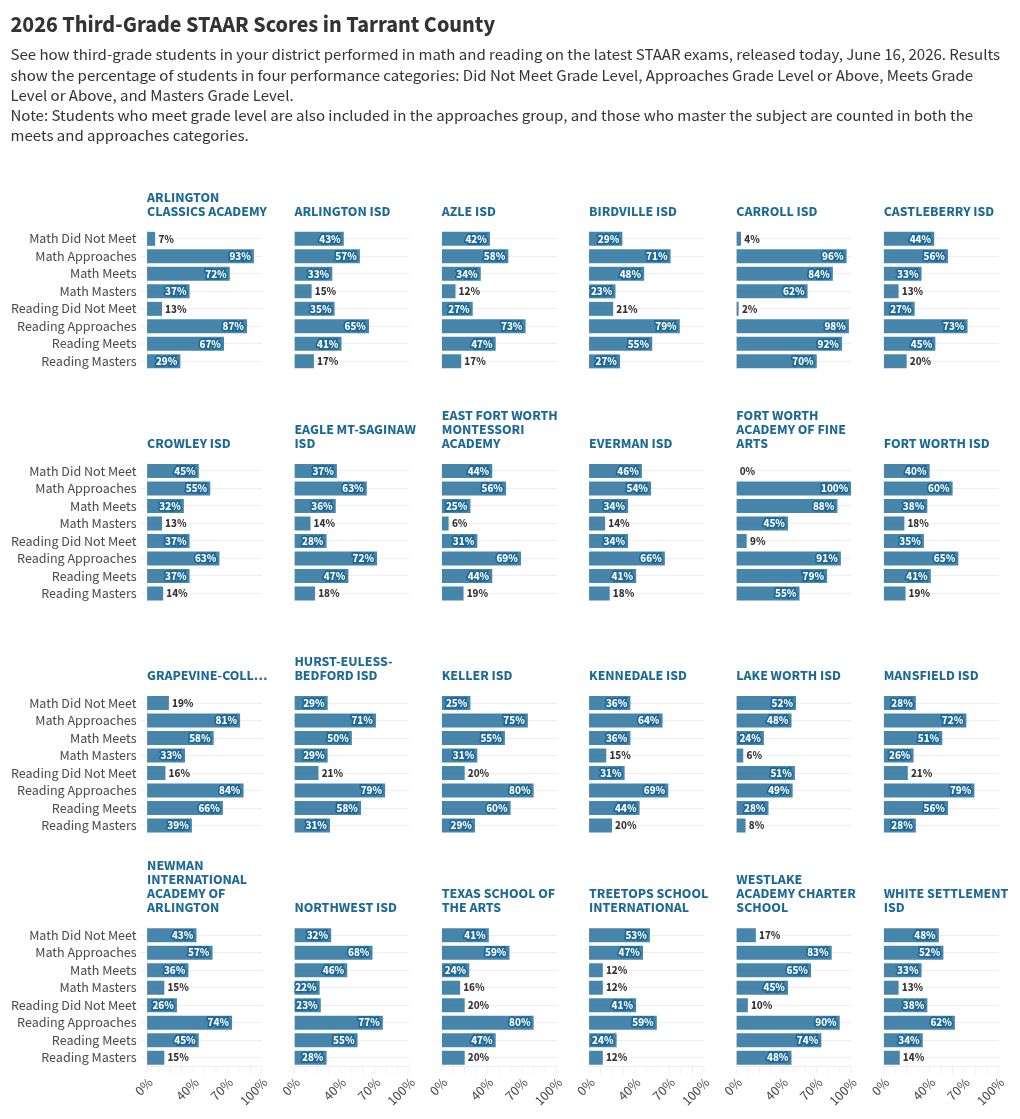
How do Tarrant County third-graders compare to their statewide peers?
Third grade is a notable point in a student’s academic career, as it marks the transition where students pivot from learning to read and are now reading to learn.
Reading scores statewide dipped by 1% for third-graders with 49% meeting grade level this spring. Tarrant County public and charter schools trailed behind the state in third-grade reading with 46% of students meeting grade level. Local student performance also declined by 1% compared to spring 2025.
In math, 44% of Texas third-graders performed on grade level, while 42% of Tarrant students met this metric. Both student groups saw no improvements compared to last year.
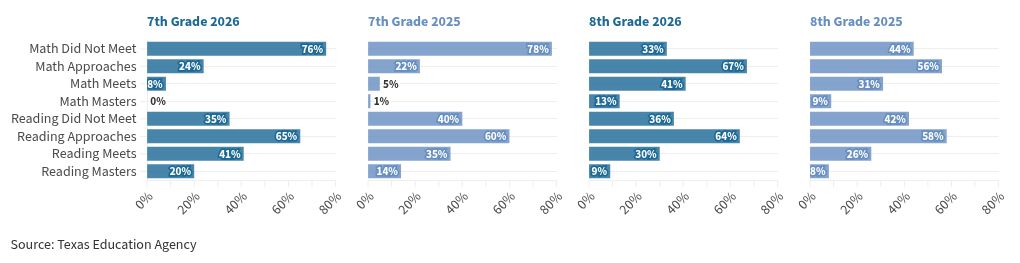
Texas Education Commissioner Mike Morath in a statement on Tuesday highlighted the improvements seen in middle school reading and said it could be connected to a statewide ban on cell phone use during the school day.
“The 2026 results demonstrate both the progress Texas students are making and the work that remains ahead of us. We are encouraged by continued gains in mathematics, especially with the growing number of students participating and succeeding in advanced mathematics courses. The gains in middle school reading are also notable, as it may be associated with the statewide ban on the use of cell phones in schools,” Morath said.
TEA officials also shared information on a new state program meant to support third-grade students who are below grade level in reading.
Students who did not meet grade level in this subject can receive up to $400 for literary tutoring services through the new Parent Access to Supplemental Supports program. The program launches in the fall with eligible families having access to in-person tutoring companies, virtual tutoring providers and designated Teacher Incentive Allotment tutors. Families can apply at pass.tea.texas.gov.
This is a developing story. For the latest updates, sign up for breaking news alerts.
This story was originally published June 16, 2026 at 9:38 AM.
Related Stories from Fort Worth Star-Telegram

Fort Worth Star-Telegram
Lina Ruiz covers early childhood education in Tarrant County and North Texas for the Fort Worth Star-Telegram. A University of Florida graduate, she previously wrote about local government in South Florida for TCPalm and Treasure Coast Newspapers.